The percentage of students achieving proficiency in math was <50% (which was higher than the Michigan state average of 37%). The percentage of students achieving proficiency in reading/language arts was <50% (which was lower than the Michigan state average of 64%).
School Overview
Grades Offered
n/a
Total Students (17-18)
34 students
Total Classroom Teachers (17-18)
1 teacher
School Rankings
Math Test Scores (% Proficient)
(11-12)<50%
37%
Reading/Language Arts Test Scores (% Proficient)
(11-12)<50%
64%
Student-Teacher Ratio
n/a
17:1
American Indian
(17-18)n/a
1%
Asian
(17-18)n/a
3%
Hispanic
(17-18)2%
8%
Black
(17-18)9%
18%
White
(17-18)89%
66%
Hawaiian
(17-18)n/a
n/a
Two or more races
(17-18)n/a
4%
Eligible for Free Lunch (17-18)
58%
40%
Eligible for Reduced Lunch (10-11)
2%
5%
School Statewide Testing
School District Name
Source: National Center for Education Statistics (NCES), MI Dept. of Education
Frequently Asked Questions
What percent of students have achieved state testing proficiency in math and reading?
<50% of students have achieved math proficiency (compared to the 37% MI state average), while <50% of students have achieved reading proficiency (compared to the 64% MI state average).
How many students attend Evart Adult Education?
34 students attend Evart Adult Education.
What is the racial composition of the student body?
89% of Evart Adult Education students are White, 9% of students are Black, and 2% of students are Hispanic.
What school district is Evart Adult Education part of?
Evart Adult Education is part of Evart Public Schools.
Recent Articles

The Experience of Being a New Student Mid-Year
Learn what students experience when transferring to a public school mid-year and how schools help new students adjust socially and academically.

How Public Schools Structure Free Periods or Study Time
Learn how public schools structure free periods or study time to support homework, tutoring, enrichment, and student independence.
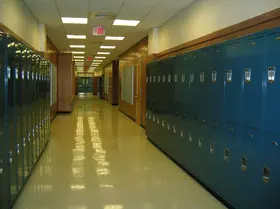
The Role of Hallways, Common Areas, and Shared Spaces in Public Schools
Discover how hallways, cafeterias, libraries, and shared spaces shape student learning, safety, and school culture in public schools.