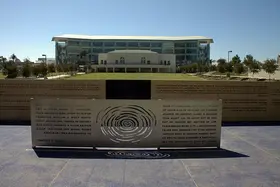
Serving 284 students in grades 5-6, Willard Intermediate-south ranks in the bottom 50% of all schools in Missouri for overall test scores (math proficiency is top 50%, and reading proficiency is top 50%).
The percentage of students achieving proficiency in math is 39% (which is lower than the Missouri state average of 40%). The percentage of students achieving proficiency in reading/language arts is 40% (which is lower than the Missouri state average of 43%).
The student-teacher ratio of 12:1 is equal to the Missouri state level of 12:1.
Minority enrollment is 22% of the student body (majority Hispanic), which is lower than the Missouri state average of 33% (majority Black).
Quick Facts (2026-27)
- Grades: 5-6
- Enrollment: 284 students
- Student-Teacher Ratio: 12:1
- Minority Enrollment: 22%
- Overall Testing Rank: Bottom 50% in MO
- Math Proficiency: 39% (Top 50%)
- Reading Proficiency: 40% (Btm 50%)
- Science Proficiency: 40-44% (Top 50%)
- Source: National Center for Education Statistics (NCES), MO Dept. of Education
School Overview
Willard Intermediate-south's student population of 284 students has declined by 10% over five school years.
The teacher population of 24 teachers has declined by 11% over five school years.
Grades Offered
Grades 5-6
(No virtual instruction)
(No virtual instruction)
Total Students
284 students
Total Classroom Teachers
24 teachers
School Rankings
Willard Intermediate-south ranks within the bottom 50% of all 2,076 schools in Missouri (based off of combined math and reading proficiency testing data).
The diversity score of Willard Intermediate-south is 0.38, which is less than the diversity score at state average of 0.52. The school's diversity has stayed relatively flat over five school years.
Overall Testing Rank
#1172 out of 2076 schools
(Bottom 50%)
(Bottom 50%)
Math Test Scores (% Proficient)
39%
40%
Reading/Language Arts Test Scores (% Proficient)
40%
43%
Science Test Scores (% Proficient)
40-44%
38%
Student-Teacher Ratio
12:1
12:1
American Indian
2%
n/a
Hispanic
10%
9%
Black
5%
15%
White
78%
67%
Two or more races
5%
6%
All Ethnic Groups
Chronically Absent Students
(22-23)22.9%
20.5%
Eligible for Free Lunch
44%
43%
Eligible for Reduced Lunch
8%
7%
School Statewide Testing
School District Name
Source: National Center for Education Statistics (NCES), MO Dept. of Education
Frequently Asked Questions
What is Willard Intermediate-south's ranking?
Willard Intermediate-south is ranked #1172 out of 2,076 schools, which ranks it among the bottom 50% of public schools in Missouri.
What percent of students have achieved state testing proficiency in math and reading?
39% of students have achieved math proficiency (compared to the 40% MO state average), while 40% of students have achieved reading proficiency (compared to the 43% MO state average).
How many students attend Willard Intermediate-south?
284 students attend Willard Intermediate-south.
What is the racial composition of the student body?
78% of Willard Intermediate-south students are White, 10% of students are Hispanic, 5% of students are Black, 5% of students are Two or more races, and 2% of students are American Indian.
What is the student-teacher ratio of Willard Intermediate-south?
Willard Intermediate-south has a student ration of 12:1, which is equal to the Missouri state average of 12:1.
What grades does Willard Intermediate-south offer ?
Willard Intermediate-south offers enrollment in grades 5-6 (No virtual instruction).
What school district is Willard Intermediate-south part of?
Willard Intermediate-south is part of Willard R-II School District.
School Reviews
Review Willard Intermediate-south. Reviews should be a few sentences in length. Please include any comments on:
- Quality of academic programs, teachers, and facilities
- Availability of music, art, sports and other extracurricular activities
Recent Articles

School Leadership Matters: Evaluating a Principal
Learn how to evaluate a public school principal before enrolling by examining leadership stability, teacher support, communication, school culture, instructional priorities, discipline, family engagement, and measurable improvement efforts.

Comparing Before- and After-School Programs
Learn how to compare before- and after-school programs when choosing a public school, including hours, costs, staffing, safety, activities, enrollment rules, transportation, meals, and daily convenience for families.

Choosing a Public School During Budget Uncertainty
Learn which questions parents should ask when choosing a public school during budget uncertainty, including staffing, programs, class sizes, transportation, reserves, enrollment trends, and planned reductions ahead.