Public School Policies

From unions to vouchers, school budgets to discipline policies, we cover some of the most controversial issues affecting public schools today. Learn more about education reform and how it impacts your family. Keep current on the latest controversies regarding religion, sex-education, civil rights and more.

View the most popular articles in Public School Policies:

Phone Bans Are Expanding: Will They Actually Help Your Child?

Updated
|
Phone Bans Are Expanding: Will They Actually Help Your Child?
Phone bans are spreading in public schools nationwide. Learn how to evaluate whether a school's cellphone policy will improve your child's learning and well-being.

Cellphones have become one of the most debated issues in American education.

Over the past two years, a growing number of states, school districts, and individual schools have adopted restrictions on student phone use during the school day. Some schools require students to place phones in locked pouches. Others prohibit phones entirely during instructional hours. A few districts have gone even further, implementing bell-to-bell bans that prevent students from accessing devices throughout the entire school day.

Supporters argue that these policies reduce distractions, improve academic performance, and help students engage more fully with their peers and teachers. Critics counter that phones provide important communication tools, can support learning when used appropriately, and may be necessary during emergencies.

For parents, the question is not simply whether phone bans are good or bad. The more important question is whether a particular policy is likely to help their child.

As more schools implement restrictions, families should understand what separates an effective cellphone policy from one that may create unintended challenges.

Why Schools Are Restricting Phones

The push for stricter cellphone policies has gained momentum as educators report increasing concerns about classroom distractions, social media use, cyberbullying, and student mental health.

Teachers frequently describe spending valuable instructional time redirecting students who are texting, scrolling social media, or watching videos during lessons. Even when phones remain unused, researchers have found that simply having a smartphone within reach can reduce attention and concentration.

Many school leaders believe that limiting access to phones creates an

. . .read more

Should My Child Enroll in Honors or General Courses in 2026?

Updated
|
Should My Child Enroll in Honors or General Courses in 2026?
Learn how to decide between honors and general courses in 2026, including GPA impact, college admissions, stress levels, and student readiness.

Choosing between honors and general courses is one of the most important academic decisions families make during middle school and high school. In 2026, the decision carries even more weight as public schools expand advanced academic opportunities, colleges continue emphasizing course rigor, and student mental health remains a growing concern.

For many parents, the question is straightforward but difficult: Should my child enroll in honors or general courses?

The answer depends less on prestige and more on the individual student. Academic strengths, work habits, long-term goals, stress tolerance, and extracurricular commitments all play a role in determining the right fit.

The best course pathway is usually one that challenges a student appropriately while still allowing room for growth, balance, and confidence.

What Is the Difference Between Honors and General Courses?

Honors courses are designed to move at a faster pace and explore material in greater depth than general or standard-level classes. Students are often expected to complete more independent work, engage in analytical thinking, and manage heavier reading and writing loads.

General courses typically follow grade-level academic standards with more instructional support and a steadier pace.

Most schools use honors classes to prepare students for future advanced coursework such as AP, IB, or dual enrollment programs. According to the College Board, students who complete rigorous coursework in high school are often better prepared for college-level expectations.

Parents should understand that honors does not necessarily mean “better” for every student. The goal is not simply to take

. . .read more

Preparing for Fall Parent-Teacher Conferences

Updated
|
Preparing for Fall Parent-Teacher Conferences
Learn how to prepare for fall parent-teacher conferences with practical tips, key questions, and 2026 communication strategies for families.

Fall parent-teacher conferences are one of the first major opportunities families and educators have to establish a productive partnership for the school year. Unlike spring meetings, which often focus on year-end performance and placement decisions, fall conferences help identify early academic trends, social adjustment concerns, and communication strategies before small issues become larger problems.

In 2026, parent-teacher conferences continue evolving alongside digital gradebooks, hybrid meeting formats, and increased attention to student wellness and executive functioning skills. Schools now frequently offer both in-person and virtual conference options, giving families more flexibility while also changing how conversations are structured and documented.

For parents, preparing thoughtfully can make these brief meetings significantly more productive. For teachers, organized conferences build trust and improve long-term family engagement. Research consistently shows that students benefit when schools and families communicate regularly and collaboratively.

According to the National Education Association, strong parent-teacher partnerships contribute to better attendance, stronger academic performance, and improved student behavior.

This guide explains how families can prepare for fall parent-teacher conferences, what questions to ask, and how to turn conference feedback into meaningful support throughout the school year.

Why Fall Parent-Teacher Conferences Matter

The first months of school provide important insight into how students are adjusting academically, socially, and emotionally. Teachers are beginning to identify:

  • Learning strengths and challenges
  • Classroom participation patterns
  • Organization and study habits
  • Peer relationships
  • Behavioral trends
  • Attendance concerns

Because the school year is still relatively new, fall conferences offer time to intervene early if support is needed.

. . .read more

How Public Schools Handle Substitute Teacher Shortages

Updated
|
How Public Schools Handle Substitute Teacher Shortages
Learn how public schools manage substitute teacher shortages, how staffing gaps affect students, and what districts are doing in 2026 to respond.

Substitute teacher shortages have become one of the most persistent operational challenges facing public schools in 2026. While teacher absences have always been part of school management, districts across the country are now struggling to find enough qualified substitutes to cover classrooms consistently.

The issue affects far more than scheduling logistics. Substitute shortages can disrupt instruction, increase teacher burnout, strain school budgets, and reduce learning continuity for students. For parents, the problem may raise concerns about classroom stability and educational quality.

As families evaluate school systems through resources like Public School Rankings and Compare Public Schools, understanding how schools handle substitute teacher shortages provides important insight into district leadership, staffing practices, and school resilience.

Why Substitute Teacher Shortages Are Increasing

Several factors have contributed to the ongoing substitute teacher shortage nationwide.

Teacher Burnout and Staffing Pressures

Schools continue to experience staffing strain following years of pandemic-related disruptions, increased behavioral challenges, and rising workload demands. Full-time teacher absences remain elevated in many districts, increasing demand for substitutes.

According to the National Center for Education Statistics, many public schools continue reporting staffing difficulties in both instructional and support positions.

Lower Pay Compared to Other Jobs

Substitute teaching often offers inconsistent work schedules and relatively low daily pay compared with jobs in other industries requiring similar education levels.

In some areas, substitute teachers can earn more predictable wages through retail, hospitality, or remote customer service positions.

Certification Requirements

Some states require substitute teachers to

. . .read more

What Happens During a School Inspection? A Parent’s Guide

Updated
|
What Happens During a School Inspection? A Parent’s Guide
Learn what happens during a public school inspection, what inspectors evaluate, and how inspection results affect students, parents, and schools.

For many parents, the phrase “school inspection” sounds formal, technical, and somewhat intimidating. Yet school inspections are a routine and important part of maintaining educational quality across the United States. Whether conducted by state education agencies, accreditation organizations, or district review teams, inspections help ensure schools are meeting academic, safety, and operational standards.

In 2026, school inspections have evolved significantly. Modern evaluations now examine not only academic performance but also student well-being, school climate, safety procedures, teacher development, and equity initiatives. Understanding what happens during a school inspection can help parents better interpret school ratings, improvement plans, and public accountability reports.

For families researching schools through resources like Public School Rankings or exploring strategies for choosing the best school for your child, inspections provide valuable insight into how schools operate behind the scenes.

What Is a School Inspection?

A school inspection is a formal evaluation process designed to assess how effectively a school is educating and supporting students. Inspections may be conducted by:

  • State departments of education
  • Regional accreditation agencies
  • School districts
  • Federal compliance reviewers
  • Independent education evaluators

The primary goal is not simply to “grade” schools, but to identify strengths, weaknesses, compliance issues, and opportunities for improvement.

Unlike standardized test scores alone, inspections provide a broader picture of school quality. According to the National Center for Education Statistics, accountability systems increasingly incorporate factors such as attendance, graduation rates, student engagement, and school climate alongside academic outcomes.

Why Schools Are Inspected

School inspections serve several

. . .read more

Recent Articles

Phone Bans Are Expanding: Will They Actually Help Your Child?
Phone bans are spreading in public schools nationwide. Learn how to evaluate whether a school's cellphone policy will improve your child's learning and well-being.
Should You Move for a Better Public School or Stay Put?
Considering a move to a higher-rated public school? Learn how to weigh school quality, housing costs, and family priorities before relocating.
How to Compare Public School Value Beyond Test Scores
Learn how to evaluate public school value using student support, school climate, opportunities, and outcomes, not just standardized test scores.

Public School Policies

EDUCATION REFORM
Education reform is in the works, and you can stay updated on the latest changes, debates, and policies here. Learn more about No Child Left Behind and how it impacts your child. Explore how federal and state government is working to improve school performance, student achievement and education standards.
TEACHERS AND UNIONS
A comprehensive look at teachers, tenure, and unions. Learn how unions impact school performance. Explore the impact of education reform on teaching qualification standards, traditional unions and controversial tenure rules.
PUBLIC SCHOOL BUDGETS
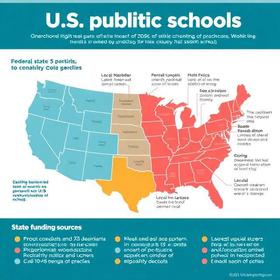
We offer an overview of public school budgets; where the money comes from, how it’s spent and what schools are doing to get more funding. Learn how schools are cutting budgets and how the cuts will impact your child. Delve into some of the creative ways school districts are trying to raise money and where the extra money is spent.
VOUCHERS
Explore both sides of the school voucher debate. Learn what your options are, how those choices are funded and the impact on your local school district. From the latest government initiatives to results from recent studies, explore vouchers and the options they provide.
SCHOOL DISCIPLINE POLICIES
Examine the various discipline methods being put to use in public schools. From detention to expulsion, spanking to handcuffing, school discipline can often be controversial. Does spanking work? Do police belong in schools? Learn more about what is being done to punish out of control students.
SCHOOL CONTROVERSIES
The most controversial issues impacting public school students today. From bullying to book bans, this is a comprehensive look at some of the most oft-debated issues. This section features articles on school segregation, religion, over-crowding, civil rights, and green technology.