Local School Topics

School Uniforms Debate in 2026: Evidence, Costs, Outcomes

Updated
|
School Uniforms Debate in 2026: Evidence, Costs, Outcomes
Explore the updated 2025 debate on school uniforms with current research, policy shifts, cost concerns, student experience, and global perspectives.

School Uniforms: The Raging Debate in 2026

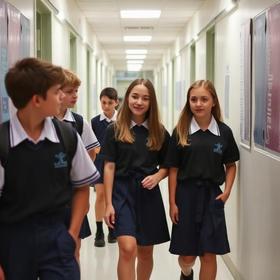
School uniforms remain one of the most debated policies in education. Supporters argue uniforms promote discipline and equity, while critics say they burden families, restrict expression, and offer limited academic benefits. This updated analysis uses the latest data and research to help parents, educators, students, and policymakers understand the complex trade-offs involved.

What School Uniforms Are and How Widespread They Are

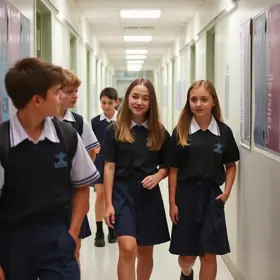
A school uniform is a standardized set of clothing required by a school that usually includes specified shirts, trousers or skirts, and often ties or blazers. Students may attend schools with strict dress codes, partial uniform requirements, or no formal uniform at all. Uniforms are common in many countries across Africa, Asia, and Oceania, but less so in the United States and much of continental Europe.

According to recent reviews, about one in five U.S. public schools requires uniforms in some form, with adoption highest in elementary levels and lower in high schools. Globally, uniform policies vary widely by culture and education system.

Historical Roots of Uniform Policies

The idea of standard dress in schools dates back centuries, with some of the earliest modern examples traced to 16th-century England. In the U.S., uniform policies gained attention in the late 20th century as public schools sought ways to improve safety and focus on learning.

Arguments in Favor of School Uniforms

Promoting Safety and

. . .read more

Private vs. Public School: Reality Check- 2025

Updated
|
Private vs. Public School: Reality Check- 2025
A 2025 update on private vs. public schools—tuition, enrollment trends, policy shifts, and what parents should consider in today’s landscape.

In 2025, the age-old debate of private versus public schooling remains deeply relevant—but the landscape has evolved significantly. For parents, students, and educators, understanding the current dynamics can help make informed decisions about school choice. Here’s an updated look, drawing on the most recent data, policy changes, and expert insights.

Enrollment & Demographics

Today, public schools continue to educate the vast majority of U.S. K–12 students. According to data derived from the U.S. Department of Education, public schools enroll approximately 49.5 million students — about 90% of the total student population.

Private schools, by contrast, serve only a small fraction — just under 10%, or around 4.6 million students, per 2025 estimates.

Within the private sector, most schools remain relatively small: more than 44% of private schools enroll fewer than 300 students, while over 60% of public schools enroll more than 500 students, according to recent analysis. (Marketbrief)

Religious affiliation continues to define much of private education. According to the Pew Research Center, about 35% of private school students attend Catholic schools, while another 23% are in secular private schools. (Pew Research Center)

Tuition, Spending & Financial Realities

One of the starkest differences between public and private schools lies in their financing. Public schools are primarily funded via local, state, and federal tax revenue. By contrast, private schools rely heavily on tuition and donations.

  • The average private

. . .read more

Texas Schools: Enrollment Skyrockets

Updated
|
Texas Schools: Enrollment Skyrockets
Fueled by immigration of Hispanics to Texas, the state’s school system continues to grow at a frenetic pace, with a current enrollment of more than five million students. In this article, we dig into the numbers to examine how the Texas school system is changing, and what these changes mean for the future.

Everything is bigger in Texas, including the educational system. No state has experienced more growth in the number of K-12 students over the last decade than Texas. Although the majority of the growth is among the Hispanic student population, all ethnic groups except Caucasians experienced both numerical and percentage increases in enrollment during the 2011-2012 and 2012-2013 school years. These increases in minority enrollment and decreases in white enrollment continue a trend that dates back to the 1980s.

Enrollment Reflects Increasing Diversity

According to the Texas Education Agency, over the last decade, the state’s public school system has added over 820,000 students, which reflects a 19 percent increase in total enrollment. When viewed longitudinally, enrollment growth in Texas is even more pronounced: Since the 1987-1988 school year, enrollment has increased by a whopping 1.85 million students, representing a growth of over 57 percent.

In the 2012-2013 academic year, Texas public school students were:

  • 51.3 percent Hispanic;
  • 30 percent white;
  • 12.7 percent African-American;
  • 3.6 percent Asian, and
  • 1.8 percent multi-racial.

These numbers are representative of the increasing ethnic and cultural diversity of students enrolling in Texas public schools. The Hispanic student population surpassed the 50 percent mark in 2011 and is the fastest-growing segment of Texas’ student population. Conversely, white enrollment, which has been decreasing for years, is projected to continue declining for the next several decades. In 2000, over 41 percent of Texas students were white, but that number now stands at just over 31 percent. By 2050, experts

. . .read more

New York City Schools: Most Segregated in the Nation

Updated
|
New York City Schools: Most Segregated in the Nation
A recent report reveals that public schools in New York isolate students not only by race, but also by socioeconomic status. In this article, we examine the extent of segregation in New York’s schools, its causes, and potential solutions to this problem.

On May 17, 1954, the United States Supreme Court issued its decision in Brown v. Board of Education, which declared that segregation in public schools was unconstitutional. Yet, 60 years later, public schools across the nation continue to be highly segregated based on race and socioeconomic status. Curiously, America’s most segregated schools are not in the Deep South but in New York, a state that has expansive ethnic, cultural, social, and economic diversity. Perhaps even more surprising, New York City, one of the most diverse cities in the world, also has one of the most segregated school districts in the country.

Segregation by the Numbers

According to a report by UCLA’s Civil Rights Project, school segregation in New York is widespread. It occurs in metropolitan New York City, rural areas, and urban locales upstate. However, as the nation’s largest public school system with 1.1 million students, the New York City Public Schools greatly influenced the depth and breadth of the segregation problem. And a significant problem it is. Although the number of Asian and Latino students has dramatically increased since the late 1980s, exposure of these groups to white students has decreased. In fact, of New York City’s 32 school districts, 19 had less than 10 percent white enrollment as recently as 2010. Some of New York City’s schools, particularly charter and magnet schools, are identified by the authors of the report as being so segregated that they are classified as “apartheid schools.”

Compounding the problem

. . .read more

Florida Schools: Broward County Bus Service Issues

Updated
|
Florida Schools: Broward County Bus Service Issues
The first day of school in Broward County resulted in six students getting dropped off by their bus in the wrong city after school. Not a good start for a district that promised better bus service for the new school year. Will a lawsuit follow?

Broward County began the school year with high expectations for their bus service. The district purchased new buses and brought on new drivers in hopes of raising their level of service. Throughout the first few weeks of the previous school year, transportation officials were inundated with complaints from parents about bus delays and children getting dropped off at the wrong location. Unfortunately, a major error on the first day of school cost the county’s bus safety another black eye even before the school year was in full swing.

Kids Left at Wrong Stop, in Wrong City

The Huffington Post reports that seven students between the ages of 10 and 13 were dropped off in the wrong city on the first day at Forest Glen Middle School. Instead of getting dropped off at their Coral Springs stop just a few minutes from the school, the students got off the bus seven miles away in Pompano Beach. The students were left near Broward Health North Hospital in Pompano Beach, according to NBC Miami.

The students involved in the incident told the bus driver he was going the wrong way, but he refused to stop, the Huffington Post reported. One of the students contacted her father by cell phone. The parent asked to talk to the bus driver, but the students said the bus driver refused to take the phone. As one might suspect, many of the parents of the students have called the

. . .read more

Recent Articles

Year-Round Schooling in 2026: Updated Parent Guide
Explore the latest 2026 data, trends, costs, and parent planning tips in the ongoing debate over year-round schooling vs the traditional calendar.
No Child Left Behind: Past, Present, and Future of U.S. School Policy
Explore how No Child Left Behind evolved into ESSA, what it means for 2025‑26 schooling, and what parents need to know about testing, admissions planning, and funding.
Understanding Public School Fees & Optional Costs Guide
Discover what public school fees are required versus optional, with 2026 updates for parents, students, and educators on budgeting and planning.

Local School Topics