Evaluating Public Schools

This section provides tools to aid in finding the best public school option for your child. Compare private and public schools, explore school zoning issues, and delve into the public school grading and ranking system. Find information on the safest schools and what they are doing right.

View the most popular articles in Evaluating Public Schools:

Gifted, Honors, and Advanced Tracks: Are They Accessible or Just Advertised?

Updated
|
Gifted, Honors, and Advanced Tracks: Are They Accessible or Just Advertised?
Learn how to evaluate gifted, honors, and advanced academic programs in public schools, including admission criteria, equity, and the questions every parent should ask.

Walk through the website of almost any public school district, and you'll likely find references to gifted education, honors classes, accelerated learning, or advanced academic pathways. These programs promise rigorous coursework, intellectual challenges, and opportunities for students to reach their full academic potential. Yet for many parents, one important question remains unanswered: Are these programs genuinely accessible to qualified students, or are they simply attractive features highlighted in school marketing materials?

The answer often depends on much more than whether a program exists. Admission requirements, identification methods, teacher recommendations, scheduling, transportation, and ongoing support all influence whether students can realistically participate. A school may advertise a robust gifted program, but if only a small percentage of students ever gain access, families deserve to understand why.

As districts continue expanding academic pathways to meet the needs of diverse learners, parents should look beyond promotional brochures and school websites. Asking thoughtful questions about how advanced programs actually operate can help determine whether these opportunities are meaningful educational experiences or simply impressive descriptions on paper.

According to the National Center for Education Statistics (NCES), schools across the country continue working to improve academic outcomes while expanding access to challenging coursework for students with varying educational needs.

Understanding the Different Types of Advanced Programs

Although the terms "gifted," "honors," and "advanced" are often used interchangeably, they frequently describe very different educational opportunities.

Gifted education is generally designed for students who demonstrate exceptional academic ability or intellectual potential. Depending on

. . .read more

When Absenteeism Signals a School Fit Problem

Updated
|
When Absenteeism Signals a School Fit Problem
Learn when student absenteeism may point to a school fit problem and how parents can respond constructively.

Missing school occasionally is part of childhood. Illness, family emergencies, and unexpected circumstances happen. But when absences become frequent or follow a recognizable pattern, they may be telling parents something more important than simply, "My child doesn't want to go to school."

Chronic absenteeism has become one of the most significant challenges facing public schools since the pandemic. The U.S. Department of Education defines chronic absenteeism as missing 10 percent or more of the school year for any reason. In a typical 180-day school year, that means about 18 days of missed instruction. While attendance interventions often focus on improving habits and removing logistical barriers, parents should also consider whether frequent absences reflect a deeper issue with the student's school experience.

Sometimes, absenteeism is not simply about avoiding school. It is about avoiding a learning environment that no longer feels like the right fit.

If you are concerned about the academic impact of missed instructional time, Public School Review's guide to consistent school attendance and academic success explains why regular attendance remains one of the strongest predictors of long-term student achievement.

What Is a School Fit Problem?

A school fit problem does not necessarily mean a school is ineffective. A highly rated school can still be the wrong environment for an individual student.

School fit refers to how well a student's academic needs, personality, learning style, interests, and social development align with the school's culture and educational approach. When those factors become misaligned, students often begin showing subtle signs of

. . .read more

The Middle School Transition: Questions Parents Should Ask Before Sixth or Seventh Grade

Updated
|
The Middle School Transition: Questions Parents Should Ask Before Sixth or Seventh Grade
Help your child succeed in middle school by asking the right questions before sixth or seventh grade. Learn what to ask about academics, safety, and student support.

For many families, the move to middle school is one of the biggest transitions in a child's education. Whether your district begins middle school in sixth or seventh grade, students suddenly face new academic expectations, multiple teachers, larger campuses, changing friendships, and greater independence. While this transition is exciting, it can also be overwhelming.

The months before middle school provide an excellent opportunity for parents to gather information and prepare their children for success. Rather than waiting until orientation day, asking thoughtful questions early can help you understand what to expect and determine whether your child will have the support needed to thrive.

As you prepare for this next step, focus on learning about the school's academic programs, student support services, safety practices, and overall culture. The answers you receive will provide valuable insight into your child's future learning environment.

Why the Middle School Transition Matters

The transition to middle school represents much more than moving to a different building. Students are entering a stage of rapid academic, emotional, and social development. Instead of spending the day with one classroom teacher, they often rotate among several teachers, manage lockers, follow more complex schedules, and balance increasing homework responsibilities. At the same time, early adolescence brings new social pressures and growing expectations for independence.

Research from the U.S. Department of Education has consistently shown that successful school transitions contribute to improved academic achievement, attendance, and student well-being. Preparing children for these changes before the school year

. . .read more

How to Spot a School Climate Problem Before Enrolling

Updated
|
How to Spot a School Climate Problem Before Enrolling
Learn how to identify school climate problems before enrolling in a public school, including warning signs, key questions, and reliable data sources.

Choosing a public school involves much more than comparing test scores or graduation rates. While academic performance is important, it doesn't always reflect what students experience each day. A school's climate, the overall quality of its learning environment, relationships, and sense of safety, plays a major role in a child's academic success and emotional well-being.

Students who feel welcomed, respected, and supported are more likely to attend school regularly, participate in class, and build positive relationships with teachers and classmates. Conversely, schools with ongoing discipline problems, poor communication, or weak student engagement can make learning more difficult, regardless of their academic reputation.

The good news is that parents can often identify potential school climate issues before enrollment. By combining campus visits with public data, conversations with current families, and careful observation, you can gain a much clearer picture of what daily life is actually like inside a school.

What Is School Climate?

School climate refers to the overall character of a school. It encompasses everything from student behavior and teacher relationships to safety, communication, inclusiveness, and the way problems are handled. Although these qualities can be difficult to measure, they often have a lasting impact on a student's educational experience.

According to the National Center for Education Statistics (NCES), positive school climates are associated with stronger academic achievement, higher attendance rates, and fewer disciplinary issues. Schools that prioritize student well-being often create environments where children are more willing to participate, collaborate, and challenge themselves academically. Parents interested in

. . .read more

Should You Move for a Better Public School or Stay Put?

Updated
|
Should You Move for a Better Public School or Stay Put?
Considering a move to a higher-rated public school? Learn how to weigh school quality, housing costs, and family priorities before relocating.

For many parents, few decisions feel as consequential as choosing the right school for their children. In communities across the country, families often face a difficult question: Should we move to access a higher-rated public school, or can our child thrive where we are?

The answer is rarely straightforward. School ratings, district rankings, and test scores can make one community appear dramatically better than another. Yet moving comes with high financial, emotional, and lifestyle costs that can affect a family just as much as a school's academic reputation.

As housing prices continue to rise in many sought-after school districts, parents are increasingly weighing whether a move is truly necessary or whether staying put may offer comparable benefits. The decision requires looking beyond rankings and considering the broader picture of what helps children succeed both in school and in life.

Why Families Consider Moving

School quality has long been one of the biggest drivers of residential decisions in the United States. Homes located in highly rated school districts often command premium prices because families are willing to pay more for access to schools with strong reputations.

The appeal is understandable. Schools with impressive academic records may offer advanced coursework, experienced teachers, robust extracurricular programs, and strong graduation rates. Many parents view these opportunities as investments in their children's futures.

However, a school's reputation does not automatically mean it is the best fit for every student. As discussed in Public School Review's article on Public School Rankings: Are

. . .read more

Recent Articles

Gifted, Honors, and Advanced Tracks: Are They Accessible or Just Advertised?
Learn how to evaluate gifted, honors, and advanced academic programs in public schools, including admission criteria, equity, and the questions every parent should ask.
Algebra Readiness: What Parents Should Ask Before Middle School
Discover how to determine if your child is ready for algebra before middle school, including the questions parents should ask and the skills students need to succeed.
How to Evaluate Reading Instruction in Your Zoned Elementary School
Learn how to evaluate reading instruction in your neighborhood elementary school by recognizing effective literacy practices, asking the right questions, and understanding what quality reading instruction looks like.

Evaluating Public Schools

SCHOOL ZONING
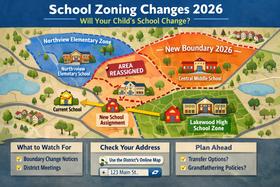
Learn more about zoning rules, how they impact schools and your child. This section offers information on the history of school zones, what they are, and how they work. Get information on who decides school boundaries and the impact those decisions have on the community.
GETTING STARTED
An overview of school designations, best practices for evaluating your options, and tips on choosing the best school for your child. Learn about Blue Ribbon, Vocational and Special Education schools. Get tips on finding the right school in a new neighborhood, city or state.
GRADING AND RANKING SCHOOLS
Explore the public school grading/ranking system, how it works and what it means. Get latest national rankings and read what critics of school grading have to say. Take a look at the nation’s top performing schools as ranked by U.S. News and Newsweek.
PUBLIC SCHOOL SAFETY
A comprehensive look at the safety of US public schools. Learn what schools are doing to combat gangs and drugs, prepare for natural disasters, and protect your children from predators. From web cameras to armed guards, see what tools public schools are employing to keep kids safe.
PUBLIC VS. PRIVATE SCHOOLS
A comparison of public and private schools, the pros and cons of each, and a look at the cost of getting a stellar education at both. Take a look at some of the most expensive schools, notable public school alumni, and learn more about “private” public schools.