School Zoning

Learn more about zoning rules, how they impact schools and your child. This section offers information on the history of school zones, what they are, and how they work. Get information on who decides school boundaries and the impact those decisions have on the community.

View the most popular articles in School Zoning:

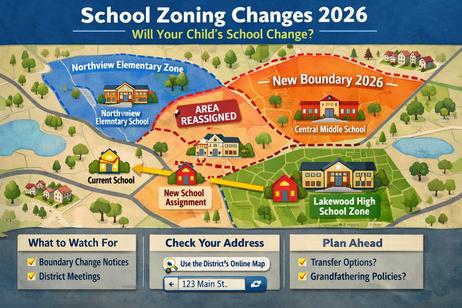
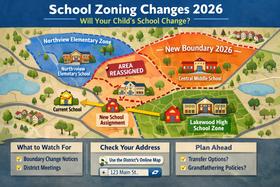
School Zoning Changes 2026: How Assignments May Shift

Updated
|
School Zoning Changes 2026: How Assignments May Shift
School Zoning Changes 2026 could affect your child’s school assignment. Learn how zoning works, what is changing, and how families can prepare.

School Zoning Changes 2026: How to Know if It Affects Your Child’s Assignment

School zoning determines which public school a child is assigned to based on where a family lives. For many households, zoning decisions shape daily routines, home values, academic options, and long-term educational planning. As districts across the country prepare for School Zoning Changes 2026, families are asking an urgent question: will these changes affect my child’s school assignment?

School Zoning Changes 2026 are being driven by enrollment shifts, housing development, capacity imbalances, and equity initiatives. While zoning updates are routine, the scale of proposed adjustments in 2026 has elevated concerns among parents, educators, and policymakers. Understanding how School Zoning Changes 2026 work, where they are happening, and what steps families should take can help reduce uncertainty and protect educational continuity.

This guide explains School Zoning Changes 2026 in clear terms, outlines warning signs that your assignment may change, and provides practical steps families can take now.

What Are School Zoning Changes 2026

School zoning refers to geographic attendance boundaries established by public school districts. These boundaries determine which elementary, middle, or high school a student attends by default. School Zoning Changes 2026 involve district-approved updates to these boundaries that take effect during the 2026 academic year.

School Zoning Changes 2026 are not random. They are typically the result of long-term planning cycles that account for:

  • Population growth or decline

. . .read more

Best School Match 2025: Public vs Charter vs Magnet Meta Description

Updated
Best School Match 2025: Public vs Charter vs Magnet  Meta Description
A 2025 guide comparing public, charter, and magnet schools to help families choose the best education match.

Best School Match 2025: Public vs Charter vs Magnet

Choosing the right school in 2025 requires understanding how traditional public schools, charter schools, and magnet programs operate in an era shaped by increased choice, shifting enrollment patterns, and growing specialization. This updated guide provides a clear comparison of each option and integrates the latest policy and demographic trends to help families make informed decisions.

1. The 2025 Landscape: Enrollment and Growth

Traditional public schools still serve the vast majority of American students, yet many districts continue adjusting to enrollment fluctuations. National data from the National Center for Education Statistics shows steady shifts in student populations across school types, with notable movement toward choice-based models.
(Link: https://nces.ed.gov)

Charter schools remain the fastest-growing segment of public education. They now serve approximately 3.7 million students at more than 8,000 campuses nationwide. Growth is strongest in states that expanded facility funding and loosened enrollment caps during 2024 and 2025.

Magnet schools form a smaller but influential portion of the education system. According to ongoing research published through the Brookings Institution, magnet programs continue to attract families seeking specialized learning environments with strong district support.
(https://www.brookings.edu)

2. Key Structural Differences

Traditional Public Schools

These schools operate under district governance and accept all students residing within zoned boundaries. They rely on local and state tax revenue, and because of their size, they typically offer broad academic and extracurricular options.

. . .read more

A Typical Day in Public School: 2025 Guide

Updated
|
A Typical Day in Public School: 2025 Guide
Explore what a typical day in public school looks like in 2025. Learn about schedules, classes, lunch, technology use, and extracurricular activities.

What Does a Typical Day Look Like in Public School?

For many families, choosing between public and private schools comes down to a question of fit. While private and boarding schools often publish sample daily schedules, families exploring public school options may wonder: What does a typical day in public school actually look like in 2025?

Public school life varies by district, grade level, and state regulations, but most schools in the United States follow a structured pattern designed to balance academic instruction, social development, and extracurricular opportunities. This article breaks down a standard day in public school, while also highlighting how schedules are evolving in response to new technology, post-pandemic changes, and growing awareness of student well-being.

The Structure of a Public School Day

Start Times and Morning Routines

Most public schools in the U.S. begin between 7:30 a.m. and 8:30 a.m. Elementary schools often start earlier, while middle and high schools have been shifting later in recent years. In 2025, more districts have adopted later high school start times, reflecting research from the American Academy of Pediatrics showing that adolescents benefit from additional morning sleep.

A typical morning includes:

  • Arrival and homeroom or advisory check-in

  • Announcements, attendance, and pledge (in many schools)

  • First academic block, often English or math

Class Periods and Core Subjects

Public school schedules are usually broken into six to eight periods of 40–60 minutes each. Some districts use block scheduling, with four longer classes rotating every other day.

Core subjects include:

  • English

. . .read more

Why You Need to Research School Districts When Buying a Home

Updated
|
Why You Need to Research School Districts When Buying a Home
Whether you have children or not, researching school districts is a crucial step when buying a new home.

If you’re in the market for a new home you better be researching local school districts – it could mean all the difference for your family, whether you have children or not.

When people search for a new home, there are many factors that weigh in on their decision: price, amenities, neighborhood, the square footage, rent or own, new or old, and much more. Don’t make the mistake of forgetting to add another important aspect of home buying to this research list- school districts. Even if you don’t have, or never plan to have school-age children, school districts can still have quite an impact on your home value and living area.

Mark Schreier of Century 21 American Homes discusses the importance of considering school districts when buying a home.

Here are four of the main reasons why the quality of school districts is something that you need to keep in mind when you buy your next home.

1. A Good School District = A Good Neighborhood

All other things constant, a good school district tends to equal a good neighborhood. And when it comes to real estate, the name of the game is location, location, location. Great location can mean safer neighborhoods, an abundance of places to eat, ease of access to transportation, proximity to urban, beach or vacation areas, and amenities like public parks and services.

If you do have kids, a good location

. . .read more

Recent Articles

Public School Open House & Enrollment Season Guide for Parents
Learn what to ask at a public school open house during enrollment season, from academics to safety, to choose the right school for your child.
School Zoning Changes 2026: How Assignments May Shift
School Zoning Changes 2026 could affect your child’s school assignment. Learn how zoning works, what is changing, and how families can prepare.
School Vouchers: Updated Pros and Cons (2025 Review)
Comprehensive 2025 analysis of school vouchers, weighing benefits and challenges for families, funding, outcomes, and policy directions.