Evaluating Public Schools

This section provides tools to aid in finding the best public school option for your child. Compare private and public schools, explore school zoning issues, and delve into the public school grading and ranking system. Find information on the safest schools and what they are doing right.

View the most popular articles in Evaluating Public Schools:

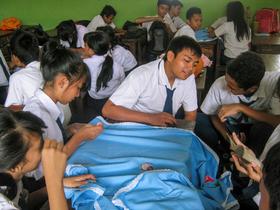
A Typical Day in Public School: 2025 Guide

Updated
|
A Typical Day in Public School: 2025 Guide
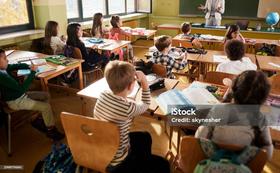
Explore what a typical day in public school looks like in 2025. Learn about schedules, classes, lunch, technology use, and extracurricular activities.

What Does a Typical Day Look Like in Public School?

For many families, choosing between public and private schools comes down to a question of fit. While private and boarding schools often publish sample daily schedules, families exploring public school options may wonder: What does a typical day in public school actually look like in 2025?

Public school life varies by district, grade level, and state regulations, but most schools in the United States follow a structured pattern designed to balance academic instruction, social development, and extracurricular opportunities. This article breaks down a standard day in public school, while also highlighting how schedules are evolving in response to new technology, post-pandemic changes, and growing awareness of student well-being.

The Structure of a Public School Day

Start Times and Morning Routines

Most public schools in the U.S. begin between 7:30 a.m. and 8:30 a.m. Elementary schools often start earlier, while middle and high schools have been shifting later in recent years. In 2025, more districts have adopted later high school start times, reflecting research from the American Academy of Pediatrics showing that adolescents benefit from additional morning sleep.

A typical morning includes:

  • Arrival and homeroom or advisory check-in

  • Announcements, attendance, and pledge (in many schools)

  • First academic block, often English or math

Class Periods and Core Subjects

Public school schedules are usually broken into six to eight periods of 40–60 minutes each. Some districts use block scheduling, with four longer classes rotating every other day.

Core subjects include:

  • English

. . .read more

15 Failures of U.S. Public Education in 2025

Updated
|
15 Failures of U.S. Public Education in 2025
Updated for 2025: the 15 biggest failures of the American public education system, with new data, expert insights, and reform examples.

The 15 Biggest Failures of the American Public Education System in 2025

Introduction

American public education is at a crossroads. Once hailed as a global standard, the system today faces deep, structural problems that undermine its ability to deliver on its promise of equity and opportunity. From worsening academic performance to chronic underfunding, the failures of the American public education system are not isolated issues but interconnected challenges.

In 2025, the stakes have never been higher. Recent changes within the U.S. Department of Education, demographic shifts, and a surge in private school enrollment have all placed new pressures on public schools. This article examines 15 of the most pressing failures, updated with the latest data and examples, and provides a roadmap for parents and educators seeking context.

1. Academic Decline

The most visible failure is academic performance. According to the 2024 NAEP “Nation’s Report Card,” 12th graders posted the lowest reading results in more than three decades, with over 30% unable to demonstrate basic proficiency. Math scores also plunged, with nearly half of students unable to perform fundamental operations (Reuters).

This crisis affects college readiness, workforce preparation, and global competitiveness. As we outlined in our Private vs. Public Schools: 2025 Guide, many families are seeking alternatives due to these declines.

2. Widening Achievement Gaps

Beyond raw scores, the disparities between high- and low-performing students have widened. NAEP science data revealed the largest gap in 25 years among eighth graders, while math

. . .read more

10 Advantages of Public Education in 2025

Updated
|
10 Advantages of Public Education in 2025
Explore 10 key benefits of public education in 2025, with fresh statistics, expert insights, and real-world examples for parents and educators.

10 Advantages to Public Education in 2025

Introduction

Public schools remain the cornerstone of American education, serving nearly 50 million students nationwide. While recent years have brought challenges—such as test score declines reported in the 2024 NAEP “Nation’s Report Card”—the system still provides enduring benefits. These advantages to public education continue to support families, build communities, and prepare students for future success.

Below, we explore 10 key advantages of public education in 2025, drawing from the latest data, expert perspectives, and real-world examples.

1. Universal Access at No Tuition Cost

Perhaps the greatest advantage to public education is that it is available to all children at no direct cost to families. Unlike private or parochial schools, which can charge tuition upwards of $15,000–$25,000 per year, public schools are funded primarily by state, local, and federal governments.

According to the National Center for Education Statistics (NCES), roughly 49.6 million students were enrolled in public elementary and secondary schools in fall 2022. That represents about 90% of the school-age population—making public schools the most accessible educational option in the country (NCES).

This universal access not only reduces financial burden on families but also ensures that every child has the right to a baseline of quality education, regardless of socioeconomic status.

2. Diversity and Inclusion in the Classroom

Public schools reflect the communities they serve, making them hubs of cultural, linguistic, and socioeconomic diversity. This is one of the most meaningful advantages to public education,

. . .read more

School Choice vs. Neighborhood Schools: Key Factors

Updated
|
School Choice vs. Neighborhood Schools: Key Factors
Explore school choice vs. neighborhood schools in 2025. Learn key factors parents should weigh when deciding the best fit for their child.

School Choice vs. Neighborhood Schools:

What Parents Should Consider

Choosing the right school for a child has never been more complex—or more important. In 2025, families are navigating a diverse educational landscape shaped by policy shifts, demographic changes, and evolving expectations of what schools should provide. Two primary pathways dominate the conversation: school choice (charter schools, private schools, magnet programs, and homeschooling options) and neighborhood schools (the traditional public school assigned by residence).

This article explores the benefits, challenges, and considerations of both models, offering parents a framework to make an informed decision.

Understanding the Basics

What Is School Choice?

School choice refers to policies and programs that allow families to select schools beyond their assigned public school. Options include:

  • Private schools (boarding, day, religious, or independent)

  • Charter schools (publicly funded but independently operated)

  • Magnet schools (public schools with specialized curricula)

  • Virtual schools and homeschooling

The principle behind school choice is that families should not be restricted by zip code when selecting the best environment for their child.

What Are Neighborhood Schools?

Neighborhood schools are the default option in most U.S. communities. Enrollment is based on residence, with children attending the school within their geographic district. These schools often serve as community hubs, offering stability, extracurricular opportunities, and strong local identity.

School Choice vs. Neighborhood Schools: A Side-by-Side Comparison

FactorSchool ChoiceNeighborhood Schools
AccessRequires applications; sometimes lotteries or tuitionOpen to all local residents
CostVaries: private schools charge tuition; charter and magnet schools are freeFree (funded by taxes)
CurriculumSpecialized
. . .read more

U.S. Public vs. Private Schools 2025 Guide

Updated
|
U.S. Public vs. Private Schools 2025 Guide
Compare 2025 U.S. public and private school options, tuition, enrollment, and outcomes to make informed education decisions.

A Quick Guide to U.S. Public and Private School Options (2025 Update)

Introduction

For many families, the choice between public and private education remains one of the most important decisions they will make for their children. While public schools continue to serve the vast majority of American students, private schools offer different learning environments and benefits that appeal to certain families. In 2025, with tuition costs shifting, demographics evolving, and policies changing, the landscape of schooling options is more complex than ever. This guide offers a clear, updated overview to help parents, students, and educators navigate these choices.

Enrollment and Demographics

Public schools enroll about 49.5 million students nationwide, making up roughly 90% of the K–12 population, according to the U.S. Department of Education. By contrast, private schools educate just under 10% of U.S. students, totaling around 4.6 million. Charter schools, which remain public but operate independently, continue to expand, now accounting for more than 7% of total enrollment.

Regionally, private school enrollment is highest in the Northeast, where nearly 13% of students attend independent institutions, while in the West the figure is closer to 8%. Research from Education Week notes that more than 44% of private schools enroll fewer than 300 students, offering more intimate environments. By comparison, over 60% of public schools have enrollments exceeding 500 students, providing greater scale but often less individualized attention.

Tuition and Spending

Public schools are funded primarily through local, state, and federal tax revenues, with an average per-pupil expenditure

. . .read more

Recent Articles

Public School Rankings: Are They Accurate?
Explore how accurate public school rankings really are, their limitations, and how parents can interpret them in 2026.
Public School Schedule Options Explained for Families
Learn how public school schedule options like year-round calendars, block scheduling, and later start times affect students and families in 2026.
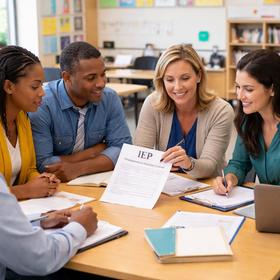
How to Request Special Education Services at School Registration
A step-by-step guide for families on how to request special education services at school registration, including IEPs, 504 plans, timelines, and tips.

Evaluating Public Schools

SCHOOL ZONING
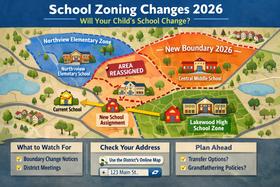
Learn more about zoning rules, how they impact schools and your child. This section offers information on the history of school zones, what they are, and how they work. Get information on who decides school boundaries and the impact those decisions have on the community.
GETTING STARTED
An overview of school designations, best practices for evaluating your options, and tips on choosing the best school for your child. Learn about Blue Ribbon, Vocational and Special Education schools. Get tips on finding the right school in a new neighborhood, city or state.
GRADING AND RANKING SCHOOLS
Explore the public school grading/ranking system, how it works and what it means. Get latest national rankings and read what critics of school grading have to say. Take a look at the nation’s top performing schools as ranked by U.S. News and Newsweek.
PUBLIC SCHOOL SAFETY
A comprehensive look at the safety of US public schools. Learn what schools are doing to combat gangs and drugs, prepare for natural disasters, and protect your children from predators. From web cameras to armed guards, see what tools public schools are employing to keep kids safe.
PUBLIC VS. PRIVATE SCHOOLS
A comparison of public and private schools, the pros and cons of each, and a look at the cost of getting a stellar education at both. Take a look at some of the most expensive schools, notable public school alumni, and learn more about “private” public schools.