Uniforms: The Pros and Cons
The prevalence of uniforms in public schools continues to rise in the United States as parents and school administrators exert efforts to create safe environments in our schools.
- According to the National Center for Education Statistics, nearly 20% of all public schools have adopted uniform mandates.
- Approximately 22% of elementary schools, 19% of all middle schools, and 10% of high schools currently require uniforms, and this trend continues to accelerate.
Although uniforms have been a mainstay of private schools, public schools didn’t jump on the bandwagon until 1994, when the Long Beach California School District integrated school uniforms to address safety issues challenging the district.
- According to the school district data, within one year after the implementation of uniforms, the fights and muggings at school decreased by 50%, while sexual offenses were reduced by 74%.
- Across the country, similar statistics abound; for example, at Ruffner Middle School in Norfolk, VA, the number of discipline referrals decreased by 42% once uniforms were enforced.
Fueled by these statistics, more schools nationwide require uniforms in their public schools, naming school safety as their primary motivation.
- Even with these compelling statistics, other statistics argue that uniforms are not as beneficial as school administrators and parents are encouraged to believe.
- Opponents cite research that shows a lack of individualism and comfort among students, working to decrease student learning and success.
- Thus, the question remains: are public school uniforms good for your child?
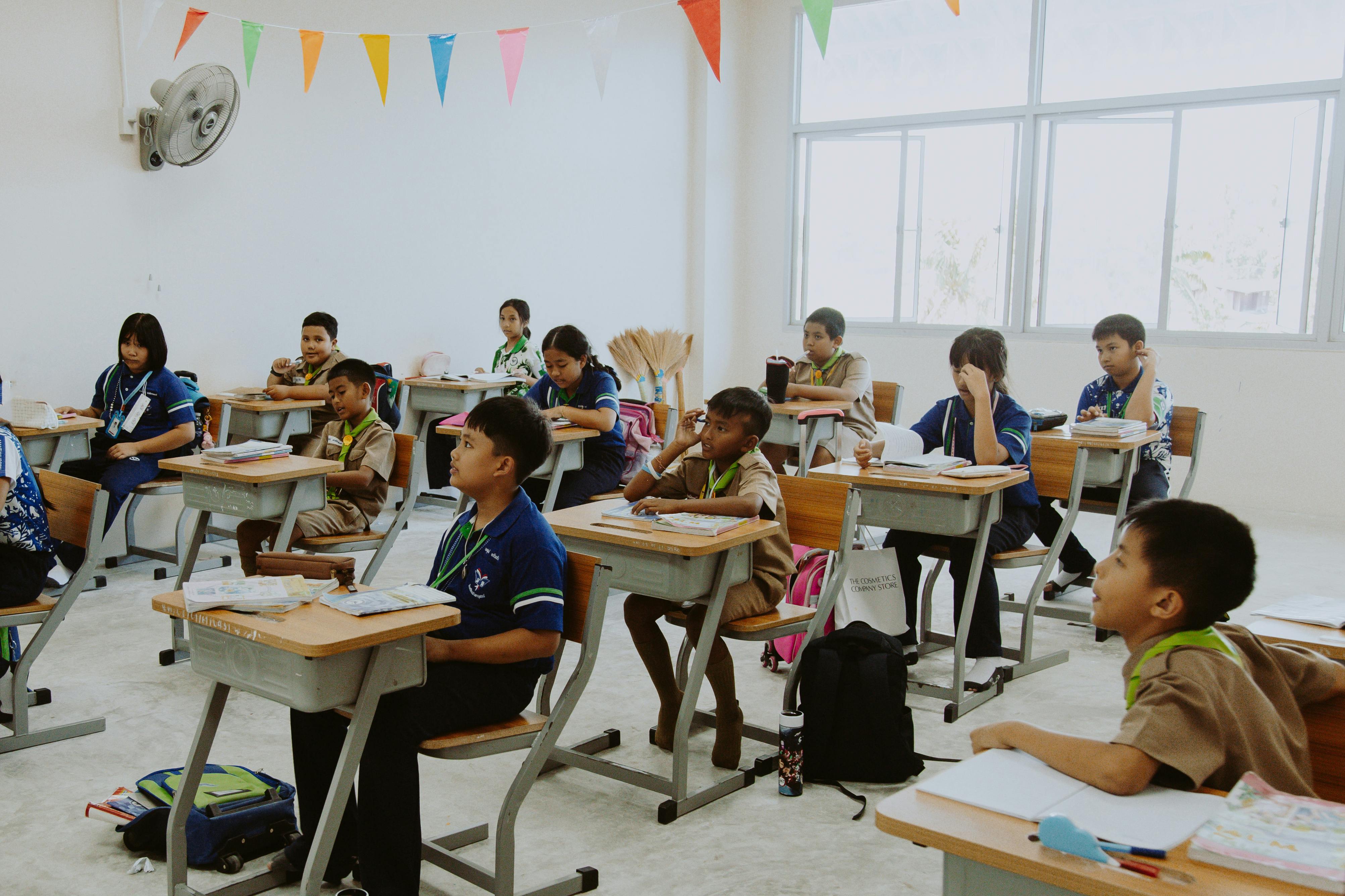
The Benefits of Public School Uniforms: Safer Learning Environment
Many school administrators and parents believe that uniforms create a better learning environment.
- First and foremost, many administrators claim that students are not as distracted by how they look and, therefore, spend more time learning at school.
- The peer pressures of stylish dressing with the “best” brands are alleviated, especially when students may not wear uniform pieces from name-brand companies.
- This allows students to focus more on their schoolwork rather than social appearances.
- Furthermore, the socioeconomic differences present among students are minimized when all students must wear the same school uniforms, no longer feeling the pressure to “fit in” with the right clothing choices.
This video from the Today Show discusses the uniform issue.
According to school-reported statistics and the School Administrator, the mandate of uniforms on campuses has reduced tardiness, skipped classes, suspensions, and discipline referrals among students.
- In addition, with the visual uniformity across all students, the instance of school pride has increased.
- Like athletic team uniforms, proponents argue that dressing cohesively increases pride, unity, and a renewed commitment to the school.
- With uniforms, a more professional tone is set in a school, encouraging students to take their studies more seriously.
Uniforms at school also reduce the prevalence of violence, which is a major concern for many public schools.
- Outsiders who do not belong on campus are easily identified and, thus, do not pose a great threat to the students.
- Additionally, uniforms reduce the prevalence of “cliques” and gangs on school campuses as students must only wear specific colors and uniform pieces.
- A school may only allow green or yellow polo shirts and khaki bottoms, for example, preventing students from wearing the traditional gang-identifying colors of red and blue.
- Accessories such as bandanas, another distinguishing gang clothing characteristic, can also be eliminated from the school dress code.
- When it is more difficult to identify members of gangs in school, the fights and violence between rival gangs decrease.
Disadvantages: Denial of Self-Expression and Comfort
The opponents of public school uniforms, as outlined by the ACLU’s argument for the First Amendment, argue that uniforms stifle students' need for self-expression.
- By denying students the opportunity to express their unique personality through the clothing they select fully, individualism cannot develop to its fullest capacity.
- When children select their clothing, they can develop confidence and independence, characteristics vital to personality development and adult success.
- Denying students the ability to express individualism and belief in a sub-culture, whether preppy, hip-hop, punk, or jock, could stymie the students’ transition from childhood into adulthood.
- Controlling the socialization process could harm the student as an adult, as they are not prepared for the real world, where they will be judged by their appearance.
Proponents of uniforms argue that they will bring conformity among students, resulting in increased safety.
- Still, when students are limited in what they may wear, they will find other ways to react against authority and the limits uniform policies place on their individual nature.
- Students denied clothing expression may resort to more problematic forms of rebellion, including extreme hairstyles or defiant behavior.
In addition, opponents argue that uniforms may not be comfortable for all students, limiting learning as students worry about their appearance.
- Student comfort is important to maximize learning outcomes, and uniforms may stymie academic focus.
- For example, the uniform standard may require students to wear polo shirts tucked into khaki slacks.
- Students who are overweight may feel very self-conscious about their bodies. Additionally, female students may feel insecure about their bodies and feel that having a tucked-in shirt will bring attention to their developing figures.
- When students do not feel comfortable in the required school uniform, their focus will shift from learning.
- Children, especially those in middle and high school, are constantly concerned about their appearance, and wearing a school uniform will not alleviate this concern.
Addressing the Issue of Decreased Violence among Gangs
An additional argument put forth by those in favor of uniforms advocates that they decrease violence among students involved in gangs because there will be less chance of identifying gang members through the clothing colors they wear.
- Though students may be limited in wearing a particular color, they will find other ways to identify their gang participation, from the hairstyles they select to how they wear the required uniform.
- For example, gang students may all choose the same type of belt to show unity or shave their hair similarly.
The Mixed Response from Parents: Cost-effectiveness of Wearing Uniforms
Whereas some parents believe that uniforms are more cost-effective than purchasing the latest stylish clothes, others argue that the cost of uniforms is steep.
- Typically, uniforms are more expensive up-front, as the parent must invest in all of the staples at the beginning of the school year.
- For example, there are collared or polo shirts of various colors, khaki or black pants, black or brown belts, shoes, and solid-colored sweaters. Though this is an expense at the beginning, there are only small expenses that need to be made as the school year progresses.
- On the other hand, many parents argue that uniforms are not economical, as they must purchase both a school wardrobe and a casual wardrobe, as children do not want to wear their uniform clothes outside school.
Final Thoughts
Unfortunately, the decision to require school uniforms among children is not as transparent as it might first appear.
Many factors must be considered, from overall school safety to the lack of self-expression students may encounter with their implementation.
The arguments are best summed up by Dr. Alan Hilfer, a senior child and adolescent psychologist, who states, “Uniforms do eliminate competition, pressure, and assaults perpetrated by kids on younger kids for their sneakers and possessions.
They also allow some kids to focus better, especially in the lower grades…
However], clothes are a source of expression for children, and as they age, they become increasingly resentful of uniforms.”
Deciding whether uniforms are right for your child depends upon individual circumstances.
- If your child has a high need for self-expression and personal comfort in her clothing, then uniforms may create unhealthy resentment and result in negative behaviors from your child.
- On the other hand, if you believe your child needs to focus more on academics than physical and social appearances, uniforms may help level the social pressures associated with independent dressing.
Understanding what elements are most important for you and your child will help you determine if school uniforms are the right fit.
Questions? Contact us on Facebook and Instagram. @publicschoolreview
#SchoolUniforms #EducationDebate #StudentSafety #SelfExpression #SchoolPolicy #publicschools