Top Rankings
Los Banos Unified School District ranks among the top 20% of public school district in California for:
Category
Attribute
Graduation Rate
Highest graduation rate (Top 10%)
Community Size
Largest student body (number of students) (Top 1%)
For the 2026-27 school year, there are 3 public middle schools serving 1,933 students in Los Banos Unified School District. This district's average middle testing ranking is 3/10, which is in the bottom 50% of public middle schools in California.
Public Middle Schools in Los Banos Unified School District have an average math proficiency score of 15% (versus the California public middle school average of 32%), and reading proficiency score of 32% (versus the 46% statewide average).
Minority enrollment is 91% of the student body (majority Hispanic), which is more than the California public middle school average of 78% (majority Hispanic).
Overview
This School District
This State (CA)
# Schools
18 Schools
3,459 Schools
# Students
11,020 Students
1,857,843 Students
# Teachers
478 Teachers
88,071 Teachers
Student-Teacher Ratio
23:1
23:1
Student By Grade
District Rank
Los Banos Unified School District, which is ranked #1398 of all 1,903 school districts in California (based off of combined math and reading proficiency testing data) for the 2022-2023 school year.
The school district's graduation rate of 94% has decreased from 96% over five school years.
Overall District Rank
#1370 out of 1932 school districts
(Bottom 50%)
(Bottom 50%)
Math Test Scores (% Proficient)
20%
34%
Reading/Language Arts Test Scores (% Proficient)
33%
47%
Science Test Scores (% Proficient)
15%
29%
Graduation Rate
94%
86.2%
Chronically Absent Students
(2022-23)32.6%
27.7%
Students by Ethnicity:
Diversity Score
0.23
0.64
% American Indian
n/a
1%
% Asian
1%
11%
% Hispanic
88%
55%
% Black
1%
5%
% White
8%
22%
% Hawaiian
1%
n/a
% Two or more races
1%
6%
All Ethnic Groups
District Revenue and Spending
The revenue/student of $21,665 in this school district is less than the state median of $26,022. The school district revenue/student has grown by 15% over four school years.
The school district's spending/student of $18,071 is less than the state median of $22,604. The school district spending/student has grown by 7% over four school years.
Total Revenue
$239 MM
$150,628 MM
Spending
$199 MM
$130,845 MM
Revenue / Student
$21,665
$26,022
Spending / Student
$18,071
$22,604
Best Los Banos Unified School District Public Middle Schools (2026-27)
School
(Math and Reading Proficiency)
(Math and Reading Proficiency)
Location
Quick Facts
Rank: #11.
Creekside Junior High School
(Math: 15% | Reading: 33%)
Rank:
Rank:
3/
Bottom 50%10
1401 Prairie Springs Dr.
Los Banos, CA 93635
(209) 826-1005
Los Banos, CA 93635
(209) 826-1005
Gr: 7-8 | 812 students Student-teacher ratio: 20:1 Minority enrollment: 88%
Rank: #22.
Los Banos Junior High School
(Math: 16% | Reading: 31%)
Rank:
Rank:
3/
Bottom 50%10
1750 San Luis St.
Los Banos, CA 93635
(209) 826-0867
Los Banos, CA 93635
(209) 826-0867
Gr: 7-8 | 938 students Student-teacher ratio: 21:1 Minority enrollment: 93%
Rank: #33.
Crossroads Alternative Education Center
Alternative School
(Math: ≤5% | Reading: 20-24%)
Rank:
Rank:
1/
Bottom 50%10
929 West Pacheco Blvd.
Los Banos, CA 93635
(209) 826-4013
Los Banos, CA 93635
(209) 826-4013
Gr: K-12 | 183 students Student-teacher ratio: 23:1 Minority enrollment: 92%
Recent Articles

How Much Choice Do High School Students Have?
Learn how graduation requirements, prerequisites, electives, staffing, scheduling conflicts, AP courses, dual enrollment, and career pathways determine how much control high school students have over schedules each year.

Does Your Child Need More Recess?
Explore whether your child may benefit more from recess than another academic period, including research on attention, learning, physical activity, stress, social development, and school-day balance today.
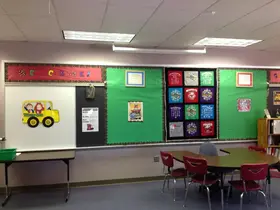
Combined Grade Classrooms, What Parents Should Know
Learn how combined-grade classrooms work, why public schools use them, potential benefits and challenges, and the questions parents should ask before enrolling their child in one today.