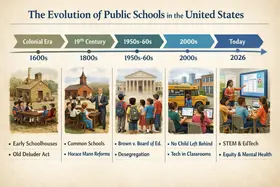
Mason High School serves 51 students in grades 9-11.
The percentage of students achieving proficiency in math was <50% (which was lower than the Illinois state average of 58%). The percentage of students achieving proficiency in reading/language arts was <50% (which was lower than the Illinois state average of 58%).
The student-teacher ratio of 1:1 was lower than the Illinois state level of 13:1.
School Overview
Grades Offered
Grades 9-11
Total Students
51 students
Total Classroom Teachers
37 teachers
School Rankings
Math Test Scores (% Proficient)
(12-13)<50%
58%
Reading/Language Arts Test Scores (% Proficient)
(12-13)<50%
58%
Student-Teacher Ratio
1:1
13:1
American Indian
n/a
n/a
Asian
2%
6%
Hispanic
2%
29%
Black
96%
16%
White
n/a
45%
Hawaiian
n/a
n/a
Two or more races
n/a
4%
All Ethnic Groups
Eligible for Free Lunch
90%
43%
School Statewide Testing
School District Name
Source: National Center for Education Statistics (NCES), IL Dept. of Education
Frequently Asked Questions
What percent of students have achieved state testing proficiency in math and reading?
<50% of students have achieved math proficiency (compared to the 58% IL state average), while <50% of students have achieved reading proficiency (compared to the 58% IL state average).
How many students attend Mason High School?
51 students attend Mason High School.
What is the racial composition of the student body?
96% of Mason High School students are Black, 2% of students are Asian, and 2% of students are Hispanic.
What is the student-teacher ratio of Mason High School?
Mason High School has a student ration of 1:1, which is lower than the Illinois state average of 13:1.
What grades does Mason High School offer ?
Mason High School offers enrollment in grades 9-11
What school district is Mason High School part of?
Mason High School is part of Chicago Public Schools District 299.
Recent Articles
The First Six Weeks at a New Public School
The first six weeks reveal how children are adapting to a new public school. Learn which academic, social, emotional, attendance, and routine signals parents should monitor closely.
Will Your Child Receive Enough Individual Attention? Looking Beyond Student-Teacher Ratios
Student-teacher ratios reveal only part of a school’s story. Learn how families can evaluate class size, staffing, teacher access, tutoring, feedback, and personalized support for children today.

What Families Should Ask About AI Use in Public Schools
Families need clear answers about classroom AI. Learn what to ask public schools about teaching, academic integrity, privacy, teacher oversight, equity, and student learning before concerns arise.