Public School Rankings: Are They Accurate?
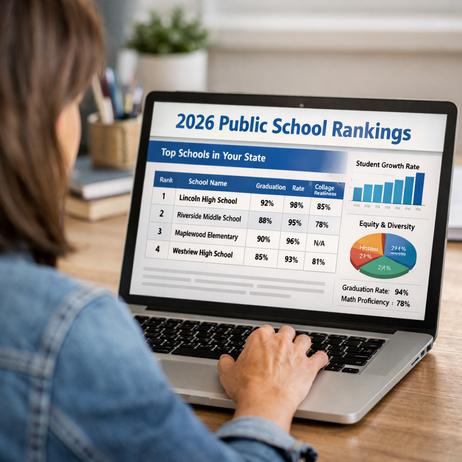
Each year, families across the country search online for the “best” schools in their area. Public school rankings promise quick answers, sortable lists, and easy comparisons. In a few clicks, parents can view a school’s position within their state, district, or even nationwide.
But are public school rankings accurate? And more importantly, do they tell the whole story?
In 2026, ranking systems are more sophisticated than ever. They draw on standardized test scores, graduation rates, college readiness indicators, and demographic data. Yet despite increased transparency and improved methodologies, school rankings remain an imperfect tool. Understanding how they work, and what they miss, is essential for families making high-stakes decisions.
How Public School Rankings Are Calculated in 2026
Most public school rankings rely on publicly available data reported to state education agencies and the federal government. Much of this information is collected through the U.S. Department of Education’s data systems and standardized testing programs.
Today’s ranking formulas typically include:
- Standardized test scores in math, reading, and science
- Graduation rates
- College readiness indicators, such as AP or IB participation
- Student growth metrics
- Equity measures, including subgroup performance
- Student-to-teacher ratios
For example, organizations such as U.S. News & World Report publish annual K-12 rankings based on academic performance and state assessment data. Meanwhile, nonprofit platforms like GreatSchools combine test scores with parent reviews and equity indicators.
In recent years, ranking methodologies have evolved. Growth data, which measures how much students improve over time, now carries more weight in many systems. Equity metrics are also increasingly emphasized, reflecting broader conversations about access and opportunity in public education.
However, even with methodological improvements, rankings depend heavily on standardized assessments. That reliance shapes what schools are rewarded for and what is overlooked.
What Public School Rankings Measure Well
Public school rankings can provide useful, standardized comparisons. They are particularly effective at highlighting:
-
Academic Performance Trends
Rankings make it easier to compare proficiency rates and growth across districts and states. Families relocating to a new area often rely on these metrics for an initial screening. -
College Readiness Indicators
Advanced coursework participation, SAT and ACT performance, and graduation rates offer insight into how well schools prepare students for postsecondary education. -
Equity Gaps
Many 2026 ranking systems disaggregate performance by subgroup, allowing parents to see whether schools are effectively serving all students.
When used as a starting point, rankings can help families narrow down options. They are especially helpful in large metropolitan areas with dozens of potential choices.
What Rankings Often Overlook
Despite their convenience, public school rankings do not capture many qualities that define a strong educational experience.
-
School Climate and Culture
Rankings rarely measure student engagement, safety, teacher morale, or sense of belonging. A school with average test scores but exceptional leadership and a supportive environment may be undervalued. Families concerned about safety, for example, should look beyond ranking lists and consult district-level safety reports and resources such as our guide on School Safety Statistics in Public Schools. -
Extracurricular Opportunities
Music programs, athletics, robotics teams, theater productions, and service-learning initiatives rarely factor into ranking algorithms. Yet for many students, these programs are central to personal growth and college applications. -
Specialized Programs
Magnet schools, career and technical education pathways, and dual-language programs often offer unique strengths that standardized metrics cannot fully capture. -
Socioeconomic Context
Research consistently shows that standardized test scores correlate strongly with family income. According to the National Center for Education Statistics, socioeconomic status remains one of the strongest predictors of academic performance. This does not mean high-performing schools are ineffective. It means rankings sometimes reflect community demographics as much as instructional quality.
The Post-Pandemic and AI Era Impact
By 2026, public schools are still addressing learning recovery from the pandemic years. Growth metrics have become increasingly important because proficiency rates alone do not reflect how far students have progressed.
Additionally, the integration of artificial intelligence tools in classrooms has introduced new variables. Some districts have leveraged AI-powered tutoring and adaptive learning platforms to accelerate growth. Others face uneven implementation due to funding disparities.
Ranking systems have struggled to account for these emerging instructional innovations. A school pioneering effective AI integration may not immediately see its ranking improve if standardized scores lag behind implementation.
The result is a lag between innovation and recognition.
A Closer Look at Ranking Limitations
Below is a simplified comparison of what rankings typically include versus what families should also consider:
| Rankings Commonly Measure | Often Not Measured |
| Test scores | Student engagement |
| Graduation rates | Teacher retention rates |
| AP/IB participation | School leadership quality |
| Student growth | Mental health support services |
| Equity gaps | Strength of arts and athletics |
Families evaluating public school rankings should view them as one data point among many, not a final verdict.
How to Use Public School Rankings Wisely
Rather than dismissing rankings altogether, families can use them strategically.
-
Start Broad, Then Dig Deeper
Rankings are useful for initial comparisons. After identifying potential schools, explore district websites, attend open houses, and schedule campus visits. For guidance on evaluating school performance data, our article on How to Evaluate Public School Test Scores provides practical tips for interpreting assessment results. -
Review Multiple Sources
Different ranking platforms weigh criteria differently. Comparing two or three systems can reveal patterns and inconsistencies. Families can also review state accountability dashboards, often available through state departments of education. -
Look at Growth, Not Just Proficiency
A school where students enter below grade level but make strong annual gains may be more effective than one with high static proficiency rates. The shift toward growth metrics aligns with research from organizations such as the Brookings Institution, which emphasizes the importance of measuring student progress rather than absolute scores. -
Consider Demographic Context
High-performing schools in affluent areas may benefit from extensive community resources. Understanding context helps families interpret data more accurately. Our overview of Public School Demographics and Statistics offers additional insight into how community factors influence outcomes. -
Prioritize Fit Over Rank
The “best” school for one child may not be the best for another. A student passionate about performing arts, for example, may thrive at a school with strong creative programs, even if it ranks lower academically. Fit includes:- Class size preferences
- Academic rigor
- Social environment
- Transportation logistics
- Specialized support services
Rankings cannot measure personal fit.
The Psychological Impact of Rankings
An often overlooked consequence of public school rankings is their effect on communities.
High rankings can increase property values and enrollment pressure. Lower rankings can stigmatize schools, even when dedicated educators are achieving meaningful progress.
Educators have expressed concern that oversimplified rankings may discourage innovation or narrow curricula toward test preparation. When schools feel judged primarily by standardized metrics, enrichment opportunities sometimes receive less emphasis.
In 2026, many education leaders advocate for more holistic accountability systems that balance academic rigor with whole-child development.
Are Public School Rankings Getting Better?
The short answer is yes, but with limits.
Recent improvements include:
- Greater transparency in methodology
- Inclusion of growth data
- Increased emphasis on equity
- Clearer data visualization
However, rankings remain constrained by available data. Until systems can reliably measure school climate, student well-being, creativity, and leadership quality, rankings will continue to offer only a partial picture. Families who understand this limitation are better equipped to make informed decisions.
Final Verdict: Are Public School Rankings Accurate?
Public school rankings are accurate within a narrow definition of accuracy. They accurately reflect certain measurable academic indicators. They do not fully capture the lived experience of students, teachers, and families.
Think of rankings as a snapshot, not a documentary. They provide useful information, but they cannot tell the entire story.
In 2026, the most informed families use public school rankings as a starting point. They supplement them with school visits, conversations with administrators, parent testimonials, and deeper research into programs and culture.
The goal is not to find the highest-ranked school. The goal is to find the right school.
By approaching rankings with both curiosity and caution, parents can turn a simple list into a meaningful, informed decision that supports long-term student success.