Do We Still Need Libraries in Public Schools?
As we settle into 2026, the question “Do we still need libraries in public schools?” continues to surface in education policy debates, budget discussions, and classroom planning sessions. With ubiquitous digital devices and increasingly connected learning environments, some may wonder whether traditional library spaces and services still matter. The short answer: yes — now more than ever.
Public school libraries have evolved far beyond rows of dusty books. Today’s libraries are dynamic learning hubs that blend literacy, technology, community, and equity. This article examines the continuing importance of libraries in public schools, how they’ve adapted to 21st‑century needs, and why eliminating them could undermine educational outcomes.
The Library’s Core Mission: Literacy and Learning
At their heart, school libraries promote reading — a foundational skill linked to academic success across subjects. Research consistently shows that access to diverse reading materials improves comprehension, vocabulary, and lifelong learning motivation.
Libraries help bridge gaps in literacy skills, especially for students who may not have access to books at home. According to the American Library Association (ALA), school libraries staffed by credentialed librarians correlate with better reading test scores and higher graduation rates.¹ Access to both print and digital resources ensures that students with different learning preferences and needs can engage meaningfully with texts.
Library programs also support broader literacy efforts such as:
- Summer reading initiatives that counter the “summer slide.”
- Curated collections of multicultural and diverse authors.
- Targeted support for English language learners and struggling readers.
For additional context on how schools support academic success, see our article on factors that influence public school quality.
More Than Books: Libraries as Learning Hubs
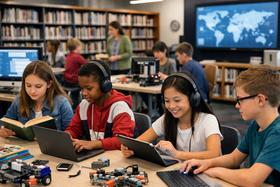
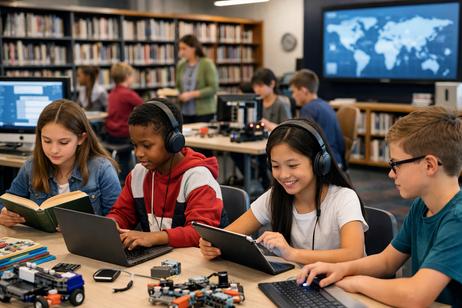
In 2026, school libraries are not merely book repositories. They are instructional partners and innovation centers. Many libraries offer:
- Makerspaces for hands‑on STEAM learning.
- Media labs for video, audio, and digital content creation.
- Collaborative workspaces for group projects and problem‑based learning.
These spaces help students develop 21st‑century skills — such as critical thinking, creativity, and digital literacy — which are essential in today’s workforce.
For example, a middle school library in Austin, Texas recently reimagined its space to include robotics kits, 3D printers, and podcasting equipment, allowing students to design solutions, tell stories, and communicate globally. These innovations align with the broader push toward active learning environments that empower students to be producers — not just consumers — of information.
Equity and Access: Libraries Level the Playing Field
One of the strongest arguments for maintaining libraries in public schools is equity. Not all students have Internet access, devices, or quiet study spaces at home. The International Federation of Library Associations and Institutions (IFLA) highlights that school libraries help reduce educational inequities by providing free access to information and learning tools.²
Libraries often provide:
- Reliable Internet access and devices.
- Support for students with disabilities through accessible formats.
- Safe, inclusive spaces for study and reflection.
In many rural and low‑income communities, the school library may be the only place students can consistently access technology or academic support after school hours.
To better understand how school conditions affect learning environments more broadly, explore our article on challenges in public schools and what they mean for students.
Why Digital Resources Don’t Eliminate the Need for Libraries
Some argue that digital learning platforms and e‑books eliminate the need for physical libraries. But access alone does not guarantee meaningful learning or equitable opportunities.
Here’s why digital resources complement but do not replace school libraries:
- Information literacy: Students need guidance to evaluate online information in an age of misinformation. Librarians teach research skills that are critical for navigating digital content responsibly.
- Digital equity gaps: Even with increased device distribution, connectivity remains uneven. The homework gap — where students lack Internet access outside school — persists in many regions of the U.S. and around the world.³
- Curation and guidance: An unfiltered digital environment can overwhelm learners. Librarians curate high‑quality resources and help students find relevant, reliable content.
- Social and emotional learning (SEL): Libraries provide quiet spaces, mentorship, and encouragement — aspects not easily replicated by screens alone.
In short, digital tools enhance access to knowledge when guided by trained professionals and supported by physical infrastructure.
What Research Says: The Evidence Supports Libraries
Multiple studies demonstrate that schools with well‑staffed libraries and professional librarians see measurable improvements in student achievement.
Highlights include:
- Improved reading and writing scores in schools with certified librarians.
- Higher graduation rates and college readiness indicators.
- Stronger engagement among students from underserved communities.
One 2025 national survey found that students who regularly visited their school library were more likely to report positive attitudes toward reading and learning.⁴
While research continues to evolve, the evidence underscores that library presence is a positive driver of academic and personal growth.
Challenges and Opportunities Ahead
Despite clear benefits, school libraries face ongoing pressures:
- Budget cuts: Libraries are often among the first programs considered for reduction when districts tighten budgets.
- Staffing shortages: Recruiting and retaining qualified librarians remains challenging, particularly in rural and high‑poverty districts.
- Evolving roles: Librarians must balance traditional duties with new demands for technology integration and instructional design.
Yet, these challenges also present opportunities for innovation:
- Partnerships with public libraries and universities.
- Community‑supported fundraising for enriched collections.
- Professional development to keep library staff current on digital tools.
Districts that invest in library infrastructure and personnel set the stage for long‑term, equitable student success.
Looking Ahead: Libraries as Cornerstones of Future Learning
As we look toward the rest of the decade, school libraries are poised to play an even greater role in shaping future learners. Their value lies not only in what they contain, but in how they connect students to knowledge, mentorship, and each other.
In 2026 and beyond, school libraries remain essential for:
- Promoting literacy across modalities.
- Ensuring equitable access to information and technology.
- Supporting inquiry‑based and project‑based learning.
- Fostering critical thinking and digital citizenship.
The library’s mission — to connect students with ideas, tools, and opportunities — is as relevant now as ever before.
Quick Summary: Why Public School Libraries Still Matter
| Benefit Area | How Libraries Contribute |
|---|---|
| Literacy | Access to diverse reading materials and literacy programs |
| Equity | Technology access and inclusive spaces |
| Digital & Information Literacy | Research guidance and critical thinking instruction |
| Innovation & Creativity | Makerspaces, media labs, collaborative zones |
| Academic Achievement | Positive correlations with test scores and engagement |
Final Takeaway
Removing libraries from public schools in 2026 would mean dismantling some of the most powerful levers of equity, literacy, and academic opportunity in education today. While the format and services may evolve, the need for expertly curated, accessible, and supportive learning spaces has never been greater.