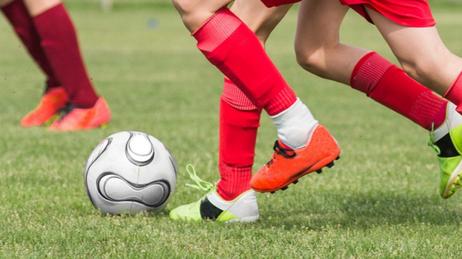
Athletics have been a mainstay of the high school scene for decades.
- Today, the field has merely expanded, encompassing an even greater variety of competitive options for male and female students alike.
- While many students get involved in high school athletics for sheer love of the game, there are significant benefits from these extracurricular activities as well.
Here are 10 ways high school sports benefit students, some of which students and parents may not even realize.

Community Representation
While club sports have become a popular pastime for both students and college recruiters, there is still a lot to be said about playing for your high school team.
- According to Unigo, students who participate in high school sports learn the benefit of representing their community on the field or court.
- These athletes learn the fun of team rivalries and revel in the praise of a job well done for their school.
- This feeling of community and the honor of representing the home team may run over into college athletics if the student advances in his sport as well.
Fitness
The fitness level of athletes in high school sports programs cannot be underestimated.
- According to a report from the National Federation of State High School Associations (NFHS), a 2006 study on female athletes found that when female students are given more opportunities to participate in athletics in high school, their weight and body mass improve.
- A 2001 survey found that students agreed they would not spend as much time in sedentary activities like watching television and playing video games if they had other options after school.
Studies also suggest that student-athletes are less likely to participate in unhealthy or risky behavior when they are playing sports in high school.
- The same report by the NFHS cited a 2002 study by the Department of Education that found students who spent no time in extracurricular activities in high school were 49 percent more likely to use drugs and 37 percent more apt to become teen parents.
- Just four hours in an extracurricular activity like sports each week dramatically improved those numbers.
Improved Academics
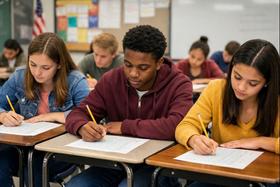
A survey conducted by the Minnesota State High School League in 2007 and reported by the NFHS found that the average GPA of a high school athlete was 2.84, while a student who was not involved in athletics had an average GPA of 2.68.
The survey also showed that student-athletes missed less school than their non-athlete counterparts, with a total of 7.4 days missed and 8.8 days missed, respectively.
Another study published in Medicine & Science in Sports and Exercise in August 2007 found that students who were active in sports like soccer, football, and even skateboarding performed 10 percent better in core subjects like math, science, social studies, and language arts.
Because sports offer equal opportunity to all students at the high school level, these academic benefits extend to all areas of the student population, including students who might be traditionally underserved.
The Importance of the 3 “P’s”
An article at Education.com talks about the 3 “P’s” student-athletes learn that extend beyond the classroom: persistence, patience, and practice.
- Team members learn that practice is required, even when they would prefer to be spending time with friends.
- They learn the harder they work, the better they perform.
- They also discover that by never giving up, they are more likely to achieve their goals.
These life lessons benefit students long after their high school years, helping them succeed in college and after.
Teamwork and Cooperation
An article at We Play Moms explains that because everyone is working toward a common goal in team sports, students learn firsthand how their performance impacts the rest of the team. Student-athletes must find their place, whether it is to be a leader of the team or to play a supporting role.
Positive Mentors
High school athletics are filled with positive mentors, from the coaches on the sidelines to the leaders on the team. Students learn to work with a wide range of authority figures, who teach them important lessons about hard work, respect, and good sportsmanship. Early experiences with mentors like these help shape student-athletes in positive ways for the rest of their lives.
Social Relationships
Students who participate in sports often forge close friendships with others on the team.
- These relationships are essential for mental, emotional, and physical health throughout the high school years.
- Students bond together over a shared passion, and the time they spend together at practice and games builds tight bonds that often last long after high school is over.
Leadership Skills
As students advance through the ranks of the high school team, they learn valuable leadership skills.
- Senior athletes are expected to encourage younger team members and hold them accountable.
- They set an example and often provide advice and guidance both on and off the field.
Time Management
Practice and games take up plenty of a student’s time, leaving much less for schoolwork and other activities. Athletes must learn time management skills if they are to get everything finished.
One student-athlete told <a href="https://growingupsc.com/">Growing Up in Santa Cruz</a>, “It definitely helps time management-wise. It affects when I have to do my schoolwork and when I have to practice."
Success Mindset
We Play Moms outlines the mindset for success that is instilled in student-athletes, which includes:
- Time management skills
- Creativity in finding ways to improve
- Strong focus and concentration development
- Internal skills for handling pressure
- Learning when to take risks
- Taking responsibility for individual performance
These skills go far beyond the sports field or even beyond high school. Student-athletes reap the benefit of their training for the rest of their lives.
Conclusion
High school sports offer far more than just physical activity and competition. They provide a comprehensive platform for students to develop academically, socially, and personally. From fostering a sense of community pride to instilling valuable life skills like persistence and teamwork, athletics play a crucial role in shaping well-rounded individuals. As students navigate the challenges of high school and prepare for their future, the lessons learned on the field or court will continue to benefit them long after the final whistle blows.
Questions? Contact us on Facebook, Instagram, or YouTube.
#HighSchoolSports #StudentAthletes #AcademicSuccess #PersonalGrowth #TeamworkSkills #FitnessGoals #LeadershipDevelopment #TimeManagement #CommunityPride #LifeLessons