
For the 2026-27 school year, there are 6 public middle schools serving 4,234 students in the neighborhood of Ahwatukee Foothills Village, Phoenix, AZ.
The top-ranked public middle schools in Ahwatukee Foothills Village are Basis Ahwatukee, Horizon Honors Secondary School and Kyrene Altadena Middle School. Overall testing rank is based on a school's combined math and reading proficiency test score ranking.
The neighborhood of Ahwatukee Foothills Village, Phoenix, AZ public middle schools have an average math proficiency score of 46% (versus the Arizona public middle school average of 32%), and reading proficiency score of 56% (versus the 40% statewide average).
Minority enrollment is 56% of the student body (majority Hispanic and Asian), which is less than the Arizona public middle school average of 66% (majority Hispanic).
Best Public Middle Schools in the neighborhood of Ahwatukee Foothills Village, Phoenix, AZ (2026-27)
School
(Math and Reading Proficiency)
(Math and Reading Proficiency)
Location
Quick Facts
Rank: #11.
Basis Ahwatukee
Charter School
(Math: 86% | Reading: 77%)
Rank:
Rank:
10/
Top 5%10
10210 S 50th Pl
Phoenix, AZ 85044
(480) 659-2294
Phoenix, AZ 85044
(480) 659-2294
Gr: 4-12 | 661 students Student-teacher ratio: 12:1 Minority enrollment: 85%
Rank: #22.
Horizon Honors Secondary School
Charter School
(Math: 52% | Reading: 68%)
Rank:
Rank:
9/
Top 20%10
16233 S 48th St
Phoenix, AZ 85048
(480) 659-3000
Phoenix, AZ 85048
(480) 659-3000
Gr: 7-12 | 678 students Student-teacher ratio: 16:1 Minority enrollment: 42%
Rank: #33.
Kyrene Altadena Middle School
(Math: 51% | Reading: 69%)
Rank:
Rank:
9/
Top 20%10
14620 S. Desert Foothills Blvd
Phoenix, AZ 85048
(480) 541-6000
Phoenix, AZ 85048
(480) 541-6000
Gr: 4-8 | 857 students Student-teacher ratio: 22:1 Minority enrollment: 46%
Rank: #44.
Keystone Montessori Charter School
Charter School
(Math: 45-49% | Reading: 80-84%)
Rank:
Rank:
9/
Top 20%10
1025 E Liberty Ln
Phoenix, AZ 85048
(480) 460-7312
Phoenix, AZ 85048
(480) 460-7312
Gr: 1-9 | 203 students Student-teacher ratio: 16:1 Minority enrollment: 55%
Rank: #55.
Kyrene Akimel A-al Middle School
(Math: 34% | Reading: 52%)
Rank:
Rank:
7/
Top 50%10
2720 E Liberty Ln
Phoenix, AZ 85048
(480) 541-5800
Phoenix, AZ 85048
(480) 541-5800
Gr: 4-8 | 792 students Student-teacher ratio: 19:1 Minority enrollment: 62%
Rank: #66.
Kyrene Centennial Middle School
(Math: 26% | Reading: 35%)
Rank:
Rank:
5/
Bottom 50%10
13808 S 36th St
Phoenix, AZ 85044
(480) 541-6400
Phoenix, AZ 85044
(480) 541-6400
Gr: 4-8 | 580 students Student-teacher ratio: 17:1 Minority enrollment: 78%
Frequently Asked Questions
What are the top-ranked public middle schools in the neighborhood of Ahwatukee Foothills Village, Phoenix, AZ?
The top-ranked public middle schools in the neighborhood of Ahwatukee Foothills Village, Phoenix, AZ include Basis Ahwatukee, Horizon Honors Secondary School and Kyrene Altadena Middle School.
How many public middle schools are located in the neighborhood of Ahwatukee Foothills Village, Phoenix?
6 public middle schools are located in the neighborhood of Ahwatukee Foothills Village, Phoenix.
What is the racial composition of students in the neighborhood of Ahwatukee Foothills Village, Phoenix?
the neighborhood of Ahwatukee Foothills Village, Phoenix public middle schools minority enrollment is 56% of the student body (majority Hispanic and Asian), which is less than the Arizona public middle schools average of 66% (majority Hispanic).
Recent Articles

How Much Choice Do High School Students Have?
Learn how graduation requirements, prerequisites, electives, staffing, scheduling conflicts, AP courses, dual enrollment, and career pathways determine how much control high school students have over schedules each year.

Does Your Child Need More Recess?
Explore whether your child may benefit more from recess than another academic period, including research on attention, learning, physical activity, stress, social development, and school-day balance today.
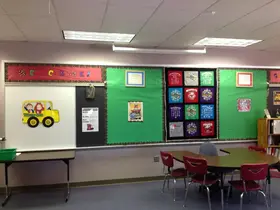
Combined Grade Classrooms, What Parents Should Know
Learn how combined-grade classrooms work, why public schools use them, potential benefits and challenges, and the questions parents should ask before enrolling their child in one today.