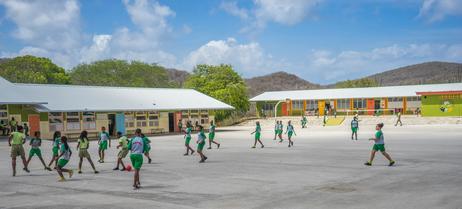
For many parents, more instructional time sounds like an obvious academic advantage. If students are struggling with reading, mathematics, or other subjects, adding another academic period might seem more productive than sending them outside to play.
But the relationship between time spent in class and learning is not that simple.
Children cannot maintain the same level of concentration indefinitely. Recess gives students a scheduled opportunity to move, interact with peers, make independent choices, and temporarily disengage from concentrated academic work. The question for parents, therefore, is not whether academics matter more than play. It is whether another period of instruction actually produces better learning when a child is already mentally or physically fatigued.
In 2026, this question has renewed relevance. The American Academy of Pediatrics has continued to emphasize the importance of recess to children's cognitive, social, emotional, and physical development.
For families comparing public schools, the amount and quality of recess can reveal more about the school day than parents might expect.
Recess Is Not Simply Time Away From Learning
Recess is sometimes viewed as the opposite of instruction. Academic periods are considered productive, while recess is treated as free time.
That distinction overlooks what happens when children take a break.
The Centers for Disease Control and Prevention identifies several potential benefits of recess, including increased physical activity, improved attention and concentration, better classroom behavior, and opportunities for social and emotional development.
This does not mean that adding recess automatically improves grades. It means that the quality of academic time matters alongside the quantity.
Twenty additional minutes of mathematics may have limited value if students are restless, distracted, or mentally exhausted. A break followed by focused instruction could potentially make the remaining classroom time more productive.
Parents trying to understand this balance may also find Public School Review's How Public Schools Structure Free Periods or Study Time helpful, particularly for older students whose schedules increasingly replace play periods with structured academic time.
What Changed in the 2026 Recess Discussion?
The research conversation around recess has evolved beyond simply asking whether children need exercise.
In its updated 2026 policy statement, the American Academy of Pediatrics describes recess as a break from concentrated cognitive effort that can help students regain focus, manage stress, and engage socially with peers. The organization recommends protecting recess rather than withholding it for academic or disciplinary reasons.
That distinction matters.
Recess is not the same as physical education. Physical education is structured instruction with specific learning goals. Recess gives students more freedom to decide whether they want to run, play a game, talk with friends, or simply take a mental break.
A child can therefore attend physical education and still benefit from recess.
When More Academic Time May Not Mean More Learning
Parents understandably worry about lost instructional minutes, especially when their child is behind academically.
But learning depends on attention.
Consider two hypothetical school schedules. One provides three uninterrupted hours of classroom instruction. Another divides the same academic work with a short recess period.
The first schedule technically offers more continuous learning time. That does not necessarily mean students remain equally attentive throughout it.
This is particularly relevant for younger children, who are still developing self-regulation, sustained attention, and executive functioning.
The question parents should ask is not simply, "How many minutes of academics does my child receive?"
Ask, "How effectively is my child able to learn during those minutes?"
Public School Review's How Much Homework Should You Expect in Public School explores a similar issue outside the classroom, where the educational value of additional work depends on age, purpose, workload, and the individual student.
Watch What Happens After Recess
One practical way to evaluate recess is to pay attention to your own child.
What happens after a break?
Some children return to class calmer and more focused. Others may struggle with the transition from an active playground back into a structured classroom.
Both observations are useful.
If your child regularly comes home describing difficulty sitting still, concentrating late in the morning, or managing frustration during long instructional periods, the daily schedule deserves closer examination.
Parents should also ask teachers whether attention changes throughout the day.
Teachers observe patterns families cannot see. They may notice that a child works effectively early in the morning but becomes increasingly restless before lunch, or that concentration improves noticeably after outdoor activity.
Recess Provides Something Academics Cannot
There is another important distinction between recess and an academic period.
During most classroom lessons, adults determine what students do, where they sit, who they work with, and what outcome they are expected to achieve.
Recess introduces greater independence.
Students may have to decide what to play, approach other children, resolve disagreements, negotiate rules, take turns, cope with losing, or decide what to do when their preferred friend is unavailable.
Those experiences can help children practice social skills in circumstances that cannot be completely replicated through teacher-directed lessons.
Research available through the Institute of Education Sciences provides a broader evidence base for evaluating educational practices and student outcomes, reinforcing the importance of looking beyond instructional minutes alone when considering how school practices affect learning.
For parents, that means playground time should not automatically be considered academically empty.
What About Children Who Struggle During Recess?
Not every child loves recess.
Some students find unstructured social situations difficult. Children who experience bullying, social anxiety, sensory overload, physical limitations, or difficulty joining group activities may view recess as one of the most stressful parts of the school day.
That does not necessarily mean eliminating recess is the answer.
Instead, parents should ask how the school supervises and structures the environment. Are there quiet areas? Are alternative activities available? Can students choose among different types of play? Are playground monitors trained to recognize exclusion and conflict?
A high-quality recess program should make room for children who do not want to spend the entire period running around a playground.
This is an important consideration when assessing the school's overall approach to student well-being.
Academic Pressure Can Extend Beyond the School Day
The recess question should also be considered within the child's complete schedule.
A student may spend six or more hours at school, attend an extracurricular activity, travel home, complete homework, and prepare for the following day.
If nearly every available hour is structured around performance or adult-directed activity, recess may represent one of the few periods in which the child controls how time is spent.
Parents concerned about this balance can review Managing Homework Without the Nightly Power Struggle, which examines cognitive overload, emotional fatigue, routines, and student independence.
The goal is not to reduce academic expectations automatically. It is to determine whether the child's schedule supports sustained learning rather than simply maximizing scheduled work.
Physical Activity Is Part of the Equation
Recess also contributes to children's opportunities to move during the school day.
The U.S. Department of Health and Human Services recommends that children and adolescents ages 6 through 17 engage in at least 60 minutes of moderate-to-vigorous physical activity daily.
Recess alone may not meet that recommendation, and not every child is physically active throughout recess. Still, the school day provides an important opportunity for movement, particularly for students who have limited access to outdoor play, organized sports, or safe recreational spaces after school.
Parents should therefore look at the entire activity picture, including recess, physical education, classroom movement breaks, sports, walking, and activity outside school.
Should Recess Ever Be Replaced With Academic Intervention?
This is where the decision becomes more complicated.
A child who needs intensive reading support, speech therapy, mathematics intervention, or another specialized service may need additional instructional time.
The important question is where that time comes from.
If intervention repeatedly replaces recess, the student who is already struggling academically may also lose a restorative part of the school day.
Parents can ask whether intervention could occur during another period, whether schedules rotate so the same activity is not consistently missed, and whether the additional instruction is producing measurable progress.
The goal should be purposeful intervention, not simply more minutes of academic work.
Questions Parents Should Ask the School
If recess is important to your family, ask about it during school visits rather than assuming every elementary school follows the same schedule.
Useful questions include:
- How many recess periods do students receive each day?
- How long does each recess last?
- Can recess be withheld for unfinished work or behavior?
- What happens during bad weather?
- How is the playground supervised?
- What options exist for children who prefer quieter activities?
- Are academic interventions scheduled during recess?
These questions can reveal whether recess is treated as an expendable block of time or as an intentional part of the school day.
Parents evaluating the broader workload may also want to read Benefits and Drawbacks of Homework in 2025, which considers the relationship between additional academic practice, student well-being, and diminishing returns from excessive workload.
Does Your Child Need More Recess?
There is no universal schedule that will suit every student.
A highly active first grader, an independent fifth grader, and a middle school student facing demanding coursework have different developmental and academic needs.
Parents should therefore resist framing the decision as academics versus recess.
A stronger question is whether the school has created a day in which children can remain engaged enough to benefit from the academic instruction they receive.
If your child is consistently exhausted, restless, stressed, or unable to concentrate during long periods of classroom work, another academic period may not automatically solve the problem. A thoughtfully scheduled break may help the child return to instruction better prepared to learn.
Recess does not have to compete with academic achievement. When it is safe, inclusive, appropriately supervised, and incorporated thoughtfully into the school day, it can support the conditions children need for learning.
Ultimately, asking whether your child needs recess more than another academic period is really asking whether more instruction is always better instruction. For many children, the answer depends not only on how much time they spend learning, but also on whether their school gives them enough time to reset, move, socialize, and return ready to learn.