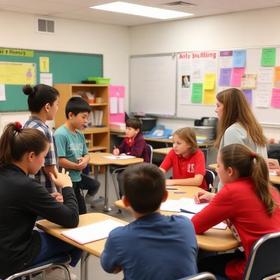
Some children eagerly raise their hands, volunteer answers, and participate in classroom discussions. Others understand the lesson but become uncomfortable when asked to speak in front of classmates. For parents, discovering that their child is afraid to speak in class can raise important questions about confidence, academic participation, and whether the school is providing appropriate support.
A child who rarely speaks during lessons is not necessarily struggling academically. Some students prefer listening before contributing, while others worry about giving incorrect answers, attracting attention, or being embarrassed in front of their peers. However, when fear consistently prevents a student from asking questions, demonstrating knowledge, or participating in required activities, parents should investigate what is happening.
In 2026, classroom participation remains an important part of public school education, particularly as teachers use discussions, presentations, and collaborative activities to assess learning. Understanding how schools respond to students who are uncomfortable speaking can help families distinguish ordinary hesitation from difficulties that require additional attention.
Why Is Your Child Afraid to Speak in Class?
Children may hesitate to speak for several reasons, and identifying the underlying concern is essential before deciding how to respond. Some students are naturally reserved and prefer to think carefully before answering questions. Others may worry that classmates will laugh if they make a mistake or that teachers will become frustrated when they cannot respond immediately.
Previous classroom experiences can also influence participation. A child who was corrected harshly, interrupted repeatedly, or embarrassed during a presentation may become reluctant to speak again. Even when the incident seems minor to an adult, the student may associate classroom participation with uncomfortable attention.
Parents should consider whether the difficulty is limited to a particular subject, teacher, or classroom setting. A student who confidently discusses science at home but remains silent during science lessons may be responding to the classroom environment rather than struggling to understand the material.
Public School Review's article on helping children overcome first-week school anxiety examines how unfamiliar environments and expectations can affect children's confidence. However, when speaking difficulties continue well beyond the initial adjustment period, families should explore whether something more specific is preventing participation.
What Does the Teacher Notice During Classroom Discussions?
One of the first questions parents should ask is how their child behaves when classroom discussions begin. Teachers may observe patterns that are not apparent at home, including whether the student avoids eye contact, appears uncomfortable when called upon, or participates more readily in smaller groups.
Parents should ask whether their child volunteers answers occasionally, responds when approached individually, or remains silent regardless of the situation. These distinctions can help determine whether the student needs additional confidence-building opportunities or a more individualized approach.
It is also important to understand how teachers respond when a student hesitates. Some children benefit from additional thinking time, while others become more uncomfortable when attention remains focused on them. A teacher who recognizes these differences can adjust questioning techniques without lowering academic expectations.
Families preparing for these conversations may find Public School Review's article on preparing for parent-teacher conferences useful for organizing observations and discussing classroom concerns constructively.
The goal should be to understand the student's experience rather than simply determine how often they raise their hand. Meaningful participation can take different forms, and teachers should consider whether the child is learning successfully even when verbal contributions are limited.
Is Your Child Afraid of Making Mistakes in Front of Classmates?
Fear of giving an incorrect answer can become a significant barrier to classroom participation. Some children understand the material but worry that a mistake will cause classmates to laugh or change how others perceive them. This concern may become more noticeable during upper elementary and middle school, when peer opinions often carry greater social importance.
Parents should ask whether the teacher encourages students to take academic risks and how incorrect answers are handled during discussions. A classroom that treats mistakes as opportunities for learning may help students become more comfortable contributing, while one in which students regularly criticize one another may discourage participation.
Teachers can establish expectations that classmates listen respectfully, avoid interrupting, and respond constructively to different ideas. They can also provide opportunities for students to rehearse answers with a partner before sharing them with a larger group.
The American Academy of Pediatrics explains that children experiencing anxiety may benefit from realistic goals, gradual practice with feared situations, and encouragement for manageable steps toward greater confidence.
Parents should avoid pressuring children to become outspoken immediately. Instead, they can work with teachers to identify situations in which the child feels reasonably comfortable participating and gradually expand those opportunities.
Does the School Grade Students on Speaking in Class?
Classroom participation can affect grades, particularly in subjects that include discussions, oral presentations, debates, or collaborative assignments. Parents should ask whether verbal participation is formally assessed and how teachers distinguish between academic understanding and a student's willingness to speak publicly.
A child who completes written assignments successfully but rarely volunteers answers may understand the curriculum as well as more outspoken classmates. However, if participation grades depend heavily on how frequently students speak, the child could receive lower marks despite demonstrating knowledge through other activities.
Parents should request clarification about the grading criteria. Teachers may assess preparation, engagement, listening, collaboration, and the quality of contributions rather than simply counting how often students raise their hands.
When oral communication is an essential learning objective, students still need opportunities to develop those skills. However, teachers may be able to provide structured practice, smaller audiences, or alternative ways to demonstrate progress while the student builds confidence.
The important question is whether classroom assessment measures the intended learning outcomes fairly and whether students experiencing genuine communication difficulties receive appropriate support.
Could Classroom Silence Be Related to Anxiety or Selective Mutism?
Occasional nervousness about speaking is common, but persistent difficulty communicating in particular settings may require closer attention. Some children speak comfortably with family members yet become extremely distressed or unable to speak at school.
The American Speech-Language-Hearing Association explains that selective mutism is an anxiety disorder in which children experience consistent difficulty speaking in certain social situations despite being able to communicate in others. It is not simply a matter of choosing to remain quiet.
Parents should not assume that every shy or reserved child has selective mutism. However, when a student consistently cannot respond to teachers, ask for assistance, or communicate basic needs, discussing the situation with a pediatrician or qualified mental health professional may be appropriate.
School personnel can also contribute important observations. Teachers, counselors, and speech-language specialists may help determine whether the difficulty involves anxiety, communication development, language differences, or another concern.
Public School Review's article on common mental health problems in school children and how to address them provides broader information about recognizing difficulties that may affect students' daily school experiences.
Early attention can help families identify appropriate support without unnecessarily labeling children who simply have quieter personalities.
What Classroom Adjustments Can Help Your Child Participate?
Parents should ask whether teachers can introduce participation opportunities that reduce unnecessary pressure while still encouraging students to develop communication skills. A child who finds whole-class discussions intimidating may be more comfortable answering questions privately, speaking with a partner, or contributing to a small group.
Teachers might provide questions in advance, allow additional response time, or invite students to share prepared ideas rather than requiring immediate answers. These approaches can make participation more predictable and help children focus on communicating their knowledge instead of worrying about unexpected attention.
For students with significant anxiety, adjustments should be individualized. Some children benefit from gradual speaking practice supported by school personnel or outside professionals. Others may initially need written or nonverbal communication options while receiving help with the underlying difficulty.
Parents should ask how the teacher plans to increase participation over time. The objective is not to excuse students from every speaking activity indefinitely, but to provide a manageable path toward meeting educational expectations.
A successful approach should account for the child's current abilities, emotional needs, and academic responsibilities. Teachers and parents can then review whether the adjustments are improving participation without increasing distress.
When Should Parents Ask About a 504 Plan or Additional School Support?
If a child's difficulty speaking substantially interferes with learning or participation, parents may need to ask whether a formal evaluation is appropriate. Public schools have responsibilities under federal disability laws when students have conditions that significantly affect their ability to access educational opportunities.
The U.S. Department of Education explains that students with anxiety disorders may qualify for protections under Section 504 of the Rehabilitation Act. Depending on individual circumstances, schools may need to evaluate students and provide accommodations or related services.
A 504 plan is not automatically necessary for every child who hesitates to speak. However, when anxiety prevents a student from completing required activities, asking questions, or demonstrating academic knowledge, parents should discuss whether additional assessment is warranted.
Families should also ask about available school counseling services and whether teachers have experience supporting students with significant communication anxiety. When appropriate, school professionals can coordinate with outside healthcare providers to develop consistent strategies.
Parents can find additional guidance on communicating educational concerns in Public School Review's article on advocating for your child in public school without overstepping.
How Can Parents Help Their Child Build Speaking Confidence at Home?
Parents can support classroom participation by creating opportunities for children to express their thoughts without pressure. Everyday conversations about school subjects, family decisions, or personal interests can help children practice organizing ideas and speaking clearly.
For younger children, reading aloud together or explaining how a favorite activity works may provide comfortable speaking practice. Older students might rehearse short presentations, discuss possible answers to classroom questions, or practice asking a teacher for clarification.
However, practicing at home should not become another source of anxiety. Parents should avoid repeatedly criticizing speech patterns, correcting every mistake, or comparing their child with more outspoken classmates. Encouragement is most useful when it recognizes effort and gradual improvement.
Families can also ask children what would make classroom participation feel easier. Some may prefer knowing questions in advance, while others might feel more comfortable speaking after discussing their ideas with a trusted classmate.
When a child experiences substantial anxiety, parents should coordinate these activities with the professionals providing support. Gradual progress is generally more helpful than forcing a child into speaking situations that exceed their current ability to cope.
What Questions Should Parents Ask During a School Meeting?
A productive school meeting should establish what is happening, how it affects the student, and what adjustments may improve participation. Rather than simply asking why their child never speaks, parents should seek specific information about classroom expectations and the teacher's observations.
Important questions include:
Does my child participate more comfortably in small groups or individual conversations?
How does the teacher respond when my child cannot answer a question aloud?
Are participation grades affected by how frequently students volunteer answers?
Can the school provide gradual speaking opportunities or other appropriate classroom adjustments?
What additional support is available if the difficulty continues or becomes more severe?
Parents should also ask how progress will be measured and when they can expect an update. Agreeing on a review date can help prevent concerns from remaining unresolved throughout the school year.
The conversation should focus on practical steps that support the child's learning rather than expecting immediate changes in personality or communication style.
How Will Parents Know Whether Their Child Is Making Progress?
Improvement does not always mean that a previously quiet student suddenly becomes eager to speak in every lesson. Progress may begin with smaller changes, such as asking a teacher a question privately, answering during a partner activity, or contributing one prepared comment during a classroom discussion.
Parents should ask teachers to monitor whether the child is participating more comfortably and whether the agreed strategies are working. It is also important to determine whether academic performance, classroom engagement, and the student's overall experience are improving.
At home, families can observe whether the child talks about classroom activities with less worry or begins expressing greater confidence about upcoming assignments. However, parents should avoid turning every school conversation into an assessment of speaking performance.
If the child continues experiencing significant distress, avoids school, or becomes increasingly unable to communicate in situations requiring speech, additional professional support may be necessary. The school and family should reassess the plan rather than continuing an approach that is not producing meaningful progress.
Conclusion: Helping Your Child Feel Comfortable Speaking in Class
When a child is afraid to speak in class, parents should look beyond the assumption that the student is simply shy. Classroom expectations, peer relationships, previous experiences, and individual communication needs can all influence whether children feel comfortable expressing themselves.
The most useful starting point is a conversation with the teacher about when the difficulty occurs, how participation is assessed, and what support is available. Parents should also consider whether the child's reluctance affects academic progress or reflects a more significant concern requiring evaluation.
In 2026, public schools should recognize that students develop communication confidence at different rates. With thoughtful classroom practices, appropriate support, and consistent communication between families and educators, children can gradually become more comfortable contributing their ideas.
The goal is not to turn every quiet student into an outspoken participant. It is to ensure that fear does not prevent a child from asking questions, demonstrating knowledge, or taking part in meaningful classroom learning.