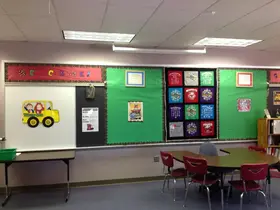
For the 2026 school year, there is 1 public school serving 157 students in Pleasant Grove Joint Union School District. This district's average testing ranking is 7/10, which is in the top 50% of public schools in California.
Public School in Pleasant Grove Joint Union School District have an average math proficiency score of 42% (versus the California public school average of 34%), and reading proficiency score of 42% (versus the 47% statewide average).
Minority enrollment is 36% of the student body (majority Hispanic), which is less than the California public school average of 80% (majority Hispanic).
Overview
This School District
This State (CA)
# Schools
1 School
10,357 Schools
# Students
157 Students
5,825,514 Students
# Teachers
8 Teachers
267,966 Teachers
Student-Teacher Ratio
20:1
20:1
Student By Grade
District Rank
Pleasant Grove Joint Union School District, which is ranked #676 of all 1,908 school districts in California (based off of combined math and reading proficiency testing data) for the 2022-2023 school year.
Overall District Rank
#654 out of 1932 school districts
(Top 50%)
(Top 50%)
Math Test Scores (% Proficient)
42%
34%
Reading/Language Arts Test Scores (% Proficient)
40-44%
47%
Science Test Scores (% Proficient)
30-39%
29%
Students by Ethnicity:
Diversity Score
0.54
0.63
% American Indian
2%
1%
% Asian
2%
12%
% Hispanic
23%
56%
% Black
2%
5%
% White
64%
20%
% Hawaiian
1%
n/a
% Two or more races
6%
6%
All Ethnic Groups
District Revenue and Spending
The revenue/student of $13,752 in this school district is less than the state median of $19,979. The school district revenue/student has grown by 11% over four school years.
The school district's spending/student of $13,490 is less than the state median of $18,400. The school district spending/student has grown by 10% over four school years.
Total Revenue
$2 MM
$116,387 MM
Spending
$2 MM
$107,188 MM
Revenue / Student
$13,752
$19,979
Spending / Student
$13,490
$18,400
Best Pleasant Grove Joint Union School District Public Schools (2026)
School
(Math and Reading Proficiency)
Location
Quick Facts
Rank: #11.
Pleasant Grove
(Math: 40-44% | Reading: 40-44%)
Rank:
Rank:
7/
Top 50%10
3075 Howsley Rd.
Pleasant Grove, CA 95668
(916) 655-3235
Pleasant Grove, CA 95668
(916) 655-3235
Gr: K-8 | 157 students Student-teacher ratio: 20:1 Minority enrollment: 36%
Frequently Asked Questions
How many schools belong to Pleasant Grove Joint Union School District?
Pleasant Grove Joint Union School District manages 1 public schools serving 157 students.
What is the rank of Pleasant Grove Joint Union School District?
Pleasant Grove Joint Union School District is ranked #676 out of 1,908 school districts in California (top 50%) based off of combined math and reading proficiency testing data for the 2022-2023 school year.
What is the racial composition of students in Pleasant Grove Joint Union School District?
64% of Pleasant Grove Joint Union School District students are White, 23% of students are Hispanic, 6% of students are Two or more races, 2% of students are American Indian, 2% of students are Asian, 2% of students are Black, and 1% of students are Hawaiian.
What is the student/teacher ratio of Pleasant Grove Joint Union School District?
Pleasant Grove Joint Union School District has a student/teacher ratio of 20:1, which is lower than the California state average of 22:1.
What is Pleasant Grove Joint Union School District's spending/student ratio?
The school district's spending/student of $13,490 is less than the state median of $18,400. The school district spending/student has grown by 10% over four school years.
Recent Articles
Public School Transportation & Commute Planning Guide
Learn how public school transportation and commute planning can help families prepare for the coming school year safely and efficiently.
New Public School Safety Protocols 2025–26 Guide
Learn how new public school safety protocols for 2025–26 affect students, parents, and schools nationwide.
How Technology Transforms Education in 2025
Explore how technology shapes learning today, with updated data, policy context, trends, and real-world implications for students, educators, and families.