Crestview Elementary School serves 597 students in grades Kindergarten-5.
The percentage of students achieving proficiency in math was 44% (which was lower than the California state average of 58%). The percentage of students achieving proficiency in reading/language arts was 35% (which was lower than the California state average of 56%).
Minority enrollment was 90% of the student body (majority Hispanic), which was higher than the California state average of 80% (majority Hispanic).
School Overview
Grades Offered
Grades Kindergarten-5
Total Students
597 students
Showing 2003–2025. Full 39-year historical data available below ↓
Total Classroom Teachers (09-10)
31 teachers
Showing 2001–2010. Full 24-year historical data available below ↓
School Rankings
Math Test Scores (% Proficient)
(10-11)44%
58%
Reading/Language Arts Test Scores (% Proficient)
(10-11)35%
56%
American Indian
1%
1%
Showing 2000–2025. Full 37-year historical data available below ↓
Asian
1%
12%
Showing 2003–2025. Full 38-year historical data available below ↓
Hispanic
84%
56%
Showing 2003–2025. Full 38-year historical data available below ↓
Black
3%
5%
Showing 2003–2025. Full 38-year historical data available below ↓
White
10%
20%
Showing 2003–2025. Full 38-year historical data available below ↓
Two or more races
1%
6%
All Ethnic Groups
Showing 2003–2025. Full 38-year historical data available below ↓
Eligible for Free Lunch
74%
54%
Showing 2003–2025. Full 34-year historical data available below ↓
Eligible for Reduced Lunch
13%
8%
Showing 2003–2025. Full 27-year historical data available below ↓
School Statewide Testing
School District Name
Source: National Center for Education Statistics (NCES), CA Dept. of Education
Frequently Asked Questions
What percent of students have achieved state testing proficiency in math and reading?
44% of students have achieved math proficiency (compared to the 58% CA state average), while 35% of students have achieved reading proficiency (compared to the 56% CA state average).
How many students attend Crestview Elementary School?
597 students attend Crestview Elementary School.
What is the racial composition of the student body?
84% of Crestview Elementary School students are Hispanic, 10% of students are White, 3% of students are Black, 1% of students are American Indian, 1% of students are Asian, and 1% of students are Two or more races.
What grades does Crestview Elementary School offer ?
Crestview Elementary School offers enrollment in grades Kindergarten-5
What school district is Crestview Elementary School part of?
Crestview Elementary School is part of Vista Unified School District.
Recent Articles

How Much Choice Do High School Students Have?
Learn how graduation requirements, prerequisites, electives, staffing, scheduling conflicts, AP courses, dual enrollment, and career pathways determine how much control high school students have over schedules each year.
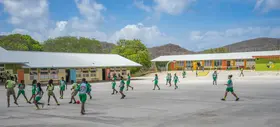
Does Your Child Need More Recess?
Explore whether your child may benefit more from recess than another academic period, including research on attention, learning, physical activity, stress, social development, and school-day balance today.
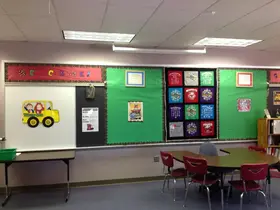
Combined Grade Classrooms, What Parents Should Know
Learn how combined-grade classrooms work, why public schools use them, potential benefits and challenges, and the questions parents should ask before enrolling their child in one today.