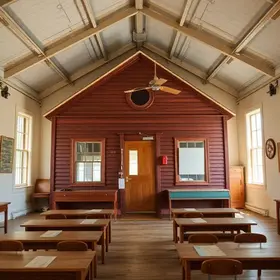
J.r. Smith School

235 E 500 N
Heber City, UT 84032
(School attendance zone shown in map)
: 
8/
10
Top 30%
Serving 633 students in grades Prekindergarten-5, J.r. Smith School ranks in the top 30% of all schools in Utah for overall test scores (math proficiency is top 20%, and reading proficiency is top 20%).
The percentage of students achieving proficiency in math is 57% (which is higher than the Utah state average of 40%). The percentage of students achieving proficiency in reading/language arts is 43% (which is equal to the Utah state average of 43%).
The student-teacher ratio of 19:1 is lower than the Utah state level of 21:1.
Minority enrollment is 42% of the student body (majority Hispanic), which is higher than the Utah state average of 31% (majority Hispanic).

Quick Facts (26-27)

  • Grades: Prekindergarten-5
  • Enrollment: 633 students
  • Student-Teacher Ratio: 19:1
  • Minority Enrollment: 42%
  • : Top 30% in UT
  • : 57% (Top 20%)
  • : 43% (Top 50%)
  • : 30-34% (Btm 50%)
  • : J.R. Smith School serves the northwest part of Heber City, UT, covering an attendance area of approximately 63.8 square miles. Families can expect a typical drive of 15-20 minutes to reach the school, with the furthest edge of the zone located about 16.4 miles away.
  • Source: National Center for Education Statistics (NCES), UT Dept. of Education

Top Rankings

J.r. Smith School ranks among the top 20% of public schools in Utah for:

Category
Attribute

School Overview

J.r. Smith School's student population of 633 students has grown by 17% over five school years.
The teacher population of 33 teachers has stayed relatively flat over five school years.
Grades Offered
Grades Prekindergarten-5
Total Students
633 students

Showing 2016–2025. View full 39-year historical data

Total Classroom Teachers
33 teachers

Showing 2012–2025. View full 39-year historical data

School Rankings

J.r. Smith School ranks within the top 30% of all 957 schools in Utah (based off of combined math and reading proficiency testing data).
The diversity score of J.r. Smith School is 0.52, which is more than the diversity score at state average of 0.48. The school's diversity has stayed relatively flat over five school years.
This School
State Level (UT)
#280 out of 957 schools
(Top 30%)

Showing 2013–2023. View full 14-year historical data

57%
40%

Showing 2012–2023. View full 14-year historical data

(20-21)
43%
43%

Showing 2011–2021. View full 12-year historical data

(20-21)
30-34%
45%
Student-Teacher Ratio
19:1
21:1

Showing 2012–2025. View full 39-year historical data

Asian
1%
2%

Showing 2008–2025. View full 36-year historical data

Hispanic
38%
21%

Showing 2016–2025. View full 38-year historical data

Black
1%
1%

Showing 1998–2025. View full 30-year historical data

White
58%
69%

Showing 2016–2025. View full 38-year historical data

Two or more races
2%
4%

Showing 2016–2025. View full 15-year historical data

All Ethnic Groups
42%
0.52

Showing 2016–2025. View full 38-year historical data

(22-23)
39.3%
26.5%
Eligible for Free Lunch
29%
23%

Showing 2016–2025. View full 36-year historical data

Eligible for Reduced Lunch
6%
6%

Showing 2016–2025. View full 27-year historical data

School Statewide Testing
School District Name
Source: National Center for Education Statistics (NCES), UT Dept. of Education

Frequently Asked Questions

What is J.r. Smith School's ranking?
J.r. Smith School is ranked #280 out of 957 schools, which ranks it among the top 30% of public schools in Utah.
What schools are J.r. Smith School often compared to?
J.r. Smith Schoolis often viewed alongside schools like Old Mill School, Midway School, Heber Valley School by visitors of our site.
What percent of students have achieved state testing proficiency in math and reading?
57% of students have achieved math proficiency (compared to the 40% UT state average), while 43% of students have achieved reading proficiency (compared to the 43% UT state average).
How many students attend J.r. Smith School?
633 students attend J.r. Smith School.
What is the racial composition of the student body?
58% of J.r. Smith School students are White, 38% of students are Hispanic, 2% of students are Two or more races, 1% of students are Asian, and 1% of students are Black.
What is the student-teacher ratio of J.r. Smith School?
J.r. Smith School has a student ration of 19:1, which is lower than the Utah state average of 21:1.
What grades does J.r. Smith School offer ?
J.r. Smith School offers enrollment in grades Prekindergarten-5
What school district is J.r. Smith School part of?
J.r. Smith School is part of Wasatch School District.

School Reviews

Review J.r. Smith School. Reviews should be a few sentences in length. Please include any comments on:

  • Quality of academic programs, teachers, and facilities
  • Availability of music, art, sports and other extracurricular activities
Rate this school:

Recent Articles

Is Your Child's School Day Too Structured?
Discover where free time disappears during your child's school day, how to evaluate lunch, recess, and classroom schedules, and what parents can do when breaks become structured activities.
When Your Child's Best Friend Is in Another Class
Discover how to help your child when their best friend is assigned to another classroom, including school placement policies, maintaining friendships, building connections, and knowing when to request help.
Should Your Child Repeat a Grade or Move Ahead?
Before agreeing to grade retention, learn what evidence to request, how to review school policies, explore alternatives, understand parental rights, and secure an effective academic support plan for your child.

Quick Facts (26-27)

  • Grades: Prekindergarten-5
  • Enrollment: 633 students
  • Student-Teacher Ratio: 19:1
  • Minority Enrollment: 42%
  • : Top 30%
  • : 57% (Top 20%)
  • : 43% (Top 50%)
  • : 30-34% (Btm 50%)
  • : J.R. Smith School serves the northwest part of Heber City, UT, covering an attendance area of approximately 63.8 square miles. Families can expect a typical drive of 15-20 minutes to reach the school, with the furthest edge of the zone located about 16.4 miles away.
  • Source: National Center for Education Statistics (NCES), UT Dept. of Education

Request Information

Quick Links