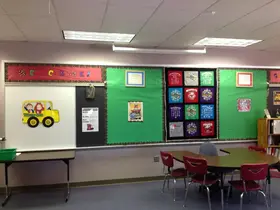
For the 2026 school year, there are 3 public schools serving 499 students in Southland Public School District. This district's average testing ranking is 6/10, which is in the top 50% of public schools in Minnesota.
Public Schools in Southland Public School District have an average math proficiency score of 39% (versus the Minnesota public school average of 46%), and reading proficiency score of 54% (versus the 51% statewide average).
Minority enrollment is 11% of the student body (majority Hispanic), which is less than the Minnesota public school average of 39% (majority Black and Hispanic).
Overview
This School District
This State (MN)
# Schools
3 Schools
2,722 Schools
# Students
499 Students
870,203 Students
# Teachers
32 Teachers
57,740 Teachers
Student-Teacher Ratio
16:1
16:1
Student By Grade
District Rank
Southland Public School District, which is ranked within the top 50% of all 520 school districts in Minnesota (based off of combined math and reading proficiency testing data) for the 2022-2023 school year.
The school district's graduation rate of 80% has decreased from 90% over five school years.
Overall District Rank
#184 out of 525 school districts
(Top 50%)
(Top 50%)
Math Test Scores (% Proficient)
39%
46%
Reading/Language Arts Test Scores (% Proficient)
55%
51%
Science Test Scores (% Proficient)
40%
41%
Graduation Rate
(21-22)≥80%
84%
Students by Ethnicity:
Diversity Score
0.20
0.59
% American Indian
n/a
2%
% Asian
1%
7%
% Hispanic
7%
12%
% Black
1%
12%
% White
89%
61%
% Hawaiian
n/a
n/a
% Two or more races
2%
6%
All Ethnic Groups
District Revenue and Spending
The revenue/student of $16,212 in this school district is less than the state median of $17,866. The school district revenue/student has declined by 29% over four school years.
The school district's spending/student of $27,088 is higher than the state median of $18,593. The school district spending/student has declined by 52% over four school years.
Total Revenue
$8 MM
$15,547 MM
Spending
$14 MM
$16,179 MM
Revenue / Student
$16,212
$17,866
Spending / Student
$27,088
$18,593
Best Southland Public School District Public Schools (2026)
School
(Math and Reading Proficiency)
Location
Quick Facts
Rank: #11.
Southland Middle School
(Math: 35-39% | Reading: 60-64%)
Rank:
Rank:
7/
Top 50%10
200 Nw Water St
Adams, MN 55909
(507) 582-3568
Adams, MN 55909
(507) 582-3568
Gr: 6-8 | 116 students Student-teacher ratio: 19:1 Minority enrollment: 10%
Rank: #22.
Southland Senior High School
(Math: 20-29% | Reading: 50-59%)
Rank:
Rank:
5/
Bottom 50%10
200 Nw Water St
Adams, MN 55909
(507) 582-3568
Adams, MN 55909
(507) 582-3568
Gr: 9-12 | 187 students Student-teacher ratio: 23:1 Minority enrollment: 8%
Rank: #33.
Southland Elementary School
(Math: 45-49% | Reading: 40-44%)
Rank:
Rank:
5/
Bottom 50%10
200 Nw Water St
Adams, MN 55909
(507) 582-3283
Adams, MN 55909
(507) 582-3283
Gr: PK-5 | 196 students Student-teacher ratio: 11:1 Minority enrollment: 13%
Frequently Asked Questions
How many schools belong to Southland Public School District?
Southland Public School District manages 3 public schools serving 499 students.
What is the rank of Southland Public School District?
Southland Public School District is ranked #219 out of 520 school districts in Minnesota (top 50%) based off of combined math and reading proficiency testing data for the 2022-2023 school year.
What is the racial composition of students in Southland Public School District?
89% of Southland Public School District students are White, 7% of students are Hispanic, 2% of students are Two or more races, 1% of students are Asian, and 1% of students are Black.
What is the student/teacher ratio of Southland Public School District?
Southland Public School District has a student/teacher ratio of 16:1, which is higher than the Minnesota state average of 15:1.
What is Southland Public School District's spending/student ratio?
The school district's spending/student of $27,088 is higher than the state median of $18,593. The school district spending/student has declined by 52% over four school years.
Recent Articles
Year-Round Schooling in 2026: Updated Parent Guide
Explore the latest 2026 data, trends, costs, and parent planning tips in the ongoing debate over year-round schooling vs the traditional calendar.
No Child Left Behind: Past, Present, and Future of U.S. School Policy
Explore how No Child Left Behind evolved into ESSA, what it means for 2025‑26 schooling, and what parents need to know about testing, admissions planning, and funding.
Understanding Public School Fees & Optional Costs Guide
Discover what public school fees are required versus optional, with 2026 updates for parents, students, and educators on budgeting and planning.