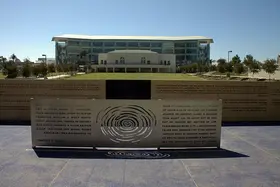
For the 2026-27 school year, there are 6 public elementary schools serving 2,267 students in Bibb County School District. This district's average elementary testing ranking is 3/10, which is in the bottom 50% of public elementary schools in Alabama.
Public Elementary Schools in Bibb County School District have an average math proficiency score of 21% (versus the Alabama public elementary school average of 31%), and reading proficiency score of 39% (versus the 49% statewide average).
Minority enrollment is 32% of the student body (majority Black), which is less than the Alabama public elementary school average of 50% (majority Black).
Overview
This School District
This State (AL)
# Schools
9 Schools
1,086 Schools
# Students
3,063 Students
522,452 Students
# Teachers
178 Teachers
29,608 Teachers
Student-Teacher Ratio
17:1
17:1
Student By Grade
District Rank
Bibb County School District, which is ranked within the bottom 50% of all 145 school districts in Alabama (based off of combined math and reading proficiency testing data) for the 2022-2023 school year.
The school district's graduation rate of 89% has increased from 88% over five school years.
Overall District Rank
#106 out of 145 school districts
(Bottom 50%)
(Bottom 50%)
Math Test Scores (% Proficient)
21%
30%
Reading/Language Arts Test Scores (% Proficient)
36%
47%
Science Test Scores (% Proficient)
26%
38%
Graduation Rate
89%
90%
Chronically Absent Students
(2022-23)27.6%
22.6%
Students by Ethnicity:
Diversity Score
0.50
0.64
% American Indian
n/a
1%
% Asian
n/a
1%
% Hispanic
8%
12%
% Black
21%
31%
% White
67%
50%
% Hawaiian
n/a
n/a
% Two or more races
4%
5%
All Ethnic Groups
District Revenue and Spending
The revenue/student of $15,632 in this school district is less than the state median of $15,699. The school district revenue/student has stayed relatively flat over four school years.
The school district's spending/student of $15,900 is higher than the state median of $14,867. The school district spending/student has declined by 7% over four school years.
Total Revenue
$48 MM
$11,791 MM
Spending
$49 MM
$11,166 MM
Revenue / Student
$15,632
$15,699
Spending / Student
$15,900
$14,867
Best Bibb County School District Public Elementary Schools (2026-27)
School
(Math and Reading Proficiency)
(Math and Reading Proficiency)
Location
Quick Facts
Rank: #11.
Woodstock Elementary School
(Math: 45-49% | Reading: 65-69%)
Rank:
Rank:
9/
Top 20%10
19456 Eastern Valley Rd
Woodstock, AL 35188
(205) 938-2028
Woodstock, AL 35188
(205) 938-2028
Gr: PK-4 | 324 students Student-teacher ratio: 19:1 Minority enrollment: 21%
Rank: #22.
West Blocton Elementary School
(Math: 35-39% | Reading: 60-64%)
Rank:
Rank:
8/
Top 30%10
828 Cahaba River Dr
West Blocton, AL 35184
(205) 938-9005
West Blocton, AL 35184
(205) 938-9005
Gr: PK-4 | 288 students Student-teacher ratio: 17:1 Minority enrollment: 20%
Rank: #33.
Randolph Elementary School
(Math: 20-24% | Reading: 40-44%)
Rank:
Rank:
5/
Bottom 50%10
7259 Highway 36
Randolph, AL 36792
(334) 366-2897
Randolph, AL 36792
(334) 366-2897
Gr: PK-6 | 225 students Student-teacher ratio: 15:1 Minority enrollment: 20%
Rank: #44.
West Blocton Middle School
(Math: 19% | Reading: 42%)
Rank:
Rank:
5/
Bottom 50%10
4721 Truman Aldrich Pkwy
West Blocton, AL 35184
(205) 938-2451
West Blocton, AL 35184
(205) 938-2451
Gr: 5-8 | 387 students Student-teacher ratio: 18:1 Minority enrollment: 18%
Rank: #55.
Brent Elementary School
(Math: 21% | Reading: 37%)
Rank:
Rank:
4/
Bottom 50%10
160 4th Street
Brent, AL 35034
(205) 926-4993
Brent, AL 35034
(205) 926-4993
Gr: PK-4 | 603 students Student-teacher ratio: 17:1 Minority enrollment: 47%
Rank: #66.
Centreville Middle School
(Math: 13% | Reading: 26%)
Rank:
Rank:
3/
Bottom 50%10
1621 Montgomery Hwy
Centreville, AL 35042
(205) 926-9861
Centreville, AL 35042
(205) 926-9861
Gr: 5-8 | 440 students Student-teacher ratio: 18:1 Minority enrollment: 44%
Recent Articles

When Your Child Gets a Teacher You Didn't Request
Learn what parents can do when a child is assigned to an unexpected teacher, including when to wait, communicate, document concerns, request support, and seek reassignment appropriately.
Before Accepting a Public School Seat: 15 Checks
Before accepting a public school seat, parents should verify enrollment terms, transportation, staffing, academics, safety, support services, schedules, attendance rules, extracurriculars, costs, and long-term placement details carefully.

Will This Public School Offer the Same Programs Next Year?
Learn how parents can determine whether public school programs will continue next year by checking budgets, enrollment, staffing, board documents, grants, course schedules, and district priorities before enrolling.