Quick Facts (2026)
- School Type: Alternative school
- Grades: 4-12
- Source: National Center for Education Statistics (NCES), IL Dept. of Education
School Overview
School Type
Grades Offered
Grades 4-12
Total Students (17-18)
11 students
Total Classroom Teachers (19-20)
3 teachers
School Rankings
Student-Teacher Ratio
n/a
13:1
American Indian
(17-18)n/a
n/a
Asian
(17-18)n/a
5%
Hispanic
(17-18)n/a
26%
Black
(17-18)9%
17%
White
(17-18)91%
49%
Hawaiian
(17-18)n/a
n/a
Two or more races
(17-18)n/a
3%
Eligible for Free Lunch (17-18)
72%
46%
Eligible for Reduced Lunch (11-12)
42%
27%
School Statewide Testing
School District Name
Source: National Center for Education Statistics (NCES), IL Dept. of Education
Frequently Asked Questions
How many students attend Echo Juvenile Detention Center?
11 students attend Echo Juvenile Detention Center.
What is the racial composition of the student body?
91% of Echo Juvenile Detention Center students are White, and 9% of students are Black.
What grades does Echo Juvenile Detention Center offer ?
Echo Juvenile Detention Center offers enrollment in grades 4-12
What school district is Echo Juvenile Detention Center part of?
Echo Juvenile Detention Center is part of Frankln/Johnsn/Massc/Willimsn Regional Office Of Education School District.
School Reviews
Review Echo Juvenile Detention Center. Reviews should be a few sentences in length. Please include any comments on:
- Quality of academic programs, teachers, and facilities
- Availability of music, art, sports and other extracurricular activities
Recent Articles

Do We Still Need Libraries in Public Schools in 2026
An updated look at the role of public school libraries in 2026, their impact on literacy, equity, and digital learning, and why they remain essential today.
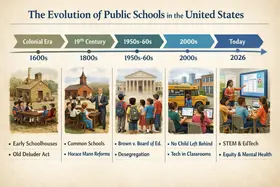
The History of Public Schools in the United States
Explore the history of public schools in the U.S., from colonial roots to 2026 reforms shaping equity, funding, and classroom innovation.

Special-Program Registration Deadlines Explained
Learn what to know about special-program registration deadlines for magnet, CTE, and dual-enrollment options in public schools.