Kirby Middle School in Birmingham, Alabama, closed in 2010; it served grades 6 through 8 with enrollment around 277 students and a student–teacher ratio near 17:1 before closing.
Historical math proficiency declined sharply from 68% in 2012 to 9% in 2023, consistently remaining lower than the Alabama state average (30% in 2023).
Reading proficiency decreased from 75% in 2012 to 22% in 2022, remaining below the state average of 47% in the same year.
The student body was predominantly Black (275 out of 277 students) with a high percentage (over 80%) eligible for free lunch, reflecting socioeconomic challenges before closure.
As a Birmingham City school and Title I eligible, Kirby Middle showed significant declines in academic performance before its closure in 2010 among Union County NJ high schools or New Jersey high school comparisons do not apply.
School Overview
Grades Offered
Grades 6-8
Total Students
277 students
Total Classroom Teachers
16 teachers
School Rankings
Student-Teacher Ratio
17:1
17:1
American Indian
n/a
1%
Asian
n/a
1%
Hispanic
n/a
11%
Black
99%
32%
White
1%
51%
Hawaiian
n/a
n/a
Two or more races
n/a
4%
All Ethnic Groups
Eligible for Free Lunch
84%
56%
Eligible for Reduced Lunch
6%
5%
School Statewide Testing
School District Name
Source: National Center for Education Statistics (NCES), AL Dept. of Education
Frequently Asked Questions
How many students attend Kirby Middle School?
277 students attend Kirby Middle School.
What is the racial composition of the student body?
99% of Kirby Middle School students are Black, and 1% of students are White.
What is the student-teacher ratio of Kirby Middle School?
Kirby Middle School has a student ration of 17:1, which is equal to the Alabama state average of 17:1.
What grades does Kirby Middle School offer ?
Kirby Middle School offers enrollment in grades 6-8
What school district is Kirby Middle School part of?
Kirby Middle School is part of Birmingham City School District.
Recent Articles

The Experience of Being a New Student Mid-Year
Learn what students experience when transferring to a public school mid-year and how schools help new students adjust socially and academically.

How Public Schools Structure Free Periods or Study Time
Learn how public schools structure free periods or study time to support homework, tutoring, enrichment, and student independence.
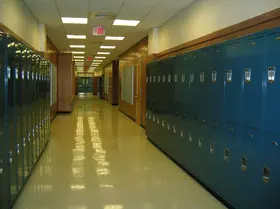
The Role of Hallways, Common Areas, and Shared Spaces in Public Schools
Discover how hallways, cafeterias, libraries, and shared spaces shape student learning, safety, and school culture in public schools.