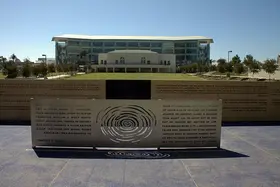
North Dakota Vision Services/School for the Blind is a branch of the North Dakota government offering services to visually impaired residents of all ages in North Dakota. It is centered in Grand Forks, with regional offices in Bismarck, Fargo, Jamestown, and Minot.
Quick Facts (2026-27)
- Source: National Center for Education Statistics (NCES), ND Dept. of Education
School Overview
Total Students (94-95)
3 students
Total Classroom Teachers (11-12)
12 teachers
Year Founded
1908
School Calendar
School Rankings
White
(94-95)100%
90%
Eligible for Free Lunch (93-94)
30%
21%
School Statewide Testing
School District Name
Source: National Center for Education Statistics (NCES), ND Dept. of Education
Frequently Asked Questions
How many students attend School For The Blind?
3 students attend School For The Blind.
What is the racial composition of the student body?
100% of School For The Blind students are White.
What school district is School For The Blind part of?
School For The Blind is part of Nd Vision Services/School For The Blind School District.
School Reviews
Review School For The Blind. Reviews should be a few sentences in length. Please include any comments on:
- Quality of academic programs, teachers, and facilities
- Availability of music, art, sports and other extracurricular activities
Recent Articles

School Leadership Matters: Evaluating a Principal
Learn how to evaluate a public school principal before enrolling by examining leadership stability, teacher support, communication, school culture, instructional priorities, discipline, family engagement, and measurable improvement efforts.

Comparing Before- and After-School Programs
Learn how to compare before- and after-school programs when choosing a public school, including hours, costs, staffing, safety, activities, enrollment rules, transportation, meals, and daily convenience for families.

Choosing a Public School During Budget Uncertainty
Learn which questions parents should ask when choosing a public school during budget uncertainty, including staffing, programs, class sizes, transportation, reserves, enrollment trends, and planned reductions ahead.