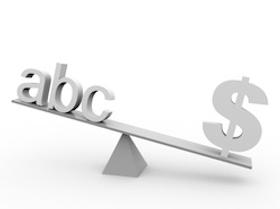
Few would deny that the education system in the United States is ripe for a major overhaul. After all, this country has slipped from the top spot for education down to around the tenth – at about the same place as Lithuania. Another concern is that disparities between poor and wealthy students are consistently growing, as the "haves" seem to get more educational opportunities to excel and the "have-nots" get less.
While many theories have been contemplated about how to raise the bar on the standard of education in this country, one factor appears to be untouched – the quality of the teachers in public schools today. Why the lack of accountability for these professionals entrusted with the future of our country? Tenure seems to be the primary answer. Teachers that achieve tenure are difficult to fire, no matter what offenses they may practice in the classroom.
As we describe the process to fire an inept teacher in many school districts across the country, it becomes easy to see why principals would often rather put up with incompetent teachers than go through the red tape and headache to replace them.
Teachers Dismissed for Poor Performance
According to a recent article in Newsweek, few inept teachers are ever dismissed from their positions. In 2008, New York fired three out of 30,000 tenured teachers for just cause. In Chicago, the number of teachers dismissed for poor performance between 2005 and 2008 was 0.1 percent. During that same time frame, Toledo, Ohio, dismissed just .01 percent, and Akron, Ohio and Denver, Colorado did not dismiss any. Instead of getting rid of poor performers, principals try to shuffle them into other schools and districts – a process known as the "dance of the lemons" by many schools today.
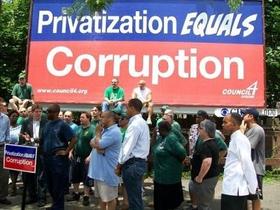
One reason teachers simply don't get fired is the power of the unions that back them. These organizations were originally designed to protect good teachers from favoritism and nepotism by school principals. However, the process has evolved into one where tenured teachers get armor-clad protection for their positions, no matter how inept they have proven themselves to be in the classroom.
Because public education does not work like the rest of the free market, parents are not able to hold schools accountable for poor teaching by simply moving Johnnie and Betty down the street to another institution. Unfortunately, the public education system is also set up to keep children in failing schools, simply because there is nowhere else for them to go, and principals' hands are tied from holding their own staff to a teaching standard.
The Firing Process in Chicago
A few examples will clearly illustrate the convoluted process for firing inept teachers. In the Chicago Public School system, according to the Chicago Tribune, a principal can determine that a teacher's performance is unsatisfactory after spending at least two different days of observation inside that teacher's classroom. If the principal notifies the teacher about his unsatisfactory performance, he then must appoint a "consulting" teacher and create a remediation plan to try to improve the teacher's classroom technique. Remediation lasts a full 90 days before the principal can determine whether it was effective.
If performance does not improve, the teacher is served with charges and can demand a hearing from the Illinois State Board of Education. This process can take up to six months to complete. If the teacher does not like the decision handed down at the end of the hearing process, he can appeal the decision in court, taking another two to three years to finalize the process. Throughout the entire time frame, the teacher can decide to retire or take a buy out, if one is offered to him.
Getting Rid of New York Teachers
In New York, the process for firing inept teachers is just as lengthy and complex, according to a chart published at Common Good. It should also be noted that teachers in New York City can achieve tenure in just three short years, and state teachers outside the city can get tenure in five years. After this point, it becomes extremely difficult to fire a New York teacher, even if the teacher has assaulted a student, been found guilty of inappropriate sexual activity or broken other laws!
A report at Reason.com cites an example of a teacher who had been sending sexual emails to a 16-year-old student, as told by the chancellor of the New York City's public school system, Joel Klein. School officials had possession of the emails, and the teacher even admitted to sending them. Even so, it took six years – and plenty of expensive litigation – before the school was finally able to fire the teacher. And although the teacher was not in a classroom during those six years, he was still on the school's payroll, landing around $350,000 before his termination was finalized.
Despite the seemingly hopeless outlook on the state of education in this country today, there are some bright spots that are starting to glow bright. In New Orleans, where Hurricane Katrina wiped out most of the public school system, charter schools have cropped up to serve the students of the area. Because these schools are not subject to the terms of teacher's unions like public schools, they have the ability to hold teachers accountable for their performance. These schools are doing a much better job of educating students, even in lower-income areas, than other schools across the country with similar demographics.
There is no doubt the public education system in this country is ready for an overhaul. The question becomes whether politicians and school officials have the courage and stomach to take the necessary steps to bring that overhaul to fruition.