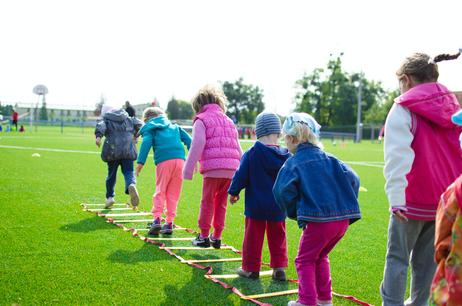
Recess has been a core component of the public education experience for generations. However, pressure from standardized testing, academic recovery efforts, and packed instructional schedules has often made outdoor playtime a casualty in the quest to improve academic performance. Some school districts have limited the amount of outdoor time students receive during the school day, while others have reduced recess in favor of additional classroom instruction. At the same time, many educators and health experts continue to advocate for protecting recess because of its proven benefits for students' physical, mental, and academic well-being.
New Jersey became one of the first states to guarantee daily recess for elementary students, and its legislation has since become a model for other states considering similar policies.
About S-1501
The bill introduced in the New Jersey Legislature as S-1501 eventually became law. Today, New Jersey requires all public elementary schools serving students in kindergarten through fifth grade to provide at least 20 minutes of recess each school day, excluding instructional time needed for physical education. Schools may only withhold recess under limited circumstances involving student safety or other exceptional situations.
State Senator Shirley Turner, who championed the legislation for many years, argued that students perform better academically when they receive regular opportunities to play and recharge during the school day. Since the law took effect, education leaders across the country have increasingly recognized recess as an important part of a well-rounded education rather than simply a break from learning.
Parents interested in learning more about the importance of recess can also read Public School Review's article on Who Killed Recess? The Movement to Resuscitate Recess.
This video offers a look at mandatory recess in New Jersey.
Health Benefits of Recess
Health experts continue to recommend that children engage in regular physical activity every day. The Centers for Disease Control and Prevention recommends that children and adolescents ages 6 through 17 participate in at least 60 minutes of moderate-to-vigorous physical activity daily. Recess helps schools contribute toward that goal while also giving students opportunities to develop motor skills, social relationships, and healthy habits.
Since the original article was written, childhood obesity statistics have changed. According to the CDC, approximately 19.7 percent of U.S. children and adolescents are affected by obesity, making regular physical activity an ongoing public health priority.
Children also spend more time indoors than previous generations. Increased screen time, organized schedules, and changing neighborhood environments often limit opportunities for free outdoor play after school. For many students, recess provides one of the few opportunities during the day for unstructured physical activity.
The American Academy of Pediatrics continues to support daily recess, describing it as an essential component of child development that complements, rather than replaces, physical education. The organization notes that recess contributes not only to physical health but also to emotional regulation, creativity, problem-solving, and social development.
Parents interested in broader school fitness initiatives may also enjoy Public School Review's article on Physical Education Reform in Public Schools.
Academic Benefits of Recess
One reason experts continue to support recess from an academic standpoint is that children learn more effectively when periods of concentrated instruction are balanced with opportunities for movement. Students who sit for extended periods often become restless, making it more difficult to maintain attention and absorb new information.
Research over the past decade has continued to support this conclusion. Studies published by the American Academy of Pediatrics have found that recess contributes to improved classroom behavior, stronger attention spans, better peer relationships, and increased readiness to learn. Rather than reducing academic achievement, regular recess often helps students return to class more focused and engaged.
Research supported by the Robert Wood Johnson Foundation has likewise found that many principals believe recess improves students' ability to learn by providing necessary mental breaks throughout the school day.
This video offers an overview of the benefits of recess.
Why Mandated Recess Might Be a Bad Idea
Despite the many benefits of outdoor playtime, some lawmakers and school administrators have continued to voice concerns about mandated recess. While many educators agree that recess is important, some believe local school districts should retain the flexibility to determine how the school day is structured rather than having a statewide requirement.
One concern is that a mandatory recess period could reduce instructional time in an already crowded school schedule. Schools continue to face pressure to improve academic achievement while addressing learning gaps, implementing new curriculum standards, and providing intervention services for students who need additional support. Some educators argue that adding another required component to the school day can make scheduling more challenging, particularly in districts with limited staffing or facilities.
When the legislation was first introduced, some lawmakers questioned whether every school had appropriate indoor or outdoor space to supervise recess safely throughout the year. Weather conditions, especially during winter months, can also complicate scheduling in some parts of the state. Schools without adequate playgrounds or gymnasium space may need to be creative in providing students with meaningful opportunities for active play.
Cost also remains a consideration. Although recess itself is free, supervising students requires personnel. Districts facing staffing shortages may need to assign additional employees to monitor playgrounds or indoor activity spaces, creating scheduling and budget challenges. Smaller districts and schools with aging facilities may find these requirements particularly difficult to accommodate.
Even so, experience since New Jersey's law took effect has shown that many schools have successfully incorporated daily recess into their schedules without sacrificing instructional quality. Rather than viewing recess as time away from learning, many educators now consider it an investment in improved student focus, classroom behavior, and overall well-being.
Research published in recent years continues to support this perspective. Studies have found that students who receive regular opportunities for physical activity during the school day often demonstrate improved attention, stronger executive functioning, and better emotional regulation upon returning to the classroom. These benefits can contribute to a more productive learning environment throughout the school day.
This video discusses the need for rethinking recess.
Looking Ahead
As more states examine student wellness initiatives, recess has become part of a broader conversation about supporting children's physical and mental health in school. Several states have adopted minimum recess requirements, while others encourage districts to protect recess through state guidance or local wellness policies. At the same time, organizations including the American Academy of Pediatrics continue to recommend that recess should never be withheld as punishment or replaced by additional academic instruction regularly.
Schools are also increasingly recognizing that recess supports the development of the whole child. In addition to providing opportunities for physical activity, recess helps students practice communication, cooperation, conflict resolution, creativity, and problem-solving through unstructured play. These skills complement classroom learning and contribute to a positive school climate.
Parents interested in learning more about the role of physical activity in education can also explore Public School Review's article on Physical Education Reform in Public Schools. For additional insight into why recess remains an essential part of the elementary school experience, read Who Killed Recess? The Movement to Resuscitate Recess.
Conclusion
The debate over mandatory recess has evolved considerably since New Jersey first proposed requiring daily outdoor play for elementary students. Today, research continues to demonstrate that recess supports children's physical health, social development, emotional well-being, and academic success. While school leaders must balance instructional time with numerous educational priorities, many now recognize that regular opportunities for movement help students return to the classroom more focused, engaged, and ready to learn.
As schools continue to emphasize whole-child education in 2026, recess is increasingly viewed not as a break from learning, but as an essential part of it.