This article has been updated to reflect 2026 data and recent developments.
Almost two decades ago, the most expensive high school in the country was completed in Los Angeles: The Robert F. Kennedy Community Schools, to the tune of $578 million. There was plenty of hoopla to accompany the grand opening, as well as critics deriding the district for spending huge portions of their budget on such posh facilities. While this school has long been cited as the most expensive public school campus built in the country, others fall in close behind, with state-of-the-art facilities most high school students across the country will never see. Dubbed “Taj Mahal” schools, these institutions offer first-class amenities, along with their eye-popping price tags. In 2026, debates about major school construction projects continue as districts balance facility investments with rising operating costs and aging infrastructure; These issues are explored in Public School Review's Overview of the Funding of Public Schools (2026 Guide).
Robert F. Kennedy Community Schools
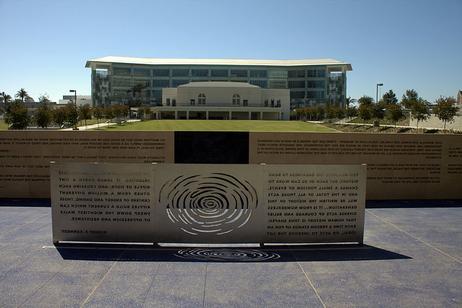
The newest and most expensive of the Taj Mahal schools on this list sits on the site where Robert F. Kennedy was assassinated in 1968, where the Ambassador Hotel was once located. While much of the original structure has been considerably altered to accommodate a school campus designed for more than 4,000 students, certain features of the original site remain. A marble memorial was erected to remind students of the historic significance of the location, and some of the school areas boast the original names of hotel rooms. For example, the auditorium was built where the Cocoanut Grove Nightclub once stood, and it boasts the same name and a tropical feel reminiscent of the original structure.
The Robert F. Kennedy Community Schools was a project in the making for some time, as school officials wrangled with historic preservationists over what to keep and what to get rid of from the original structure. The land under the building was also found to be contaminated when a methane gas field was discovered. The district had to pay $9 million in legal wrangling with the preservationists and another $15 million to preserve certain historic features. More money ($50 million, to be exact) was spent in methane mitigation and the purchase of a methane mitigation system.
Throughout the course of the project, the size of the school also grew to encompass a large kitchen with a high-quality pizza oven, a dance studio featuring cushioned wood floors, and a 10-acre public park. The school also boasts a collection of fine art murals and a state-of-the-art swimming pool. While the finished product is indeed a sight to behold, not everyone was pleased with the final cost of the project.
“New buildings are nice, but when they’re run by the same people who’ve given us a 50-percent dropout rate, they’re a big waste of taxpayer money,” Ben Austin, executive director of Parent Revolution and member of the California Board of Education, said at the time.
However, some educators argue that the buildings do serve a purpose, since students have been shown to learn more effectively in more pleasant surroundings. In 2026, questions about maintaining modern facilities have become increasingly important as districts consider HVAC systems, technology infrastructure, safety systems, energy use, and long-term capital planning. Public School Review's How Public Schools Manage Building Maintenance examines those current challenges.
Edward R. Roybal Learning Center
Another Los Angeles school with a hefty price tag is the Edward R. Roybal Learning Center, which opened in downtown Los Angeles in 2008, with a final price tag of $377 million. The project took more than two decades to complete because construction had to be halted twice: once after underground methane gas was discovered and again when a seismic fault line was found. American School & University reported that a new architect took over the project in 2003 and transformed the plan to create a positive learning environment that would benefit students well into the future.
The school holds around 2,500 students and offers nearly 73,000 square feet of classroom space, 418 underground parking spaces, and extensive community space.
The campus remains in operation in 2026. The Los Angeles Unified School District reports that Roybal Learning Center now includes academic departments, a Film and Television Magnet, Advanced Placement opportunities, counseling, special education, academic intervention, athletics, and other student supports. The school reports a 97% graduation rate and says 85% of its Class of 2026 met A-G requirements.
Central No. 9 Visual and Performing Arts High School
The final Los Angeles school on this list is the Central No. 9 Visual and Performing Arts High School that cost $232 million to complete. The school is now known as the Ramon C. Cortines School of Visual and Performing Arts. Students at this school can study performing arts, crafts, photography, and filmmaking in a positive environment that fosters creativity. The building, which is located near the Walt Disney Concert Hall and the Museum of Contemporary Art, took nine years to complete.
The school is breathtaking, inside and out. The exterior features a large, steel spiral sculpture, and the interior is filled with airy classrooms and studios. The school boasts a 950-seat performing arts center, a 300-car parking garage and an outdoor atrium for Japanese raku pottery.
In more recent information, the school is described as offering rigorous pre-conservatory arts training alongside a college preparatory academic program, with arts programs in dance, music, theatre arts, and visual arts.
Newton North High School
Not all the expensive schools are located on the west side of the country. Newton North High School, located in Newtonville, Massachusetts, opened in the fall of 2010 with a price tag of $197.5 million. The school won the 2011 Award for Design Excellence from the Boston Society of Architects.
“We thought the new layout for the site, which brings the entrance to the school into play with the sports field, was brilliant,” one of the judges said at the time.
The school features state-of-the-art athletic facilities, a swimming pool and climbing wall. A television studio is also located on the campus, which encompasses 413,000 square feet and was designed to accommodate approximately 1,865 students.
The original $197.5 million project budget is also documented in financial records from the City of Newton, which reported that the Massachusetts School Building Authority was expected to finance a portion of the construction cost while the remainder was financed locally through long-term debt.
New Brunswick High School
The last school on the list is also located on the East Coast, New Brunswick High School in New Jersey. The school, which cost $185 million, holds approximately 1,300 students with 400,000 square feet. The school boasts athletic fields with state-of-the-art lighting, rooftop solar panels, and Smart Boards instead of traditional blackboards.
The New Brunswick Public Schools history of the school confirms that the current $185 million complex opened on a new site along Route 27 in 2010, beginning the latest phase in a school history extending for more than 200 years.
Whether expensive facilities correlate with improved learning remains an important question, but these campuses certainly have awe-inspiring amenities that can excite students to attend school. In 2026, the debate also extends beyond the original construction price. Districts must consider the continuing costs of maintaining large and technologically advanced campuses while funding teachers, student services, transportation, curriculum, and other priorities. Public School Review's 10 Major Challenges Facing Public Schools in 2026 provides additional context on the financial and operational pressures facing today's public schools.