Getting Started

An overview of school designations, best practices for evaluating your options, and tips on choosing the best school for your child. Learn about Blue Ribbon, Vocational and Special Education schools. Get tips on finding the right school in a new neighborhood, city or state.

View the most popular articles in Getting Started:

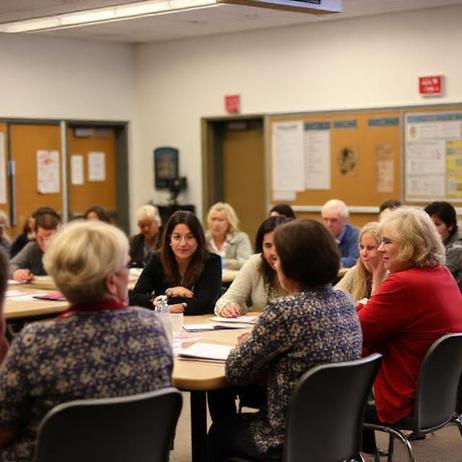
Adult Education and Community Programs in Public Schools

Updated
|
Adult Education and Community Programs in Public Schools
Learn how public schools provide adult education and community programs that expand career skills, literacy, and workforce readiness across local communities.

Adult Education & Community Programs Offered by Public Schools

Adult Education & Community Programs Offered by Public Schools play a critical role in helping adults access new skills, prepare for the workforce, and strengthen community engagement. In communities across the United States, public school districts have expanded these programs to meet evolving economic, social, and technological needs. As districts rethink how to serve learners of every age, Adult Education & Community Programs Offered by Public Schools have become central to local workforce development, family literacy, and lifelong learning.

Public schools already serve as anchor institutions, so extending services to adult learners is a natural evolution of their mission. The following report examines the most common Adult Education & Community Programs Offered by Public Schools, their impact on local communities, and how districts structure programming to support diverse populations. It also highlights 2025 trends in adult learning, blended instruction, and community partnerships.

PublicSchoolReview.com provides additional context about district-level innovation and community outreach initiatives, including how public schools adapt programming to meet local demand. These insights align with the growing interest in Adult Education & Community Programs Offered by Public Schools.

Why Public Schools Are Expanding Adult Education

Adult Education & Community Programs Offered by Public Schools respond to clear economic and social needs. Districts often launch programs to address:

  • Gaps in workforce preparedness
  • Demand for English language learning
  • Need for retraining among adults shifting careers
  • Family literacy for parents supporting student learning
  • Community enrichment and civic engagement

Because public schools already operate

. . .read more

How Documentation and Paperwork Block Access to Public Schools

Updated
|
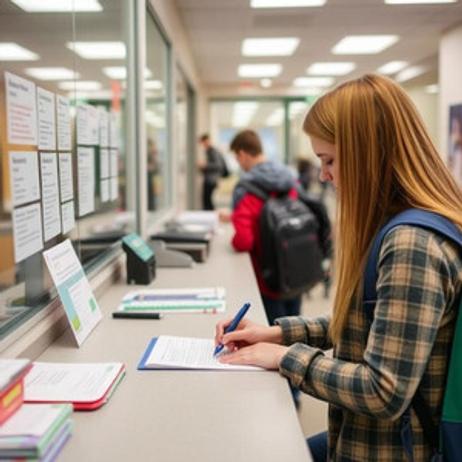
How Documentation and Paperwork Block Access to Public Schools
Discover how paperwork and documentation requirements can hinder access to public schools, and learn what rights families and schools must uphold.

How Documentation and Paperwork Can Block Access to Public Schools

Access to public education is foundational in democratic societies. Yet increasingly, families — especially those who are low-income, transient, or immigrants — face a formidable barrier: documentation and administrative paperwork. From proof of residency to immunization records, paperwork requirements are intended to streamline enrolment but often end up blocking access to public schools for the very students who need them most.

In 2025 this issue remains pressing: districts are still requiring extensive documentation, and research continues to demonstrate how these requirements disproportionately affect vulnerable students. This article explores how documentation requirements act as gatekeepers, why they persist, what the legal landscape reveals, and what effective practices look like for ensuring equitable access to public schools.

The Role of Documentation in School Enrollment

When families attempt to enrol a child in a public school, the school typically asks for documentation such as:

  • Proof of the child’s age (birth certificate or other valid record)
  • Transcript or prior school records (for transfers)
  • Immunization/health records
  • Proof of district residence (utility bill, lease, affidavit)
  • Guardianship or custody papers (if applicable)
  • Valid photo ID of the enrolling adult

On their face, these make sense: districts have obligations for attendance boundaries, health and safety, and record-keeping. But when the requirement becomes rigid, or when families cannot readily provide the documents due to transience, housing instability, language/cultural barriers, or immigration status, the result is exclusion or delay in enrolment.

A 2023 report in Atlanta found that families were required to

. . .read more

Texas Schools Enrollment Trends & Policy in 2025

Updated
|
Texas Schools Enrollment Trends & Policy in 2025
Latest data and policy changes on Texas public school enrollment growth, funding, and virtual education in 2025.

Texas Schools: Enrollment Skyrockets in 2025

Texas has long been a bellwether for national education trends, and in 2025, its public schools continue to grow and evolve at a remarkable pace. Statewide enrollment remains above 5.5 million students, making Texas the second-largest public education system in the country. But beyond raw numbers, new policies, demographic shifts, and virtual learning options are reshaping how students and families experience education across the state.

This article examines the latest enrollment data, funding changes, and program impacts, offering insights for parents, educators, and policymakers navigating this period of rapid transformation.

Enrollment Growth and Diversity

As of the 2023–24 school year, 5,517,464 students attended Texas public schools. The student body continues to diversify, reflecting broader population trends across the state:

  • Hispanic students represent just over 53% of enrollment.
  • White students account for roughly 25%, followed by African American students at about 13%, with smaller percentages for Asian, American Indian, and multiracial populations.
  • Nearly 62% of students are economically disadvantaged, the highest percentage in state history.
  • Almost one in four students is classified as an English Learner, and 14% receive special education services.

These demographic realities shape every facet of Texas education, from curriculum design to teacher recruitment and student support systems.

Policy and Funding in 2025

House Bill 2: A Record Investment

In June 2025, Governor Greg Abbott signed House Bill 2 (HB 2), an $8.5 billion public education package—the largest new investment in Texas schools in over a decade. The bill funds teacher pay

. . .read more

A Parent’s Guide to Public School Enrollment: Deadlines, Paperwork, and Common Pitfalls

Updated
|
A Parent’s Guide to Public School Enrollment: Deadlines, Paperwork, and Common Pitfalls
Everything parents need: enrollment deadlines, paperwork essentials, common pitfalls, and up-to-date school stats for smooth public school admission.

Introduction

Enrolling your child in public school is exciting—but can feel overwhelming. This guide walks you through timelines, required paperwork, and frequent missteps, using clear, parent-friendly language. It also includes current statistics: average per-student spending, student–teacher ratios, and how school demographics vary, helping you make informed decisions.

Why Timely Enrollment Matters

Signing up your child early ensures you secure a placement, avoid waitlists, and give both family and school time to plan. Missing key deadlines can mean being pushed into group assignments, less-preferred schools, or delayed start dates.

Key Enrollment Deadlines

Early Enrollment (typically January–March)

Most districts begin pre-kindergarten through grade 12 enrollment in winter:

  • Pre-K programs may open as early as January 1, especially for children turning 4 by September 1.
  • Kindergarten and higher: February–March deadlines are common.
  • Proof of residency (utility bill, lease agreement) and birth certificate are usually required during this window.

Mid-Year Transfers (often by December)

Transferring mid-year usually requires:

  • A transfer form from both districts.
  • Your most recent report card and attendance records.
  • Immunization records to meet health requirements.

Summer Fall Enrollment (April–July)

  • Many districts allow summer enrollment, but spaces fill fast. Enrolling by May often gives better class placement and choice.
  • Be sure to check open house dates and orientation schedules—often posted as early as April.

Paperwork Checklist: What You’ll Need

DocumentNotes
Birth CertificateOfficial copy to confirm age and identity.
Proof of ResidencyUtility bill, lease, or mortgage within district boundaries.
Immunization RecordsMust meet state requirements—check your state health department.
Previous School Records (if applicable)Report card, transcripts, IEP/504 plans.
Enrollment FormOften available online—complete
. . .read more

Which School Is Best: Public School vs. Charter School vs. Magnet School

Updated
|
Which School Is Best: Public School vs. Charter School vs. Magnet School
Many people assume that public school and private school are the only two options but there are actually several kinds of public school. Keep reading to learn more.

There are nearly 50 million students enrolled in U.S. public schools and another 6 million who attend private schools. Depending on where you live, you may have the option to choose where you send your child to school, but how do you make a smart choice? The first step is to learn the difference between the different types of public and private schools. Once you have a deeper understanding of the options, you can think about your child’s individual needs and preferences to make the smart choice. Keep reading to learn about traditional public, charter, and magnet schools in particular.

The Pros and Cons of Public School

A public school is one that receives funding from local, state, and federal government funds which means that they are required to admit students who live within the district. A private school, on the other hand, is one that gets its funding from a private organization or from private individuals. This means that they are able to choose which students they do and do not admit based on whatever criteria they decide.

While private schools do have their advantages, you can tell by the statistics already mentioned that more students attend private school than public school. But what are the pros and cons of public school, and what are the different types? Below you will find an overview of the pros and cons of public school and the following section will provide information about two types of public schools – charter

. . .read more

Recent Articles

How to Evaluate School Safety Beyond Headlines
Learn how to evaluate school safety beyond headlines by examining reliable data, school climate, emergency planning, bullying prevention, communication, student experiences, and everyday security practices before choosing a school.
Choosing a Public School for Executive Function Needs
Learn how to choose a public school for a child with executive function challenges by evaluating routines, classroom support, organization, accommodations, communication, transitions, and special education services before enrollment.
What School Climate Surveys Tell You Before Enrolling
Learn how school climate surveys reveal student safety, belonging, relationships, engagement, and support, and how families can interpret results carefully before choosing a public school for their child today.