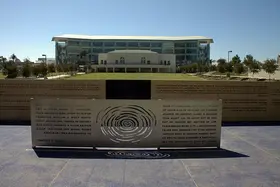
Chain of Lakes Collegiate High School is located at 999 Avenue H NE in Winter Haven, Florida, United States. A charter school, it is affiliated and colocated with Polk State College.
Chain Of Lakes Collegiate High School serves 340 students in grades 10-12.
The percentage of students achieving proficiency in math is 40-59% (which is approximately equal to the Florida state average of 57%).
The student-teacher ratio of 49:1 is higher than the Florida state level of 17:1.
Minority enrollment is 59% of the student body (majority Hispanic), which is lower than the Florida state average of 66% (majority Hispanic).
Quick Facts (2026-27)
- School Type: Charter School
- Grades: 10-12
- Enrollment: 340 students
- Student-Teacher Ratio: 49:1
- Minority Enrollment: 59%
- Graduation Rate: ≥95% (Top 20% in FL)
- Math Proficiency: 40-59%
- Source: National Center for Education Statistics (NCES), FL Dept. of Education
Top Rankings
Chain Of Lakes Collegiate High School ranks among the top 20% of public schools in Florida for:
Category
Attribute
Graduation Rate
School Overview
Chain Of Lakes Collegiate High School's student population of 340 students has stayed relatively flat over five school years.
The teacher population of 7 teachers has declined by 12% over five school years.
School Type
Grades Offered
Grades 10-12
(No virtual instruction)
(No virtual instruction)
Total Students
340 students
Total Classroom Teachers
7 teachers
Year Founded
1964
School Calendar
School Rankings
The diversity score of Chain Of Lakes Collegiate High School is 0.67, which is less than the diversity score at state average of 0.70. The school's diversity has stayed relatively flat over five school years.
Math Test Scores (% Proficient)
(16-17)40-59%
57%
Student-Teacher Ratio
49:1
17:1
Asian
2%
3%
Hispanic
36%
38%
Black
19%
21%
White
41%
34%
Hawaiian
1%
n/a
Two or more races
1%
4%
All Ethnic Groups
Graduation Rate
≥95%
88%
Chronically Absent Students
(22-23)1.5%
33.8%
Eligible for Free Lunch
1%
42%
Eligible for Reduced Lunch (19-20)
3%
6%
School Statewide Testing
School District Name
Sports
Colors
Blue and Yellow
Source: National Center for Education Statistics (NCES), FL Dept. of Education
Frequently Asked Questions
What is the graduation rate of Chain Of Lakes Collegiate High School?
The graduation rate of Chain Of Lakes Collegiate High School is 95%, which is higher than the Florida state average of 88%.
How many students attend Chain Of Lakes Collegiate High School?
340 students attend Chain Of Lakes Collegiate High School.
What is the racial composition of the student body?
41% of Chain Of Lakes Collegiate High School students are White, 36% of students are Hispanic, 19% of students are Black, 2% of students are Asian, 1% of students are Hawaiian, and 1% of students are Two or more races.
What is the student-teacher ratio of Chain Of Lakes Collegiate High School?
Chain Of Lakes Collegiate High School has a student ration of 49:1, which is higher than the Florida state average of 17:1.
What grades does Chain Of Lakes Collegiate High School offer ?
Chain Of Lakes Collegiate High School offers enrollment in grades 10-12 (No virtual instruction).
What school district is Chain Of Lakes Collegiate High School part of?
Chain Of Lakes Collegiate High School is part of Polk School District.
School Reviews
Review Chain Of Lakes Collegiate High School. Reviews should be a few sentences in length. Please include any comments on:
- Quality of academic programs, teachers, and facilities
- Availability of music, art, sports and other extracurricular activities
Recent Articles

When Your Child Gets a Teacher You Didn't Request
Learn what parents can do when a child is assigned to an unexpected teacher, including when to wait, communicate, document concerns, request support, and seek reassignment appropriately.
Before Accepting a Public School Seat: 15 Checks
Before accepting a public school seat, parents should verify enrollment terms, transportation, staffing, academics, safety, support services, schedules, attendance rules, extracurriculars, costs, and long-term placement details carefully.

Will This Public School Offer the Same Programs Next Year?
Learn how parents can determine whether public school programs will continue next year by checking budgets, enrollment, staffing, board documents, grants, course schedules, and district priorities before enrolling.