For the 2026 school year, there are 2 public schools serving 1,224 students in Prairie City School District 4. This district's average testing ranking is 7/10, which is in the top 50% of public schools in Oregon.
Public Schools in Prairie City School District 4 have an average math proficiency score of 32% (versus the Oregon public school average of 31%), and reading proficiency score of 44% (versus the 44% statewide average).
Minority enrollment is 30% of the student body (majority Hispanic), which is less than the Oregon public school average of 42% (majority Hispanic).
Overview
This School District
This State (OR)
# Schools
3 Schools
1,302 Schools
# Students
1,224 Students
541,708 Students
# Teachers
68 Teachers
29,488 Teachers
Student-Teacher Ratio
18:1
18:1
Student By Grade
District Rank
Prairie City School District 4, which is ranked within the top 50% of all 185 school districts in Oregon (based off of combined math and reading proficiency testing data) for the 2022-2023 school year.
The school district's graduation rate of 57% has increased from 50% over five school years.
Overall District Rank
#63 out of 187 school districts
(Top 50%)
(Top 50%)
Math Test Scores (% Proficient)
32%
31%
Reading/Language Arts Test Scores (% Proficient)
44%
44%
Science Test Scores (% Proficient)
26%
30%
Graduation Rate
57%
81%
Students by Ethnicity:
Diversity Score
0.48
0.60
% American Indian
1%
1%
% Asian
1%
4%
% Hispanic
16%
26%
% Black
2%
3%
% White
70%
58%
% Hawaiian
1%
1%
% Two or more races
9%
7%
All Ethnic Groups
District Revenue and Spending
The revenue/student of $4,086 in this school district is less than the state median of $18,279. The school district revenue/student has declined by 87% over four school years.
The school district's spending/student of $3,704 is less than the state median of $19,325. The school district spending/student has declined by 87% over four school years.
Total Revenue
$5 MM
$9,902 MM
Spending
$5 MM
$10,468 MM
Revenue / Student
$4,086
$18,279
Spending / Student
$3,704
$19,325
Best Prairie City School District 4 Public Schools (2026)
School
(Math and Reading Proficiency)
(Math and Reading Proficiency)
Location
Quick Facts
Rank: #11.
Prairie City School
(Math: 20-24% | Reading: 30-34%)
Rank:
Rank:
3/
Bottom 50%10
740 Overholt St
Prairie City, OR 97869
(541) 820-3314
Prairie City, OR 97869
(541) 820-3314
Gr: K-12 | 245 students Student-teacher ratio: 11:1 Minority enrollment: 8%
Rank: n/an/a
Virtual Preparatory Academy Of Oregon
Charter School
740 S Overholt St
Prairie City, OR 97869
(541) 304-2202
Prairie City, OR 97869
(541) 304-2202
Gr: K-12 | 37 students Student-teacher ratio: 6:1 Minority enrollment: 46%
Frequently Asked Questions
How many schools belong to Prairie City School District 4?
Prairie City School District 4 manages 2 public schools serving 1,224 students.
What is the rank of Prairie City School District 4?
Prairie City School District 4 is ranked #69 out of 185 school districts in Oregon (top 50%) based off of combined math and reading proficiency testing data for the 2022-2023 school year.
What is the racial composition of students in Prairie City School District 4?
70% of Prairie City School District 4 students are White, 16% of students are Hispanic, 9% of students are Two or more races, 2% of students are Black, 1% of students are American Indian, 1% of students are Asian, and 1% of students are Hawaiian.
What is the student/teacher ratio of Prairie City School District 4?
Prairie City School District 4 has a student/teacher ratio of 18:1, which is equal to the Oregon state average of 18:1.
What is Prairie City School District 4's spending/student ratio?
The school district's spending/student of $3,704 is less than the state median of $19,325. The school district spending/student has declined by 87% over four school years.
Recent Articles

The Experience of Being a New Student Mid-Year
Learn what students experience when transferring to a public school mid-year and how schools help new students adjust socially and academically.

How Public Schools Structure Free Periods or Study Time
Learn how public schools structure free periods or study time to support homework, tutoring, enrichment, and student independence.
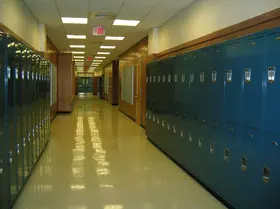
The Role of Hallways, Common Areas, and Shared Spaces in Public Schools
Discover how hallways, cafeterias, libraries, and shared spaces shape student learning, safety, and school culture in public schools.