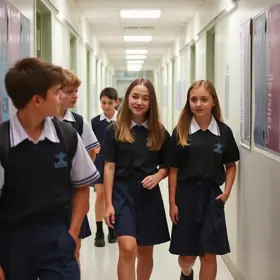
Reiche School serves 31 students in grades Prekindergarten-8.
The student-teacher ratio of 10:1 was lower than the Nebraska state level of 12:1.
Minority enrollment was 10% of the student body (majority Hispanic), which was lower than the Nebraska state average of 39% (majority Hispanic).
School Overview
Grades Offered
Grades Prekindergarten-8
Total Students
31 students
Total Classroom Teachers
3 teachers
School Rankings
Student-Teacher Ratio
10:1
12:1
Hispanic
7%
23%
Black
3%
7%
White
90%
61%
All Ethnic Groups
Eligible for Free Lunch
26%
35%
Eligible for Reduced Lunch
19%
8%
School Statewide Testing
School District Name
Source: National Center for Education Statistics (NCES), NE Dept. of Education
Frequently Asked Questions
How many students attend Reiche School?
31 students attend Reiche School.
What is the racial composition of the student body?
90% of Reiche School students are White, 7% of students are Hispanic, and 3% of students are Black.
What is the student-teacher ratio of Reiche School?
Reiche School has a student ration of 10:1, which is lower than the Nebraska state average of 12:1.
What grades does Reiche School offer ?
Reiche School offers enrollment in grades Prekindergarten-8
What school district is Reiche School part of?
Reiche School is part of Norfolk Public Schools.
Recent Articles

How Often Does Your Child's School Change Teachers Between Grade Levels?
Learn how teacher movement between grade levels affects continuity, experience, instruction, and school stability, plus the questions parents should ask about staffing patterns before choosing a public school today.

The School Pickup Test: What Arrival and Dismissal Reveal About a Public School
Discover what school arrival and dismissal reveal about safety, supervision, organization, communication, student behavior, transportation, and school climate before choosing the right public school for your child and family.
Should Siblings Attend the Same Public School?
Should siblings attend the same public school? Learn when academic needs, learning styles, programs, social fit, support services, and individual interests may make different schools better choices for children.