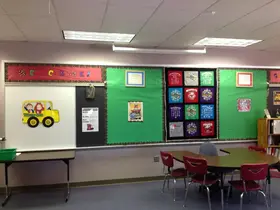
Wisconsin Heights Elementary School serves 391 students in grades Prekindergarten-5.
The percentage of students achieving proficiency in math is 65-69% (which is higher than the Wisconsin state average of 40%).
The student-teacher ratio of 13:1 is equal to the Wisconsin state level of 13:1.
Minority enrollment is 16% of the student body (majority Hispanic), which is lower than the Wisconsin state average of 34% (majority Hispanic).
Quick Facts (2026)
- Grades: Prekindergarten-5
- Enrollment: 391 students
- Student-Teacher Ratio: 13:1
- Minority Enrollment: 16%
- Math Proficiency: 65-69% (Top 10% in WI)
- Attendance Zone: Black Earth Elementary's attendance zone covers the entire district in Mazomanie, WI, encompassing approximately 104.5 square miles. The zone typically allows for a 10-15 minute drive to the school, with an average distance of 5.8 miles to its edge and a maximum of 8.3 miles to the furthest point.
- Source: National Center for Education Statistics (NCES), WI Dept. of Education
Top Rankings
Wisconsin Heights Elementary School ranks among the top 20% of public schools in Wisconsin for:
Category
Attribute
Math Proficiency
School Overview
Wisconsin Heights Elementary School's student population of 391 students has grown by 76% over five school years.
The teacher population of 31 teachers has grown by 82% over five school years.
Grades Offered
Grades Prekindergarten-5
(Supplemental Virtual)
Total Students
391 students
Total Classroom Teachers
31 teachers
School Rankings
The diversity score of Wisconsin Heights Elementary School is 0.29, which is less than the diversity score at state average of 0.54. The school's diversity has stayed relatively flat over five school years.
Math Test Scores (% Proficient)
65-69%
40%
Student-Teacher Ratio
13:1
13:1
American Indian
n/a
1%
Asian
2%
4%
Hispanic
5%
14%
Black
1%
9%
White
84%
66%
Hawaiian
n/a
n/a
Two or more races
8%
6%
All Ethnic Groups
Chronically Absent Students
(22-23)16.1%
24%
Participates in the National School Lunch Program (NSLP)
Yes
Eligible for Free Lunch
21%
36%
Eligible for Reduced Lunch
6%
4%
School Statewide Testing
School District Name
Source: National Center for Education Statistics (NCES), WI Dept. of Education
Frequently Asked Questions
How many students attend Wisconsin Heights Elementary School?
391 students attend Wisconsin Heights Elementary School.
What is the racial composition of the student body?
84% of Wisconsin Heights Elementary School students are White, 8% of students are Two or more races, 5% of students are Hispanic, 2% of students are Asian, and 1% of students are Black.
What is the student-teacher ratio of Wisconsin Heights Elementary School?
Wisconsin Heights Elementary School has a student ration of 13:1, which is equal to the Wisconsin state average of 13:1.
What grades does Wisconsin Heights Elementary School offer ?
Wisconsin Heights Elementary School offers enrollment in grades Prekindergarten-5 (Supplemental Virtual).
What school district is Wisconsin Heights Elementary School part of?
Wisconsin Heights Elementary School is part of Wisconsin Heights School District.
School Reviews
Review Wisconsin Heights Elementary School. Reviews should be a few sentences in length. Please include any comments on:
- Quality of academic programs, teachers, and facilities
- Availability of music, art, sports and other extracurricular activities
Recent Articles

How to Evaluate School Safety Beyond Headlines
Learn how to evaluate school safety beyond headlines by examining reliable data, school climate, emergency planning, bullying prevention, communication, student experiences, and everyday security practices before choosing a school.
Choosing a Public School for Executive Function Needs
Learn how to choose a public school for a child with executive function challenges by evaluating routines, classroom support, organization, accommodations, communication, transitions, and special education services before enrollment.
What School Climate Surveys Tell You Before Enrolling
Learn how school climate surveys reveal student safety, belonging, relationships, engagement, and support, and how families can interpret results carefully before choosing a public school for their child today.