When a serious incident occurs at a school, news coverage can understandably shape how families think about safety. But headlines, social media posts, and isolated events do not provide a complete picture of the everyday environment students experience.
Learning how to evaluate school safety requires a broader approach. Families should consider official safety data, school climate, bullying, emergency preparedness, communication practices, building access, student behavior, and how effectively adults respond when problems emerge.
The challenge is to distinguish between information that reveals a meaningful pattern and information that simply reflects a highly visible event. No school can eliminate every risk, but families can make more informed comparisons by examining several types of evidence rather than allowing one statistic or headline to determine their judgment.
Start With Reliable School Safety Data
Families researching a school often encounter information from multiple sources. Local news reports may cover fights, threats, arrests, or emergencies, while district websites may emphasize safety programs and security investments.
Neither source should necessarily be ignored. Instead, look for official data that can provide context.
The National Center for Education Statistics maintains national indicators covering school crime and safety, including information related to violent deaths and shootings associated with schools.
National statistics cannot tell you exactly what happens at one particular school, but they can help parents understand which safety issues are relatively common and which are unusual.
At the local level, check state report cards, district safety reports, school board documents, and other publicly available records. When possible, look at several years rather than a single reporting period.
Look for Patterns Instead of Isolated Incidents
A headline describing a fight or threat naturally attracts attention. The next question should be whether the event represents an isolated occurrence or part of a recurring problem.
Imagine two schools. One experienced a serious incident last year but otherwise has relatively few disciplinary problems. Another has never appeared prominently in local news but records frequent fights, bullying complaints, classroom disruptions, or disciplinary referrals.
Which is safer?
The answer cannot be determined from headlines alone.
Parents should investigate the frequency, type, and trajectory of incidents. Are problems increasing or declining? Are they concentrated in a particular location or grade? Has the school changed policies or supervision in response?
Public School Review's When a Higher-Rated School Isn't the Better Fit makes a similar point about evaluating schools generally. Highly visible ratings provide useful information, but families need additional evidence to understand the environment their child will actually experience.
School Climate Is Part of School Safety
Physical security is only one dimension of safety.
Students also need to feel comfortable approaching adults, reporting problems, moving through common areas, and participating in school without persistent fear of harassment or intimidation.
That makes school climate an important part of a safety evaluation.
Ask whether the school conducts student climate surveys and whether results are available publicly. Useful questions may address whether students feel safe, whether they trust adults, whether rules are enforced consistently, and whether they believe teachers respond effectively to inappropriate behavior.
Public School Review's How to Spot a School Climate Problem Before Enrolling discusses warning signs such as inconsistent discipline, poor communication, weak student-adult relationships, and disengagement.
During a visit, observe the environment yourself. Notice interactions in hallways and common spaces. Do adults appear present and engaged? Do students seem comfortable approaching teachers and administrators? Are transitions orderly without feeling excessively restrictive?
These observations are not definitive evidence, but they can add context to published statistics.
Examine Bullying Separately From Major Safety Incidents
When parents hear "school safety," they may immediately think about extreme violence. For many students, however, everyday safety concerns involve bullying, harassment, intimidation, or repeated peer conflict.
The Centers for Disease Control and Prevention defines bullying as unwanted aggressive behavior involving an observed or perceived power imbalance and repetition, or a high likelihood of repetition. The agency also notes that bullying can affect students' social, emotional, academic, and physical well-being.
Ask prospective schools how students report bullying, how reports are investigated, how families are informed, and what happens after an intervention.
A school reporting bullying incidents is not automatically less safe than one reporting very few. Reporting practices matter. A school where students trust adults enough to report problems may document more incidents than one where students remain silent.
Instead of looking only at the number of reports, ask what happens after a student speaks up.
Evaluate Everyday Supervision
Safety often depends on ordinary routines that rarely appear in public statistics.
Hallways, cafeterias, playgrounds, locker rooms, parking lots, buses, and arrival and dismissal areas can create different supervision challenges from classrooms.
Families touring a school should pay attention to these spaces.
Public School Review's The Role of Hallways, Common Areas, and Shared Spaces in Public Schools examines how the design and management of shared areas can affect student interactions, supervision, school culture, and safety.
Ask who supervises lunch periods and passing times. Find out how younger students are monitored during arrival and dismissal. For high schools, ask how administrators supervise parking areas and manage students leaving and returning to campus.
The objective is not to find a school where students are constantly watched. Rather, families should look for evidence that administrators understand where problems are most likely to occur and have appropriate supervision in place.
Ask About Emergency Planning, Not Just Security Equipment
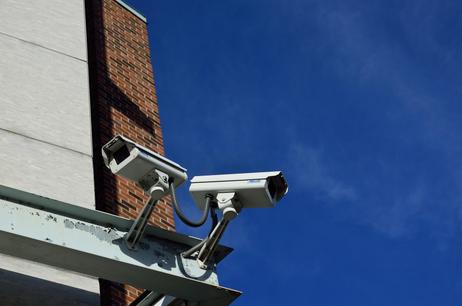
Visible security measures can be reassuring. Controlled entrances, visitor check-in procedures, cameras, identification systems, and communication technology may all contribute to campus safety.
But equipment alone cannot tell parents how effectively a school will respond during an emergency.
Federal guidance from SchoolSafety.gov emphasizes a broader approach. Its 2024 emergency-planning guidance identifies measures including developing an emergency operations plan, establishing a planning team, collaborating with community partners, considering the needs of people with disabilities, conducting appropriate exercises and drills, and regularly reviewing procedures.
Ask administrators about the school's emergency operations plan. Families do not need access to sensitive security details, but school officials should generally be able to explain the types of emergencies for which they prepare, how staff members are trained, and how parents receive information.
Emergency planning should extend beyond violence. Schools may need to respond to severe weather, fires, medical emergencies, hazardous materials, utility failures, transportation incidents, and other situations.
Also ask about reunification. If students must leave the building or campus, how will families learn where to go? How will the school verify that students are released to authorized adults?
A sophisticated security system is valuable only when it operates within a broader culture of preparedness.
Consider How Students Report Concerns
Students frequently see or hear things adults do not.
For that reason, families should ask how a school encourages students to report concerning behavior. Depending on the district, options may include speaking directly with teachers or counselors, anonymous reporting systems, online forms, telephone tip lines, or other mechanisms.
The quality of the response matters as much as the existence of a reporting system.
Ask who receives reports and what happens next. How are urgent concerns escalated? How does the school distinguish between conflict, bullying, threats, and emergencies? Are students taught when and how to seek help?
A reporting mechanism that students do not trust may provide limited protection.
Families should also listen for whether administrators can describe their procedures clearly without disclosing confidential information about individual students.
Compare Discipline Data Carefully
Suspension and discipline statistics can offer another window into school safety, but they require interpretation.
A high suspension rate might indicate significant behavioral problems. It could also reflect particularly strict disciplinary policies. A low suspension rate might indicate a calm environment, or it could reflect greater use of alternatives to exclusionary discipline.
Numbers alone cannot distinguish among these possibilities.
Ask what behaviors most commonly result in disciplinary referrals and whether the school tracks repeated incidents. Find out how administrators address lower-level behavior before it escalates.
This is especially useful when comparing schools serving similar age groups. A middle school and elementary school should not be expected to have identical disciplinary patterns.
Parents should also examine whether school rules are understandable and consistently enforced. Predictability matters because students are more likely to know what is expected when adults apply policies consistently.
Look at Attendance as a Supporting Signal
Attendance is not normally classified as a safety statistic, yet it can provide useful context.
Students miss school for many reasons, including illness, transportation difficulties, family circumstances, disengagement, and academic problems. In some cases, persistent avoidance can also accompany bullying, anxiety about school, or other concerns about the environment.
Public School Review's When Absenteeism Signals a School Fit Problem explains why families should look beyond the attendance number itself and investigate patterns and possible underlying causes.
A school's absenteeism rate should never be treated as proof that the campus is unsafe. It is better used as one supporting indicator that can prompt additional questions.
Ask How the School Communicates With Families
A school's response after an incident can reveal as much as the incident itself.
Ask how administrators notify parents when something affects school operations or student safety. Does the district use text messages, email, automated calls, an app, or several channels? How are families expected to receive updates during an extended emergency?
Also consider the quality of routine communication.
Schools that communicate clearly before problems occur can make it easier for families to understand procedures when something does happen. Parents should know where official information will appear rather than depending on neighborhood social media posts during an unfolding event.
Communication should be timely and useful while still respecting student privacy and avoiding disclosure of sensitive security information.
Questions Worth Asking During a School Visit
A short set of specific questions can reveal more than simply asking, "Is this school safe?"
- What safety concerns does the school monitor most closely?
- How are bullying and student threats reported and investigated?
- How frequently are emergency procedures reviewed?
- How will parents receive information during an emergency?
- Which parts of the campus require the most supervision?
- What changes has the school made in response to recent safety data or student feedback?
- How does the school determine whether its safety strategies are working?
The strongest answers usually include concrete procedures and examples rather than broad assurances.
How to Evaluate School Safety in Context
There is no single statistic that can identify the safest public school.
A serious headline deserves attention, but so do quieter indicators such as bullying patterns, school climate, discipline, supervision, attendance, communication, and emergency preparedness. Families should also consider whether administrators acknowledge problems and can explain what they have done in response.
Learning how to evaluate school safety means replacing a search for absolute certainty with a more disciplined examination of evidence.
Look across multiple years. Compare several sources. Ask specific questions. Distinguish an isolated event from a persistent pattern, and consider both physical security and students' everyday experiences.
Headlines can tell families that something happened. A careful school safety evaluation helps them understand what that event means, how the school responded, and what the broader evidence says about the environment their child would enter each morning.