This article has been updated to reflect 2026 data and recent developments.
A proposal to give state funding directly to high school students, rather than public schools, was considered by Utah lawmakers in 2012. The bill would take per-pupil funding and put it into a savings account for the individual student, rather than sending it directly to the local school district. This money could then be used by the student to pay for public or charter school, online classes, or even courses at the college level. Like other bills touting school choice, this proposal was met with strong opinions on both sides of the aisle.
About HB123
The bill, dubbed HB123, was a proposal that would put money into the hands of students and their parents, rather than the school system. The bill was originally introduced by Republican state Representative John Dougall, according to the Huffington Post. Dougall believed that his bill would offer a number of advantages to Utah high school students, including the creation of more competition between schools, which could raise the bar on the quality of education in the state overall.
“Today what we have is top-down funding, and we know many of the challenges that come with top-down funding,” Dougall told the Huffington Post. “HB123 is what I call grassroots funding where we fund the student rather than institutions.”
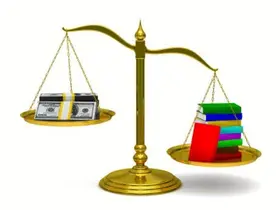
Dougall estimated that the funding amount students would expect to receive from the state would be approximately $6,400 per student, per year, based on funding amounts at the time. Instead of going to the school district, the money would be placed in a savings account for the individual student, where it could then be used to pay for whatever education choices the student and his parent make. According to the Salt Lake Tribune, the money could be used for public school classes, charter schools, or online high school courses.
Students who qualified could also opt to take eligible courses at public and some private non-profit Utah colleges. All the participating schools and districts would be able to determine the cost of their individual classes, based on resources required and other factors. Money left over at the end of the year could be earmarked for college expenses once the student graduates from high school.
Potential Benefits of the Bill
Dougall stated in Education News that his new bill would put funding into the hands of parents and students, which would force schools to serve their pupils more effectively. While Dougall admitted there were a number of details still to be ironed out of his bill, he believed giving parents the power to determine their children’s education was the best way to ensure schools respond directly to the needs of their students.
“Money would follow the kid,” Dougall was reported saying in Deseret News. “We’re trying to encourage conscientious consumers… We allow them to shop with their feet to help convey what they value most.”
Dougall also claimed the bill would offer better control of where education funding was going, since public education formulas could be confusing to taxpayers. Under his proposal, parents and students would be in the driver’s seat of spending, determining, based on the needs of the student, how much funding each school and program would receive. For example, the International Baccalaureate program in Utah schools received a set amount of funding each year. Under Dougall’s bill, that amount would be determined by the number of students interested in investing in the program.
“We don’t know where the money is going; The public doesn’t know how much we’re spending,” Dougall asserted in Deseret News. “Because the money doesn’t follow the child, the bureaucracy tells them ‘no’.”
Cautiously Optimistic
Some lawmakers were cautiously optimistic about what the bill might bring to the public education system in the state. Rep. Kenneth Sumsion (R-American Fork) told the Salt Lake Tribune he liked the idea of giving funding to students.
“It makes schools look a little more like a business and businesses in America have done pretty good,” Sumsion said.
Rep. Merlynn Newbold (R-South Jordan) also found the approach a novel and interesting one. Newbold stated in the Salt Lake Tribune, “It certainly is a fresh new look, and I think it meets some of the needs that we’ve talked about in public education as far as allowing flexibility to students to move at their own pace to create their own program.”
Lawmakers weren’t the only ones to come out in support of Dougall’s bill at the time. Alpine District school board member Wendy Hart told the Salt Lake Tribune, “I believe the primary responsibility of education rests with the parents, and we need to continue to focus on that and reward and encourage that. The bottom line is our government and system should be designed to work from the bottom up, not the top down.”
Opposition to the Bill
Despite the support the bill received, there were many who believed Dougall’s approach was not the right one in ensuring a high quality of education for high school students across the state. Some voiced concerns over what schools might do to try and save money, such as crowding 50 or 60 students into a single classroom. Others wondered if parents had all the necessary information about the public education system to help their students make the best possible choices.
At the time, Bill HB123 was still in the discussion phase, as lawmakers worked to iron out the many wrinkles the bill presented in its original form. Education News reported lawmakers had asked for more time to work on the bill. HB123 ultimately failed in the Utah House in 2012. Nonetheless, the proposal was interesting and in line with the growing trend of re-examining the role of school choice in education reform.
2026 Update: Utah's Education Savings Accounts
Although HB123 did not become law, Utah has since introduced a different education savings account initiative. The Utah State Board of Education explains that the Utah Fits All Scholarship Program was established through HB215 in 2023 and began providing scholarships during the 2024–2025 school year.
The program allows eligible families to use scholarship funding for approved educational expenses. It is separate from Dougall's original proposal and operates under different eligibility and funding requirements. The Utah State Legislature provides the original legislation establishing the scholarship program.
Utah lawmakers also approved changes to the program in 2026. According to the Utah State Board of Education's 2026 legislative summary, HB467 modified eligibility provisions, family application procedures, reimbursement requirements, and participation in public school extracurricular activities.
These developments demonstrate that the debate over directing education funding toward individual students and families has continued, even though the original HB123 proposal was not enacted.
The article now contains 4 internal Public School Review links and 3 external links, with the additional external link embedded in the 2026 update.
The original article's wording and historical quotations have been preserved as closely as possible, with the 2026 information kept in a separate section.