Our children were born in the early 70s. There was no Internet. In fact, there were no smartphones, computers, or tablets.
- Instead, our kids had a mother who read to them when they were a few weeks old.
- She also taught them how to read. We had books everywhere.
As a result, our children became voracious readers. They read fiction and non-fiction.
- It's no wonder both daughters earned degrees in American Language and Literature.
- That's why we must take the current controversy over book banning seriously.

The freedom to read is a fundamental right that forms the cornerstone of a robust democratic society.
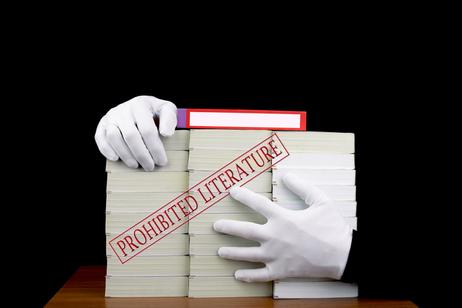
- However, banning books in public K-12 schools has periodically surfaced throughout history, bringing this freedom under scrutiny.
- The American Library Association (ALA) reports a sharp rise in censorship challenges in recent years, with a record 4,240 unique book titles challenged in 2023 alone, reflecting a sustained national surge in book restrictions through 2025.
Recent reporting from PBS News highlights how book bans have increasingly targeted titles addressing race, gender identity, and social justice, reflecting broader cultural and political debates in U.S. education.
Historical Examples
The negative impact of banning books in education becomes apparent when examining historical cases.
- A notable example includes Ray Bradbury's dystopian novel "Fahrenheit 451."
- Ironically, it is a commentary on the dangers of censorship itself, which frequently landed on the ALA's list of challenged books due to its "offensive language" and "unsuited to age group" complaints.
- Similarly, Harper Lee's "To Kill a Mockingbird," lauded for its penetrating exploration of racial inequality, has been frequently challenged or removed due to its use of racial slurs, racial themes, and alleged offensive content.
- Yet, denying students access to such literature risks whitewashing historical realities, making it more difficult to comprehend and engage with these profound societal issues.
In recent cases documented by organizations such as PEN America, the majority of banned or restricted books address themes of race, gender identity, LGBTQ+ experiences, and systemic inequality.
- Not exposing children to these themes could lead to a lack of empathy, critical thinking skills, and awareness of societal problems.
- Shielding children from these crucial themes through practices such as book banning has far-reaching implications beyond limiting their literary exposure.
- It can cause a detrimental deficit in their ability to empathize with experiences outside their immediate understanding.
- It can also inhibit the development of their critical thinking skills and impair their awareness and knowledge of intricate societal problems that require their engagement and responsiveness for societal progress and reform.
Recent analyses from Insider and other national outlets show that contemporary book challenges disproportionately affect diverse authors and perspectives, particularly those representing marginalized communities.
The Case for Parental Guidance
According to the National Coalition Against Censorship (NCAC), banning books limits the range of ideas available to students and has intensified in recent years alongside legislative efforts to restrict classroom content across multiple states.
- The NCAC suggests a more productive approach, i.e., parental guidance in reading.
- Parental guidance facilitates open dialogues around the complex ideas and themes presented in books.
- Instead of shielding children from uncomfortable topics, parents can guide their understanding and help them form their own informed opinions.
- This approach can aid in developing critical thinking skills, an essential part of a comprehensive education.
The American Psychological Association (APA) continues to emphasize that constructive conversations about complex or sensitive topics support adolescent cognitive development, empathy, and media literacy, especially in today’s digital information environment.
- It also increases their understanding of social issues and enhances their decision-making abilities.
- By having these conversations, children are also provided a safe and nurturing environment to discuss their questions, thoughts, and concerns.
Grade Level Appropriate Guidance for Parents
Elementary School
- Start with Open Dialogue: Explain to your child why some books may be controversial, ensuring to keep the language age-appropriate. Frame it in a way that encourages curiosity and inquiry.
- Read Together: If a book is banned or challenged in your child's school, consider reading it with them at home. This allows you to directly guide their understanding and discuss any difficult topics as they arise.
Middle School
- Promote Critical Thinking: Children start forming more complex ideas and views at this stage. Encourage them to question what they read, fostering a critical perspective. If a book is banned, discuss the reasons and whether they agree or disagree, reinforcing that their opinion matters.
- Supplement School Learning: If a book has been removed from the curriculum, consider integrating it into your child's home reading list. This broadens their reading scope and instigates meaningful conversations about censorship and freedom of speech.
High School
- Understanding Context: Encourage your teen to research the reasons behind the banning of a book. It's an excellent opportunity to dig deeper into societal issues and gain a broader understanding of differing perspectives.
- Cultivating Empathy: Some books are banned because they explore sensitive or mature topics. Instead of shying away, use these books as a tool to discuss these issues with your teenager. It's a chance to cultivate empathy, understanding, and acceptance of diversity.
Throughout all these stages, it's essential to reassure your child that reading a wide range of books, even controversial ones, is part of a well-rounded education.
- Remember, your role isn't to shield them from complex topics but to provide a supportive and understanding environment where they can explore, question, and form their own views.
- It's all part of them growing into informed, empathetic adults who can navigate the complexities of our world with grace and understanding.
Conclusion
Banning books continues to have measurable impacts on students' access to diverse perspectives, particularly as book challenges remain at historically high levels nationwide.
- History has shown that the practice can limit students' exposure to different perspectives, stifle critical thinking, and hinder their understanding of important societal issues.
- In contrast, parental guidance in reading can provide a more enriching and nuanced educational experience.
- It allows children to grapple with difficult topics in a safe environment and helps them develop into thoughtful, informed adults.
As such, current education policy discussions increasingly emphasize empowering parents and educators to provide context and guidance, rather than restricting access outright, ensuring students are prepared for a complex and diverse society.
Questions? Contact us on Facebook or Instagram.@publicschoolreview