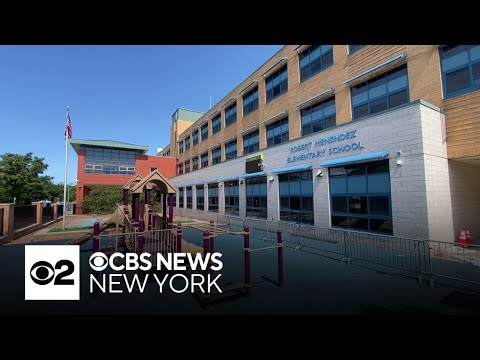
Serving 506 students in grades Kindergarten-6, Public School Number Three ranks in the bottom 50% of all schools in New Jersey for overall test scores (math proficiency is bottom 50%, and reading proficiency is bottom 50%).
The percentage of students achieving proficiency in math is 27% (which is lower than the New Jersey state average of 38%). The percentage of students achieving proficiency in reading/language arts is 23% (which is lower than the New Jersey state average of 49%).
The student-teacher ratio of 11:1 is equal to the New Jersey state level of 11:1.
Minority enrollment is 95% of the student body (majority Hispanic), which is higher than the New Jersey state average of 63% (majority Hispanic).
Quick Facts (2026-27)
- Grades: Kindergarten-6
- Enrollment: 506 students
- Student-Teacher Ratio: 11:1
- Minority Enrollment: 95%
- Overall Testing Rank: Bottom 50% in NJ
- Math Proficiency: 27% (Btm 50%)
- Reading Proficiency: 23% (Btm 50%)
- Science Proficiency: 6-9% (Btm 50%)
- Attendance Zone: Robert Menendez Elementary School is centrally located in West New York, NJ, serving a compact attendance area of approximately 0.1 square miles. Most families can expect a typical drive of 5-10 minutes to the school, with the furthest edge of the zone being about 0.4 miles away.
- Source: National Center for Education Statistics (NCES), NJ Dept. of Education
School Overview
Public School Number Three's student population of 506 students has stayed relatively flat over five school years.
The teacher population of 46 teachers has grown by 6% over five school years.
Grades Offered
Grades Kindergarten-6
(No virtual instruction)
(No virtual instruction)
Total Students
506 students
Total Classroom Teachers
46 teachers
School Calendar
School Motto
Maximizing all students' potential for success in an ever-changing world.
School Rankings
Public School Number Three ranks within the bottom 50% of all 2,184 schools in New Jersey (based off of combined math and reading proficiency testing data).
The diversity score of Public School Number Three is 0.13, which is less than the diversity score at state average of 0.72. The school's diversity has stayed relatively flat over five school years.
Overall Testing Rank
#1743 out of 2184 schools
(Bottom 50%)
(Bottom 50%)
Math Test Scores (% Proficient)
27%
38%
Reading/Language Arts Test Scores (% Proficient)
23%
49%
Science Test Scores (% Proficient)
6-9%
23%
Student-Teacher Ratio
11:1
11:1
Asian
1%
11%
Hispanic
93%
35%
White
5%
37%
Two or more races
1%
3%
All Ethnic Groups
Chronically Absent Students
(22-23)18.6%
16.7%
Participates in the National School Lunch Program (NSLP)
Yes
Eligible for Free Lunch
79%
38%
Eligible for Reduced Lunch
11%
5%
School Statewide Testing
School District Name
Source: National Center for Education Statistics (NCES), NJ Dept. of Education
Frequently Asked Questions
What is Public School Number Three's ranking?
Public School Number Three is ranked #1743 out of 2,184 schools, which ranks it among the bottom 50% of public schools in New Jersey.
What percent of students have achieved state testing proficiency in math and reading?
27% of students have achieved math proficiency (compared to the 38% NJ state average), while 23% of students have achieved reading proficiency (compared to the 49% NJ state average).
How many students attend Public School Number Three?
506 students attend Public School Number Three.
What is the racial composition of the student body?
93% of Public School Number Three students are Hispanic, 5% of students are White, 1% of students are Asian, and 1% of students are Two or more races.
What is the student-teacher ratio of Public School Number Three?
Public School Number Three has a student ration of 11:1, which is equal to the New Jersey state average of 11:1.
What grades does Public School Number Three offer ?
Public School Number Three offers enrollment in grades Kindergarten-6 (No virtual instruction).
What school district is Public School Number Three part of?
Public School Number Three is part of West New York School District.
School Reviews
Review Public School Number Three. Reviews should be a few sentences in length. Please include any comments on:
- Quality of academic programs, teachers, and facilities
- Availability of music, art, sports and other extracurricular activities
Recent Articles

School Leadership Matters: Evaluating a Principal
Learn how to evaluate a public school principal before enrolling by examining leadership stability, teacher support, communication, school culture, instructional priorities, discipline, family engagement, and measurable improvement efforts.

Comparing Before- and After-School Programs
Learn how to compare before- and after-school programs when choosing a public school, including hours, costs, staffing, safety, activities, enrollment rules, transportation, meals, and daily convenience for families.

Choosing a Public School During Budget Uncertainty
Learn which questions parents should ask when choosing a public school during budget uncertainty, including staffing, programs, class sizes, transportation, reserves, enrollment trends, and planned reductions ahead.