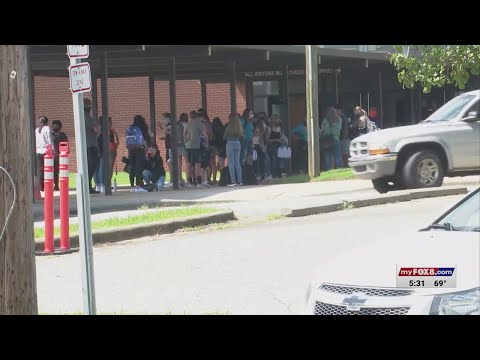
Serving 765 students in grades 5-8, Randleman Middle School ranks in the bottom 50% of all schools in North Carolina for overall test scores (math proficiency is bottom 50%, and reading proficiency is bottom 50%).
The percentage of students achieving proficiency in math is 41% (which is lower than the North Carolina state average of 51%). The percentage of students achieving proficiency in reading/language arts is 40% (which is lower than the North Carolina state average of 50%).
The student-teacher ratio of 17:1 is higher than the North Carolina state level of 15:1.
Minority enrollment is 38% of the student body (majority Hispanic), which is lower than the North Carolina state average of 58% (majority Black and Hispanic).
Quick Facts (26-27)
- Grades: 5-8
- Enrollment: 765 students
- Student-Teacher Ratio: 17:1
- Minority Enrollment: 38%
- Overall Testing Rank: Bottom 50% in NC
- Math Proficiency: 41% (Btm 50%)
- Reading Proficiency: 40% (Btm 50%)
- Science Proficiency: 72% (Top 30%)
- Attendance Zone: Randleman Middle serves the northern part of Randleman, NC, covering an area of approximately 74.9 square miles. The typical drive to the school is about 10-15 minutes, with an average distance of 5.1 miles to the edge of the attendance zone and a maximum distance of 8.1 miles to its furthest point.
- Source: National Center for Education Statistics (NCES), NC Dept. of Education
School Overview
Randleman Middle School's student population of 765 students has declined by 10% over five school years.
The teacher population of 44 teachers has stayed relatively flat over five school years.
Grades Offered
Grades 5-8
(No virtual instruction)
(No virtual instruction)
Total Students
765 students
Total Classroom Teachers
44 teachers
School Motto
Students First in All We Do!
School Rankings
Randleman Middle School ranks within the bottom 50% of all 2,617 schools in North Carolina (based off of combined math and reading proficiency testing data).
The diversity score of Randleman Middle School is 0.55, which is less than the diversity score at state average of 0.72. The school's diversity has stayed relatively flat over five school years.
Overall Testing Rank
#1786 out of 2617 schools
(Bottom 50%)
(Bottom 50%)
Math Test Scores (% Proficient)
(21-22)41%
51%
Reading/Language Arts Test Scores (% Proficient)
40%
50%
Science Test Scores (% Proficient)
72%
63%
Student-Teacher Ratio
17:1
15:1
Asian
2%
5%
Hispanic
26%
22%
Black
5%
24%
White
62%
42%
Two or more races
5%
6%
All Ethnic Groups
Chronically Absent Students
(22-23)27.8%
28.7%
Participates in the National School Lunch Program (NSLP)
Yes
Eligible for Free Lunch
100%
72%
Eligible for Reduced Lunch
3%
1%
School Statewide Testing
School District Name
Source: National Center for Education Statistics (NCES), NC Dept. of Education
Frequently Asked Questions
What is Randleman Middle School's ranking?
Randleman Middle School is ranked #1786 out of 2,617 schools, which ranks it among the bottom 50% of public schools in North Carolina.
What schools are Randleman Middle School often compared to?
Randleman Middle Schoolis often viewed alongside schools like Uwharrie Charter Academy, Eastern Guilford Middle School, Northeastern Randolph Middle School by visitors of our site.
What percent of students have achieved state testing proficiency in math and reading?
41% of students have achieved math proficiency (compared to the 51% NC state average), while 40% of students have achieved reading proficiency (compared to the 50% NC state average).
How many students attend Randleman Middle School?
765 students attend Randleman Middle School.
What is the racial composition of the student body?
62% of Randleman Middle School students are White, 26% of students are Hispanic, 5% of students are Black, 5% of students are Two or more races, and 2% of students are Asian.
What is the student-teacher ratio of Randleman Middle School?
Randleman Middle School has a student ration of 17:1, which is higher than the North Carolina state average of 15:1.
What grades does Randleman Middle School offer ?
Randleman Middle School offers enrollment in grades 5-8 (No virtual instruction).
What school district is Randleman Middle School part of?
Randleman Middle School is part of Randolph County School System School District.
School Reviews
Review Randleman Middle School. Reviews should be a few sentences in length. Please include any comments on:
- Quality of academic programs, teachers, and facilities
- Availability of music, art, sports and other extracurricular activities
Recent Articles

How Often Does Your Child's School Change Teachers Between Grade Levels?
Learn how teacher movement between grade levels affects continuity, experience, instruction, and school stability, plus the questions parents should ask about staffing patterns before choosing a public school today.

The School Pickup Test: What Arrival and Dismissal Reveal About a Public School
Discover what school arrival and dismissal reveal about safety, supervision, organization, communication, student behavior, transportation, and school climate before choosing the right public school for your child and family.

Should Siblings Attend the Same Public School?
Should siblings attend the same public school? Learn when academic needs, learning styles, programs, social fit, support services, and individual interests may make different schools better choices for children.