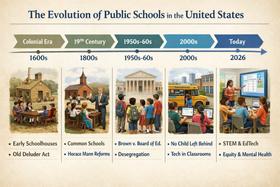
Today's students must be well-versed in much more than the three traditional "Rs" that have carried public education for the past century. In order to compete in the global marketplace, students must also know their way around the most recent technology utilized in the workplace today.
To help students and teachers achieve that goal, Google Workspace for Education continues to bring technology into the classroom in real time. Through agreements with states, districts, and schools across the country, more public schools are seeing the results of digital learning tools in the classroom.
Using Google Docs in the Classroom
According to Google for Education, Google Apps can provide a multitude of uses in today's classroom, including:
- Gmail allows students and teachers to easily communicate with one another
- Docs gives students the opportunity to turn in assignments to the teacher directly from their own computer
- Sites give students access to assignments, lesson plans, and research material at any time of the day or night
- Groups provide additional opportunities for students to interact with instructors and classmates online
The addition of Google Apps makes the entire classroom more interactive, as teachers have the ability to coach students throughout the course of their assignments, and students have easy access to ask questions and get feedback. The "anytime, anywhere" access allows students and teachers to tailor their work time around their own schedules, rather than restricting them to standard school operating hours.
Parents interested in broader digital learning trends can also review Public School Review’s article on technology in public schools.
Benefits of Google Apps in the Classroom
Google Apps offer a host of benefits in the average public classroom today. These benefits include:
- Money savings for schools
- Motivational boosts for students that may improve academic performance
- Preparation for technology use in the professional world
Many districts continue to report savings through cloud-based educational platforms that reduce hardware, software, and maintenance costs. Schools also report that collaborative tools help improve student engagement and organization.
One of the primary reasons attributed to improved classroom performance is the increase in student interest when technology is incorporated into instruction. In addition to higher engagement, some schools using Google Workspace tools also report improvements in classroom participation and communication between students and teachers.
Google Apps can also prepare students for real-world experiences by teaching them how to use the latest technology to their advantage. Innovative resources included in the apps encourage students and teachers to leave the confines of the textbook and explore topics in more creative ways. Students can also use Google Sites and Google Drive to manage coursework and submit assignments without the need for paper copies.
With more businesses and universities relying on cloud-based collaboration tools, it is a much easier transition for students to move between academia and the professional world.
Readers may also want to explore Public School Review’s article on how technology transforms education in 2025.
States Jumping Onboard
While Oregon was one of the first states to support the broad implementation of Google Apps in schools, many other states quickly followed. Colorado, Iowa, Maryland, and New York were among the early adopters of statewide technology initiatives tied to Google educational tools.
Today, Google Workspace for Education is widely used across thousands of K-12 districts nationwide. According to the National Center for Education Statistics, schools continue expanding digital learning infrastructure and cloud-based collaboration tools as part of long-term educational technology strategies.
The Maryland State Department of Education continues to support statewide digital learning initiatives, while New York districts maintain extensive technology integration programs for classroom instruction and communication.
As more states recognize the importance of incorporating modern technology into classrooms, digital collaboration platforms have become standard tools rather than optional enhancements.
Families comparing technology-rich learning environments can also read Public School Review’s guide to online learning in public high schools.
Google Workspace for Education
Google Workspace for Education has evolved significantly since its early introduction into schools. One version of Google Workspace for Education remains free, while premium versions provide additional security, analytics, and administrative features.
Every edition of Google Workspace for Education includes tools such as:
- Gmail
- Calendar
- Google Meet
- Docs
- Sheets
- Slides
- Forms
- Google Classroom
- Assignments
- Sites
- Groups
- Google Drive
- Administrative dashboards
Google Classroom remains one of the platform’s most widely used tools for teachers and students. Educators can create classes, distribute assignments, provide feedback, and communicate with students in one centralized platform.
Google Drive functions as cloud storage that allows students to store files, collaborate on projects, and access work from nearly any device. Automatic saving and collaborative editing have made cloud-based learning far more efficient than traditional file-sharing methods used in earlier decades.
From an administrative point of view, robust products such as Google Workspace for Education, which include applications commonly used in professional and institutional environments, introduce K-12 students to real-world digital collaboration skills. That practical experience remains one of the biggest advantages of bringing modern technology into public school classrooms.
Conclusion
Technology has become an essential part of modern education, and tools like Google Workspace for Education continue to shape how students learn and collaborate in 2026. While digital platforms are not a replacement for quality teaching, they provide schools with flexible, cost-effective ways to enhance communication, organization, and classroom engagement. As public schools continue investing in technology, digital literacy will remain an increasingly important skill for student success both inside and outside the classroom.