Updated
|
Public vs Private Schools in the U.S. — 2025 Guide
A clear, up-to-date 2025 comparison of U.S. public vs private schools: costs, enrollment, policy trends, and what families should know today.

U.S. Public vs. Private Schools: 2025 Guide

The choice between public and private schools remains one of the most consequential decisions for American families. As of 2025, the landscape reflects shifting enrollment patterns, evolving school-choice policies, and significant financial trade-offs. This guide examines the latest trends, costs, and considerations to help parents, students, and educators make informed decisions.

1. Enrollment & Demographics

Public schools continue to dominate the U.S. K–12 system. According to the Learning Policy Institute, about 91 percent of students—more than 49 million—attend one of the nation’s 99,000+ public schools. Private schools, by contrast, number around 29,700 and educate approximately 4.7 million students, or under 9 percent of the total. Private schools are primarily clustered in urban and suburban areas: roughly 83 percent are in or near cities, while only 16.6 percent serve remote or rural regions.

Regarding religious affiliation, about two-thirds of private schools—roughly 66 percent—are faith-based, with Catholic schools forming a large share.

2. Tuition, Funding & Spending

Public schools are funded largely through local, state, and federal tax revenues; they do not charge tuition for in-district students. However, public spending per pupil remains substantial: many districts now average around $14,000–$15,000 per student per year, depending on the state and district.

Private school tuition varies significantly. According to PrivateSchoolReview, for the 2025–26 school year, the national average is approximately $14,999 annually, with elementary tuition averaging $14,018 and high school reaching $17,954. Other sources place the average
. . .read more

How Public Schools Prepare Students for College: Best Practices

Updated
|
How Public Schools Prepare Students for College: Best Practices
Learn how public schools prepare students for college through proven programs, counseling, coursework, and partnerships that support college readiness.

Understanding how public schools prepare students for college is essential for families evaluating academic pathways and long-term outcomes. Across the United States, districts continue to expand college-readiness initiatives that blend rigorous coursework, structured advising, workforce exploration, and personalized support. In 2025, many public school systems are refining these strategies to address rising expectations for postsecondary success. This article explains how public schools prepare students for college, highlights best practices, and outlines what families should look for when comparing schools.

Why College Readiness in Public Schools Matters

Public schools serve the majority of American students, which makes effective college preparation a national priority. For families, understanding how public schools prepare students for college provides insight into curriculum quality, teacher expertise, counseling access, and the real-world opportunities available during the high school years.

Several factors drive the need for strong college-readiness systems. College admissions have become more competitive, financial aid rules evolve each year, and students face increasing pressure to build authentic academic and extracurricular portfolios. Schools that understand how public schools prepare students for college often integrate academic, social-emotional, and logistical support.

Key drivers include:

  • Rising expectations for advanced coursework
  • Demand for dual-enrollment access
  • Need for earlier counseling and planning
  • Emphasis on equitable preparation for first-generation students

Core Practices That Show How Public Schools Prepare Students for College

Districts use a variety of approaches, but several best practices consistently demonstrate how public schools prepare students for college.

Rigorous Academic Pathways

A strong academic foundation remains essential. One defining measure of how public

. . .read more

Public School Demographics & Inclusion Trends in 2025

Updated
|
Public School Demographics & Inclusion Trends in 2025
Explore key 2025 trends in U.S. public school demographics and inclusion, from rising diversity to DEI debates and policy challenges.

Public School Demographics & Inclusion: Trends for 2025

As public schools navigate an ever-changing social landscape, 2025 brings with it notable trends in demographics and inclusion. Rising diversity, shifting enrollment patterns, and debates over diversity, equity, and inclusion (DEI) are shaping the conversation in districts across the United States. This article examines key data points and emerging dynamics that parents, educators, and stakeholders should watch.

1. Changing Enrollment Patterns: A Slow but Steady Shift

1.1 Enrollment Remains Below Pre-Pandemic Levels

According to the National Center for Education Statistics (NCES), public school enrollment held nearly steady from fall 2022 to fall 2023 at 49.5 million students, but remains 2.5% below the pre-COVID peak in 2019.

Elementary and middle grade enrollment declined most sharply, while high school (grades 9–12) saw a slight increase.

These demographic shifts matter because declining enrollment can influence school funding, staffing, and district planning.

1.2 Regional Divergence in Enrollment Trends

Districts in fast-growing regions—such as parts of the Sun Belt and Southeast—are under pressure to expand capacity or rezone due to uneven population growth. Public School Review

By contrast, many rural or inland districts in the Rust Belt and West are seeing sharper enrollment drops, creating fiscal stress.

2. Increasing Racial and Ethnic Diversity

2.1 Long-Term Demographic Shifts

The racial and ethnic composition of public schools continues to evolve:

  • Between fall 2012 and fall 2022, the share of Hispanic students rose from 24% to 29%, while White student enrollment declined from

. . .read more

Digital Learning and Public Schools: What Parents Need to Know

Updated
|
Digital Learning and Public Schools: What Parents Need to Know
A comprehensive 2025 guide to digital learning and public schools, helping parents understand tools, benefits, risks, and effective school practices.

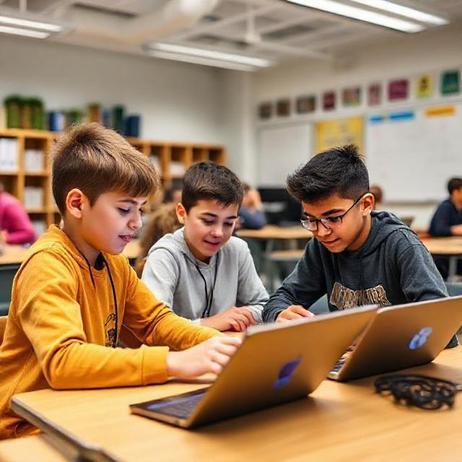
Digital learning and public schools are now deeply interconnected. Since 2020, districts have expanded technology investments, added new instructional models, and integrated online tools across grade levels. In 2025, digital learning and public schools continue to evolve at a rapid pace, creating both opportunities and challenges for families.

This guide explains what parents need to know about digital learning and public schools today, including how schools use technology, the academic impact, equity issues, and practical questions to ask administrators. The article incorporates insights from recent district initiatives, ongoing research, and interviews with public school technology leaders.

How Digital Learning Shapes Today’s Public Schools

Digital learning and public schools intersect in several ways. Schools incorporate technology into instruction, assessment, communication, and support services. Understanding this landscape helps parents better evaluate their district’s digital strategy.

Common Components of Digital Learning

Public schools typically rely on four pillars of digital learning.

  1. Classroom Technology Tools

    Digital tools for instruction vary by district, but commonly include:

    • Learning management systems, such as Google Classroom or Canvas
    • Adaptive learning platforms for math and literacy
    • Virtual science labs and simulations
    • Digital textbooks
    • Classroom devices like Chromebooks or tablets

    For parents exploring how schools integrate digital methods, the overview of technology adoption on Public School Review offers helpful context.

  2. Hybrid and Blended Learning Models

    Many public schools combine online instruction with in-person teaching. These models allow students to learn at their own pace, make up missed work, and access enrichment activities outside normal hours. Digital learning and public schools work together to support differentiated instruction

. . .read more

Budget Cuts and Class Size Impacts in Today’s Public Schools

Updated
|
Budget Cuts and Class Size Impacts in Today’s Public Schools
How budget cuts and class size shape public education today, with insights for parents and educators.

Budget Cuts and Class Size: How Real Are the Impacts in Public Education?

Understanding how budget cuts and class size affect public education is central to how communities plan, fund, and evaluate their schools. In 2025, districts continue to navigate inflation, fluctuating state appropriations, pandemic-related academic recovery, and enrollment swings. The relationship between budget cuts and class size has become one of the defining issues for educators and families, influencing instructional quality, teacher workload, and student outcomes.

This article examines how budget cuts and class size interact, what research tells us, what parents should watch, and how districts can mitigate adverse effects. It also provides updated examples, practical insights, and authoritative references to support informed decision-making.

Why Budget Cuts and Class Size Matter

The link between budget cuts and class size appears straightforward. Fewer dollars often mean fewer staff members, which leads to larger classes. Yet the impact is far more complex. Class size shapes instructional time, teacher attention, and the ability to differentiate lessons. When budget cuts and class size rise together, schools face challenges that ripple across academic and social development.

Research consistently shows that smaller classes benefit early learners the most, particularly students from historically underserved groups. Parents can explore district-level trends through resources like Public School Review (https://www.publicschoolreview.com) to assess how budget cuts and class size may affect their local schools.

The Financial Pressures Driving Changes

Several trends are putting pressure on public school budgets, making the relationship between budget cuts and

. . .read more

Recent Articles

What Makes an Elementary School Feel Supportive?
Discover what makes one elementary school more supportive than another, from teacher relationships and family communication to classroom attention, belonging, student services, leadership, routines, and responsive academic support systems.
Second School Tour: Questions Parents Forget to Ask
A second school tour can reveal what families miss initially. Learn which questions to ask about teachers, support, schedules, safety, communication, programs, and everyday student life before enrolling.
Attendance Policies Are Changing: Parent Guide 2026
Attendance policies are changing across public schools. Learn what parents should examine about absences, tardiness, interventions, flexibility, communication, and student support before choosing a school for their child today.