This article has been updated to reflect 2026 data and recent developments.
As public school students get their fill of lazy, carefree summer days, their state school boards are grappling with new federal Common Core Standards slated to go into effect this year. States that were quick to grab onto the funding that was dangled with the standards are now realizing that implementation of those standards is meeting more than a little resistance. As students play outdoors with friends and enjoy long, leisurely bike rides, their local schools are embroiled in a battle, with no sign of a resolution in time for the fall semester.
In 2026, this opening reflects the debate occurring when the article was originally published. The Common Core State Standards were a state-led initiative rather than federal standards, and states have since made their own decisions about retaining, revising, or replacing them.
This video explains Common Core.
Teacher Complaints Have North Carolina Rethinking Plans
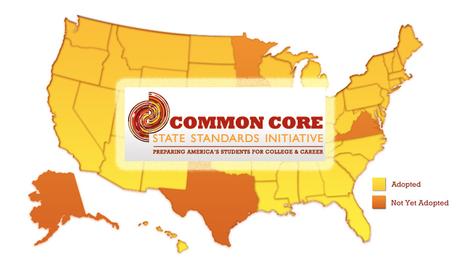
North Carolina was one of the 45 states in the country to sign on for Common Core Standards, thanks to the $166 million state school districts received in Race to the Top funding. However, as the state tries to rewrite curriculum, and fast, to accommodate the new standards, education officials are realizing the process of switching over to the new requirements won’t be easy.
News Observer reports that the state department of education has received numerous complaints about new tests in a wide range of subjects. The tests were originally written to be used as means for evaluating teachers. Effective teacher evaluations were a key component to the state’s compliance with the new federal standards. However, a large number of teachers have complained to the state board that the questions on the tests do not match the curriculum they are teaching in the classroom.
Angela Quick, the deputy chief academic officer for the state Department of Education Instruction, told the News Observer that the state might ask for a federal waiver to delay the use of the standards for one more year. That extra time would allow for proper teacher training of the new standards. It would also allow for a “practice” year, to work out possible kinks in the new system.
However, the state superintendent of public instruction, June Atkinson, admitted to the News Observer that getting a waiver might be easier said than done. Atkinson is concerned that the U.S. Education Department will probably not be keen on giving Race to the Top winners a chance to wiggle out of their contract requirements.
In 2026, the North Carolina Department of Public Instruction maintains the North Carolina Standard Course of Study, which defines the content standards for the state's public schools. The current 2017 English Language Arts standards remain in place for the 2026-27 school year, with revised standards scheduled for implementation in 2027-28.
Fight Continues in Pennsylvania
The Morning Call reports that many Pennsylvania residents are up in arms about the new Common Core Requirements, and one of the major contributors to the standards, the Bill and Melinda Gates Foundation. Some voiced concern that Bill Gates is exploiting his wealth to assist the federal government in a public school takeover. Others worry that the foundation is creating a database to track student education records and personal histories.
Tim Eller, the spokesperson for the state Department of Education, countered arguments, saying residents are misinformed about the state’s role in the Common Core Standards. Although the Common Core Standards were introduced by the U.S. Education Department, states can adapt the standards to their individual districts. Still, Pennsylvania has taken its name off the list to receive testing material from one of the two companies recommended by the federal requirements, due to concerns from residents.
The debate over standards has changed considerably since this article was first published. Pennsylvania subsequently developed its own Pennsylvania Core Standards, while decisions about curriculum and implementation continue to take place at the state and local levels.
Kansas Urged to Stick with “Proven” Testing
Kansas is another state dealing with conflict over the Common Core Standards. The Daily Journal reports that opponents of the standards are pushing the state school board to stick with tests that have been “proven” in the state. Specifically, residents want the board to continue to rely on material from the Center for Educational Testing and Evaluation at the University of Kansas, which has been developing standardized tests for the state for some time.
Opponents to the Common Core Standards have also raised concern that they take autonomy away from states. Education Commissioner Diane DeBacker told opponents at a recent school board meeting that using test material from the center is still an option. The board also assured the crowd it was way too soon in the process for the board to be making any definitive decisions about how to handle standardized testing under the new requirements.
In 2026, debates about standards and assessments continue to be largely state-specific. Parents interested in how testing has evolved since the original Common Core debate can review Public School Review's Standardized Tests in 2025: What Parents & Educators Must Know.
This video reports on opposition to Common Core.
Two States Halt Implementation
Michigan and Indiana have brought Common Core Standards to a standstill as governors in both states halt their implementation. State lawmakers will take time this summer to talk to constituents and find out which way the wind of public approval is blowing regarding the federal requirements. In the fall, the Michigan legislature plans to reconvene and vote on whether to accept the Common Core Standards in their state.
The Michigan Board of Education voted to adopt the standards in June, 2010. Since that time, the state has seen plenty of resistance to the requirements. Residents voice concerns similar to those heard in Kansas and Pennsylvania, such as less autonomy for states, more federal control of schools, and invasive student tracking. The Common Core Standards do not refer to tracking, although publicity has been fanned by conservative commentators and politicians.
For example, Sen. Rand Paul (R-Kentucky) was quoted at mLive as saying, “Instead of teaching our kids about our Constitution and our heritage, Common Core will teach students to be ‘global citizens.’ It gets worse. Common Core also mandates that school districts track everything about our nation’s children and report it back to the federal government.”
Debbie Veney Robinson, the spokesperson for the Bill and Melinda Gates Foundation, countered concerns, stating at the Morning Call, “Data and records are the property of individual school districts and states’ boards of education. The federal government does not have jurisdiction over that.”
Since the original article was published, the two states have taken different approaches. The Michigan Department of Education continues to maintain Michigan Academic Standards, which outline learning expectations and guide local curriculum development.
Indiana withdrew from Common Core and moved to its own state academic standards. In 2026, the Indiana Department of Education publishes Indiana Academic Standards across subject areas. English/language arts and mathematics standards were revised in 2023, while social studies standards were revised in 2026.
As students continue to enjoy their summer break, the battle in schools continues. In 2026, the original implementation battles described in this article have evolved into state-by-state decisions about academic standards, curriculum, and assessments.