Grading and Ranking Schools

Explore the public school grading/ranking system, how it works and what it means. Get latest national rankings and read what critics of school grading have to say. Take a look at the nation’s top performing schools as ranked by U.S. News and Newsweek.

View the most popular articles in Grading and Ranking Schools:

15 Failures of U.S. Public Education in 2025

Updated
|
15 Failures of U.S. Public Education in 2025
Updated for 2026: the 15 biggest failures of the American public education system, with new data, expert insights, and reform examples.

Introduction

American public education is at a crossroads. Once hailed as a global standard, the system today faces deep, structural problems that undermine its ability to deliver on its promise of equity and opportunity. From worsening academic performance to chronic underfunding, the failures of the American public education system are not isolated issues but interconnected challenges.

In 2025, the stakes have never been higher. Recent changes within the U.S. Department of Education, demographic shifts, and a surge in private school enrollment have all placed new pressures on public schools. This article examines 15 of the most pressing failures, updated with the latest data and examples, and provides a roadmap for parents and educators seeking context.

1. Academic Decline

The most visible failure is academic performance. As of February 2026, the latest NAEP results publicly available are from 2024, those results show reading and math performance remaining below 2019 levels, with continued challenges in both subjects and uneven recovery across grades. ( The Nations Report Card ).

This crisis affects college readiness, workforce preparation, and global competitiveness. As we outlined in our Private vs. Public Schools: 2025 Guide, many families are seeking alternatives due to these declines.

2. Widening Achievement Gaps

Achievement gaps by income and demographic group remain persistent as of early 2026, with national reporting on the 2024 NAEP cycle continuing to show a widening distance between higher and lower performing students. ( NAEP ).

This structural inequity is one of

. . .read more

School Choice vs. Neighborhood Schools: Key Factors

Updated
|
School Choice vs. Neighborhood Schools: Key Factors
Explore school choice vs. neighborhood schools in 2025. Learn key factors parents should weigh when deciding the best fit for their child.

School Choice vs. Neighborhood Schools:

What Parents Should Consider

Choosing the right school for a child has never been more complex—or more important. In 2025, families are navigating a diverse educational landscape shaped by policy shifts, demographic changes, and evolving expectations of what schools should provide. Two primary pathways dominate the conversation: school choice (charter schools, private schools, magnet programs, and homeschooling options) and neighborhood schools (the traditional public school assigned by residence).

This article explores the benefits, challenges, and considerations of both models, offering parents a framework to make an informed decision.

Understanding the Basics

What Is School Choice?

School choice refers to policies and programs that allow families to select schools beyond their assigned public school. Options include:

  • Private schools (boarding, day, religious, or independent)
  • Charter schools (publicly funded but independently operated)
  • Magnet schools (public schools with specialized curricula)
  • Virtual schools and homeschooling

The principle behind school choice is that families should not be restricted by zip code when selecting the best environment for their child.

What Are Neighborhood Schools?

Neighborhood schools are the default option in most U.S. communities. Enrollment is based on residence, with children attending the school within their geographic district. These schools often serve as community hubs, offering stability, extracurricular opportunities, and strong local identity.

School Choice vs. Neighborhood Schools: A Side-by-Side Comparison

FactorSchool ChoiceNeighborhood Schools
AccessRequires applications; sometimes lotteries or tuitionOpen to all local residents
CostVaries: private schools charge tuition; charter and magnet schools are freeFree (funded by taxes)
CurriculumSpecialized programs (STEM, arts, IB, religious)Standard district
. . .read more

Uniforms in U.S. Public Schools: 2025 Pros & Cons

Updated
|
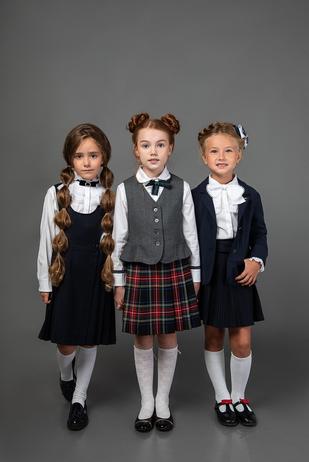
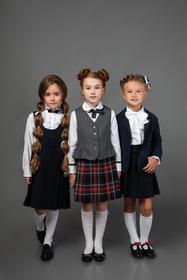
Uniforms in U.S. Public Schools: 2025 Pros & Cons
Explore the latest 2025 insights on school uniform policies—safety, costs, expression—with updated data and expert perspectives to help parents and educators decide.

Uniforms: The Pros and Cons (Updated for 2025)

Introduction

School uniform policies remain a widely debated issue in U.S. public schools. Supporters argue uniforms promote safety and equality, while critics raise concerns about freedom of expression and family costs. This updated review uses the latest 2025 data to help parents and educators weigh the evidence.

How Common Are Uniform Policies?

  • As of 2019–20, 18.8% of public schools required uniforms, while 57% of private schools did the same (NCES Fast Facts).
  • Uniform adoption is highest in primary schools (23%), compared to 18% of middle schools and 10% of high schools (Helpful Professor).
  • 22 states and the District of Columbia explicitly authorize uniform policies at the district level (UniformMarket).

The Benefits of School Uniforms

Safety & Discipline

  • In Long Beach Unified, one of the earliest large-scale adopters, officials reported declines in suspensions, crime, and vandalism after uniforms were introduced.
  • Uniforms can help staff quickly identify outsiders, enhancing security and reducing gang-related clothing visibility.

School Climate & Focus

  • A study published by the American School Health Association found uniform schools saw higher attendance and modest gains in core subject performance (2024).
  • Education Week surveys report 15% higher participation in school events among uniformed student populations.
  • Uniforms often simplify dress code enforcement, saving staff time compared to managing more complex appearance rules.

Equity & Identity

  • By minimizing visible economic differences, uniforms reduce fashion-related peer pressure and can foster a stronger sense of community identity.
  • For urban and economically diverse schools, uniforms may
. . .read more

If Your Child Misses First-Choice Public School

Updated
|
If Your Child Misses First-Choice Public School
Help your child thrive—learn next steps when first-choice public school enrollment fails, including waitlists, appeals, and smart backup plans.

A Parent’s Guide: What to Do if Your Child Doesn’t Get into Your First-Choice Public School

Introduction

It’s disappointing when your child doesn’t get into your first-choice public school—but it’s far from the end of the road. This guide walks you through clear, practical next steps: joining waitlists, appealing decisions, exploring alternatives, and protecting your child’s best interests. We’ll also share current stats and practical insights to help you navigate this stressful moment confidently.

Understanding the Situation: How Often Does This Happen?

  • In England and Wales, about 92.5% of families secured a place at their first-choice primary school, and 98.3% at one of their top three options. Rates varied significantly by area, dropping to 70% in some high-demand districts.

  • In England, waitlists and appeals are common, but success is rare unless there’s an admissions error or valid special circumstances (e.g., documented medical need).

  • In some secondary school systems (e.g., UK), around 82.9% gain admission to their first choice; families have the right to appeal, but should simultaneously accept another offer to avoid leaving a child without a school place.

Step-by-Step: What You Can Do Now

  1. Accept the Available Offer (Sooner Rather Than Later)

    Even if disappointed, accept the offered place right away. It secures your child’s enrollment and doesn’t affect your right to appeal. Several systems (e.g., in England) advise this as “best practice” to ensure your child has a school place.

  2. Join Waitlists Proactively

  3. Many school systems automatically place applicants on waitlists for higher preferences. For instance, in New York City’s DOE

. . .read more

How Are Public Schools in the United States Actually Doing?

Updated
|
How Are Public Schools in the United States Actually Doing?
When asked to rank the quality of their child's school, most parents rated it a B average. And yet politicians would have you believe that the American public-school system is failing. How are America's public schools really doing, and how do we know?

If you listen to what just about any politician has to say about America’s schools, you’ll hear the word “failing” quite a bit. The fact is that education is a hot topic and it is one that can be used to inspire people to vote. But how much can you actually trust what a politician has to say about the American public education system? How are the public schools in America actually doing?

In 2017, Jack Schneider released a book called Beyond Test Scores in which he suggests that it is well past time to start rethinking the way we measure school performance.

Schneider writes that while test scores are the go-to metric used to evaluate a school’s performance, they don’t really paint an accurate picture. Using Somerville, Massachusetts, a highly diverse urban school district, as a case study, Schneider presents a new framework to assess the effectiveness of the American education system. Read on to learn more about Schneider’s approach and to see data on how American public schools are really doing.

This video from CNBC explains why our public education system is failing us.

Changes to the U.S. News Ranking System

Each year, U.S. News publishes a list of the Best High Schools in America. For the 2018 school year, U.S. News ranked over 2,700 schools – some of the names topping the list were BASIS Scottsdale (AZ), Meridian School

. . .read more

Recent Articles

The First Six Weeks at a New Public School
The first six weeks reveal how children are adapting to a new public school. Learn which academic, social, emotional, attendance, and routine signals parents should monitor closely.
Will Your Child Receive Enough Individual Attention? Looking Beyond Student-Teacher Ratios
Student-teacher ratios reveal only part of a school’s story. Learn how families can evaluate class size, staffing, teacher access, tutoring, feedback, and personalized support for children today.
What Families Should Ask About AI Use in Public Schools
Families need clear answers about classroom AI. Learn what to ask public schools about teaching, academic integrity, privacy, teacher oversight, equity, and student learning before concerns arise.