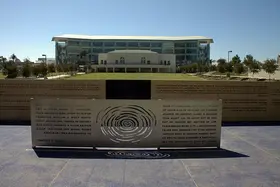
William Cullen Bryant Elementary School serves 115 students in grades Prekindergarten-3.
Minority enrollment was 16% of the student body (majority Hispanic), which was lower than the Massachusetts state average of 49% (majority Hispanic).
School Overview
Grades Offered
Grades Prekindergarten-3
Total Students
115 students
School Rankings
Asian
1%
8%
Hispanic
10%
26%
Black
5%
10%
White
84%
51%
All Ethnic Groups
Eligible for Free Lunch (00-01)
12%
19%
Eligible for Reduced Lunch (00-01)
7%
5%
School Statewide Testing
School District Name
Source: National Center for Education Statistics (NCES), MA Dept. of Education
Frequently Asked Questions
How many students attend William Cullen Bryant Elementary School?
115 students attend William Cullen Bryant Elementary School.
What is the racial composition of the student body?
84% of William Cullen Bryant Elementary School students are White, 10% of students are Hispanic, 5% of students are Black, and 1% of students are Asian.
What grades does William Cullen Bryant Elementary School offer ?
William Cullen Bryant Elementary School offers enrollment in grades Prekindergarten-3
What school district is William Cullen Bryant Elementary School part of?
William Cullen Bryant Elementary School is part of Berkshire Hills School District.
Recent Articles

School Leadership Matters: Evaluating a Principal
Learn how to evaluate a public school principal before enrolling by examining leadership stability, teacher support, communication, school culture, instructional priorities, discipline, family engagement, and measurable improvement efforts.

Comparing Before- and After-School Programs
Learn how to compare before- and after-school programs when choosing a public school, including hours, costs, staffing, safety, activities, enrollment rules, transportation, meals, and daily convenience for families.

Choosing a Public School During Budget Uncertainty
Learn which questions parents should ask when choosing a public school during budget uncertainty, including staffing, programs, class sizes, transportation, reserves, enrollment trends, and planned reductions ahead.