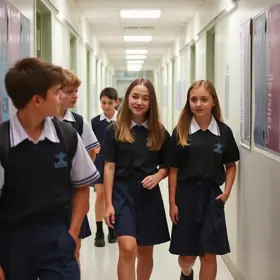
Large schools can feel intimidating at first. Long hallways, crowded cafeterias, packed schedules, and hundreds or even thousands of students can make it difficult for students to feel noticed. For many families, one of the biggest concerns about a large public school is whether their child will feel connected and supported in such a large environment.
Yet large schools also offer opportunities that smaller schools sometimes cannot provide. With more students comes greater diversity, expanded academic programs, larger extracurricular offerings, and a wider variety of social groups. Students who learn how to engage with their school community often discover friendships, mentors, leadership opportunities, and support systems that help them thrive both academically and personally.
Community in a large school rarely happens automatically. Instead, students build it intentionally through activities, relationships, traditions, and shared experiences. Schools that prioritize belonging and student connection can transform a large campus into a network of smaller, welcoming communities.
Why Community Matters in Large Schools
The school community is about more than school pride or attending football games. According to the Centers for Disease Control and Prevention, school connectedness refers to students believing that adults and peers at school care about their learning and about them as individuals.
Research consistently shows that students who feel connected to school are more likely to succeed academically, participate in activities, attend school regularly, and maintain positive mental health. They are also less likely to experience chronic absenteeism, social isolation, or behavioral problems.
In large schools, community becomes especially important because students can sometimes feel anonymous. A student who struggles socially or academically may feel overlooked if they do not have strong relationships or a clear place within the school environment.
Families comparing schools through Public School Review should look beyond enrollment numbers and graduation rates. It is equally important to evaluate how schools foster belonging through advisory systems, extracurricular programs, student leadership opportunities, counseling support, and school traditions.
Joining Clubs, Teams, and Activities
One of the most effective ways students build community in large schools is through extracurricular involvement. Clubs and activities immediately create smaller social circles within the larger campus.
Large schools often provide a major advantage in this area because they can support a wider variety of activities. Students may choose from:
- robotics clubs
- debate teams
- theater productions
- student government
- volunteer organizations
- music programs
- cultural associations
- journalism
- gaming clubs
- environmental groups
- dozens of athletic teams
These activities help students connect with peers who share similar interests and goals. Instead of trying to fit into the entire school population, students find smaller communities where they feel comfortable and valued.
For example, a student who feels shy in the classroom may discover confidence through theater rehearsals or marching band performances. Another student may build friendships while working on a robotics competition or volunteering through a community service club.
Participation also creates consistency. Students see the same teammates, cast members, or club participants regularly, allowing relationships to deepen over time.
Parents can help students approach activities thoughtfully by reviewing guidance on extracurricular sign-ups. Encouraging students to commit to one or two meaningful activities often leads to stronger connections than trying to participate in too many organizations at once.
Building Relationships With Trusted Adults
Students are more likely to feel connected when they have supportive relationships with adults on campus. In large schools, these relationships can make an enormous difference.
Trusted adults may include teachers, counselors, coaches, librarians, advisors, principals, or support staff. These adults provide guidance, encouragement, and stability, particularly during stressful periods such as transitions, academic challenges, or social difficulties.
Because large schools often have more complex schedules and larger student populations, students may need to make extra effort to develop these relationships. Simple actions such as attending office hours, participating in class discussions, or asking for advice can help students build meaningful connections with educators.
Schools also play an important role by creating structures that encourage relationship-building. Advisory periods, homerooms, mentorship programs, and smaller learning communities can help students feel more personally connected within a large institution.
Public School Review’s article on class size in public schools explains how class size and support systems together influence student learning and engagement.
Using Student Voice to Create Belonging
Students are more invested in their school community when they believe their voices matter. Large schools that encourage student participation in decision-making often create stronger feelings of belonging and school pride.
Student councils, peer leadership groups, school improvement committees, and student advisory boards allow students to help shape school culture. These organizations provide opportunities for leadership while helping administrators better understand student concerns and experiences.
The National Association of Secondary School Principals highlights the importance of student voice in improving school climate and engagement.
In large schools, student leadership can help bridge gaps between administrators and the student body. Student leaders often organize events, promote inclusion, welcome new students, and encourage participation across different social groups.
Even smaller classroom opportunities matter. Group projects, class discussions, feedback surveys, and collaborative activities all help students feel that their perspectives are valued.
School Traditions and Shared Experiences
School traditions are another powerful way students build community. Pep rallies, assemblies, performances, spirit weeks, athletic events, dances, service projects, and graduation traditions create shared memories that unite students across different grade levels and social groups.
Large schools often have strong traditions because their size allows for larger productions and events. Schoolwide celebrations can help students feel connected to something bigger than themselves.
Athletics frequently play an important role in building school spirit and unity. Even students who do not participate directly in sports may feel connected through attending games, supporting classmates, performing in the marching band, or participating in spirit activities.
Public School Review’s article on the role of sports in public schools explores how athletics support leadership, teamwork, discipline, and school engagement.
These experiences help students create lasting memories while strengthening their emotional connection to the school community.
Supporting Mental Health and Inclusion
Not every student naturally finds their place in a large school environment. Some students struggle with anxiety, loneliness, social pressure, or difficulty adjusting to a large campus.
Schools that prioritize mental health and inclusion help students feel safer and more supported. Counseling departments, peer mentoring programs, wellness initiatives, advisory groups, and social-emotional learning programs can all contribute to a stronger sense of belonging.
Large schools should also make intentional efforts to support students from different cultural, socioeconomic, and academic backgrounds. Inclusive clubs, multicultural events, and equity-focused programs help students feel respected and represented.
Families can learn more through Public School Review’s article on how public schools support mental health.
When schools actively support inclusion and wellness, students are more likely to participate confidently in school life.
How Parents Can Encourage Community Building
Parents play an important role in helping students build community, especially during transitions into middle school or high school.
Open conversations can help parents identify whether students feel connected or isolated. Questions such as “Who did you sit with today?” or “What activity are you most excited about?” encourage students to reflect on their social experiences.
Parents can also encourage students to try new activities, attend school events, and reach out to teachers or counselors when needed. Sometimes students hesitate to participate because they feel nervous or uncertain, but gentle encouragement can help them take the first step.
Families may also benefit from understanding broader enrollment trends and school demographics through the National Center for Education Statistics.
When evaluating schools, parents should consider not only academic performance but also the systems that help students feel welcomed, connected, and supported.
Conclusion
Large public schools can sometimes appear overwhelming, but they also offer tremendous opportunities for connection and growth. Students build community by joining activities, developing friendships, connecting with trusted adults, participating in traditions, and using their voices to shape school culture.
Strong school communities do not happen by accident. They are created intentionally through supportive relationships, inclusive programs, meaningful activities, and shared experiences.
For families, the most important question is not simply how large a school is, but how effectively that school helps students feel seen, valued, and connected. When students find their place within a large school community, they are far more likely to succeed academically, socially, and emotionally.