Updated
|
Can Sugar-Free Schools Improve Student Development And Grades?
Learn about how sugar-free public schools enjoy improved student behavior, higher test scores, and healthier students.

While Americans are generally aware that a diet high in sugar can lead to diabetes and obesity, did you know that it can also negatively impact your child’s development? Some studies have found that children with high-sugar diets are more likely to engage in conflicts, have behavioral issues at school, and perform relatively poorly on standardized tests.

If these theories are true, then a diet free of sugar may be ideal for children, especially as students move through their formative years in public schools. Subsequently, some public school leaders have banned overly-sweetened foods for their students on campus. Remarkably, many of these “sugar-free” schools have reported significant changes and positive benefits!

In this video, Sarah Krieger reviews easy healthy school lunch ideas to include snack ideas for schools that have Nut and Sugar restrictions in place.

The Trend of Sugar-Free Schools

While many public schools have recently begun experimenting with sugar-free campuses, one particular elementary school in Georgia has enforced a no-sugar policy for nearly a decade. As CNN reports, Browns Mill Elementary School in Lithonia implemented a no-sugar policy for its K-5 students in the late 1990s. The elementary school prohibits bake sales, sodas, sweet snacks, and other unhealthy sugar-filled treats on campus.

In place of these options, students attending Browns Mill Elementary opt for healthier foods and beverages, such as low-fat milk, vegetables, and sandwiches served on whole-wheat

. . .read more

How Positive Behavior Programs are Improving Public School Campuses

Updated
|
How Positive Behavior Programs are Improving Public School Campuses
Learn about how new positive behavior programs are creating healthier, more positive public school campuses, as well as encouraging students to perform better academically.

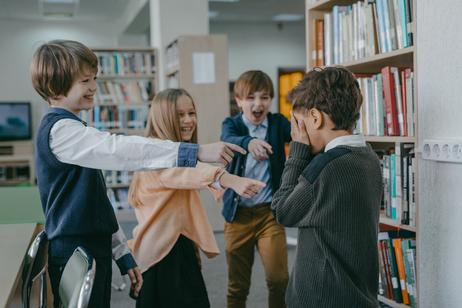
Public schools are no longer focusing on just reading, writing, and arithmetic. Hoping to improve the social environment on campus, many school leaders are implementing evidence-based positive behavior programs that support both student well-being and academic success.

Every day, millions of elementary, middle, and high school students walk through the hallways and classrooms of public schools across the country. According to the Center on PBIS, transitions between classes, lunch periods, recess, and other shared spaces help shape a school's climate. The way students interact during these times plays a significant role in determining whether the environment feels safe, respectful, and welcoming.

Public school behavior programs encourage students to build healthy relationships, develop positive behavior, and foster a shared responsibility among the school community. These factors contribute to a more productive campus environment and can support stronger academic outcomes for individual students.

This video explains positive support.

Demanding a Change: Why Schools Need Positive Behavior Strategies

Problems with negative student behavior occur at every grade level and can have lasting effects on students' confidence, sense of safety, and academic success. According to the most recent data from the National Center for Education Statistics, many students continue to report avoiding certain school spaces or activities because they feel unsafe, underscoring the importance of maintaining positive school climates.

While negative behaviors undoubtedly impact a school's overall climate and each student's comfort level,

. . .read more

Can the State Force Homeschooled Kids into Public School Classrooms?

Updated
|
Can the State Force Homeschooled Kids into Public School Classrooms?
Learn about recent legal rulings that are forcing homeschooled children into public classrooms, as well as the controversy surrounding these cases.

Could homeschooling no longer be an option that parents and students have? Based upon recent legal rulings, children can be mandated into public school classrooms, with parents stripped of their right to administer homeschooling. For example, in North Carolina, a judge recently demanded that one mother’s home-schooled children be removed from her “at home classroom” in order to engage in more “challenging” curriculum provided by publicly funded schools. What does this hold for the future of homeschooling?

The Verdict on Home School Rights

As World Net Daily reveals, a North Carolina judge has demanded that one family’s children be placed in public schools after debating whether or not the children were receiving adequate lessons and assessments at home. The mother, in this case, Vanessa Mills, argues that she initially pulled her children from the public school environment because she felt that her kids were not being sufficiently challenged. As such, for the past four years, Vanessa Mills has been taking charge of her children’s educational development through at-home lessons and instruction. While most parents can capably educate their children at home, the Mills case is rare and complex, as the children’s father brought the issue to trial, arguing that the efforts were not up to par.

According to the father’s lawyer, speaking on his client’s behalf, homeschooling has not provided his children with adequate socialization that can be achieved from the public school environment.

. . .read more

How “Collaborative Reasoning” Could Be the Next Public School Trend

Updated
|
How “Collaborative Reasoning” Could Be the Next Public School Trend
Collaborative reasoning, which encourages independent critical thinking, is growing in popularity amongst public schools. Learn about collaborative reasoning and how it benefits public school classrooms.

As school leaders experiment with modern educational strategies, one of the most promising programs centers on a concept known as “collaborative reasoning.” Far evolved from the archaic preconceptions of a classroom from the past, collaborative reasoning programs strive to make students active leaders in their learning communities.

Instead of having teachers solely speak and lecture, collaborative reasoning focuses on allowing children to explore using different learning and cognitive development elements. Specifically, as the Educational Psychology Review Journal explores, classrooms centered on collaborative reasoning enable teachers to act as facilitators of small student group discussions and investigations: “Collaborative reasoning discussions are intended to create a forum for children to listen to one another think out loud as they learn to engage in reasoned argumentation.”

Collaborative reasoning is designed to encourage independent critical thinking and question fellow peers and sources. Through this type of proactive learning, experts anticipate that cooperative learning can jumpstart student progress into modernity.

Traditional Learning vs. Collaborative Learning

Hoping to overcome the passive and dull methodologies of inactive classrooms, public schools across the country are embracing efforts to teach students using collaborative reasoning. Examining the need for this reform, Education Week argues, “The least effective mode of teaching and learning is still the most popular at all levels of instruction: teaching by telling, learning by parroting...When you tell it back to me the way I told it to you, I assume you have knowledge.”

Instead of demanding children to listen, memorize,

. . .read more

The Latest Public School Initiatives Against Gang Activity

Updated
|
The Latest Public School Initiatives Against Gang Activity
Gang activity continues to be prevalent throughout public schools, ranging from urban cities to suburban enclaves. Learn about how public schools are combating gang violence today with comprehensive initiatives.

Although the media may not frequently report sensational stories of public school gang activity, the reality of the statistics is not reassuring. Experts have found that a rising number of schools have been encountering gang-related activity – in areas outside of the stereotypical urban cities. According to the National Center for Education Statistics, during the 2003 – 2004 school year alone, 41% of high schools and 31% of middle schools reported gang activity.

As Phi Delta Kappa, an association of professional educators, explains, “Once the exclusive of poor neighborhoods in our large cities, youth street gangs have lately inspired an almost paralyzing fear in both suburban and rural middle-class communities across the nation.”

To address the growing gang dangers prevalent in school communities, educational leaders have been enforcing new practices to keep campuses and students safer.

Gangs in Public Schools: The Rising Concern

While gangs can realistically arise in any region, many schools throughout the country have reported significantly higher rates of gang activity. For example, as the Seattle Times reveals, one local Washington state high school, Garfield, has been forced to make significant changes in order to combat pressing gang problems in recent semesters. According to reports, “As Seattle struggles with heightened violence attributed to street gangs, the city's schools are increasingly shaping policies to keep the problem from spreading onto campuses.”

Garfield High School has implemented comprehensive changes in an effort to reduce gang activity, including:

  • The school purposefully avoided scheduling any
. . .read more

Recent Articles

When a Public School Cancels a Course Your Child Needs
Learn what parents can do when public schools cancel essential courses, including protecting graduation credits, finding approved alternatives, requesting substitutions, and preventing disruptions to college or career plans before deadlines.
Verify School Assignment Before Buying a House
Before buying a house, learn how to verify your child's assigned public school, check conflicting property listings, confirm enrollment eligibility, and avoid costly school assignment surprises before closing on a property.
School Bus Commute Times: What Parents Should Know
Discover how long school bus commutes really take, why routes vary, and what parents should ask about pickup times, student fatigue, transportation reliability, and daily schedules before choosing schools.