Updated
|
Tutoring & Supplemental Education: The Pros and Cons
We look at the pros and cons of personal tutors, learning centers and other types of supplemental education.

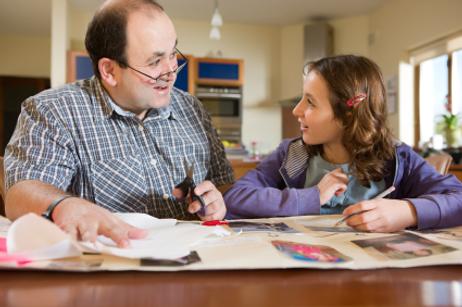
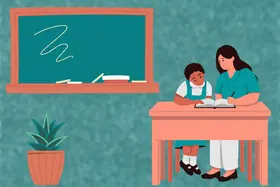
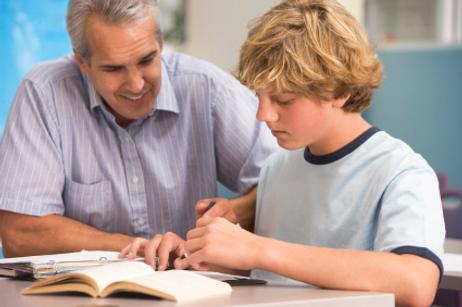
Many children struggle with school. Sometimes these problems are caused by a lack of interest, while other times they may be created by learning challenges that your child faces. If your child is having difficulty in school, this does not mean the child cannot ultimately succeed. There are many ways to help your child overcome academic hurdles. In fact, one of the solutions to overcoming academic problems is to have your child work with a tutor.

However, before you hire a private tutor, or sign your child up at the local learning center, you should first confirm whether your child truly needs the one-on-one attention the tutor provides.

How do I know if my child needs a tutor?

First, before you even hire a tutor or visit a learning center, you should determine whether or not your child needs a tutor. Ask yourself these questions:

  • Are your child’s grades slipping?
  • Is your child obtaining great grades, but not feeling challenged at school?
  • Is your child displaying low self-esteem, or thinking negatively about himself or herself in regards to school performance?
  • Does your child’s teacher think he or she may need a tutor, or sends notes home indicating he or she may need help with his or her homework?
  • Does a college your child wants to attend require high scores on tests to be accepted?

If the answer to any of these questions is, “yes,” these are signs that a one-to-one tutor may be useful to help your child to enjoy learning. A

. . .read more

Understanding the National PTA

Updated
|
Understanding the National PTA
Learn about how the national PTA works and interacts with your local PTA.

The Parent Teacher Association (PTA) is the largest volunteer child advocacy organization in the United States. From its small beginning in 1897, the PTA has emerged as a powerful voice for children at the national, state, and local levels. This article describes the role of the National PTA and discusses how the organization assists parents and teachers working together at the local level.

Overview

The PTA has been instrumental in the passage of several ground-breaking initiatives for the welfare of children, including child labor laws, the juvenile justice system, hot lunch programs, mandatory immunizations, and kindergarten classes. Its purpose has always been to better the lives of children by:

  • Serving as a voice for children before government and other decision-making bodies
  • Developing resources for families and communities
  • Advancing the education and well-being of every child

Some of the strategies that the PTA uses in accomplishing its purpose are:

  • Promoting the welfare of children and youth in home, school, community, and place of worship
  • Raising the standards of home life
  • Recommending laws for the care and protection of children and youth
  • Bringing parents and educators together so that they can work effectively for the education of children and youth

This TEDTalk discusses the importance of a solid parent-teacher relationship.

Promoting Pro-Child Policies

The National PTA speaks out to Congress and the general public about issues affecting children and their education. Subjects currently being addressed at the national level include parental involvement, serving

. . .read more

Understanding Your Local PTA

Updated
|
Understanding Your Local PTA
Learn about how your local PTA works and how getting involved can help your community.

The Parent Teacher Association (PTA) is a nationwide network of parents and teachers working together in national, state, and local organizations to improve the lives of children. Membership at the local level is open to anyone who has an interest in children. There are now close to 6 million members in 23,000 local chapters. Joining the PTA is an excellent way for parents to get involved in their children's education. Local PTAs throughout the country are making a difference in the quality of children's education.

A local PTA chapter is part of a national network of organizations working together for children's interests. Most parents join a local unit, which automatically gives them membership in the state and national PTAs. The local unit can represent a single school or a group of schools. Local units have the autonomy to establish their own priorities, select the national programs in which they will participate, assess the needs of the school, and decide how to raise needed funds.

This video explains reasons for joining the PTA.

Fundraising

Local units frequently hold fundraisers, the proceeds from which go to support school programs, building maintenance or improvements, and educational events. The following are examples of how local PTAs can improve a child's education.

  • The children at Washington Elementary School in San Gabriel, California, are enjoying their art classes once again this year, thanks to a $6,000 donation by the

. . .read more

Pros And Cons Of Using Technology In The Classroom

Updated
|
Pros And Cons Of Using Technology In The Classroom
Learn about the pros and cons of using technology in the classroom.

With the advent of cell phones, the Internet, MP3 players, DVDs, and more, what should be used in the classroom, and what should be left at the schoolhouse door? Many school administrators, teachers, and parents are pondering this question these days. Like many other complex conundrums, there is no easy answer. There are clear advantages and disadvantages to using new media in the classroom.

If you are a parent, it is up to you to say how much new media should be used in your child’s classroom. The prevalence of both benefits and disadvantages warrants finding the right balance of media in the context of learning.

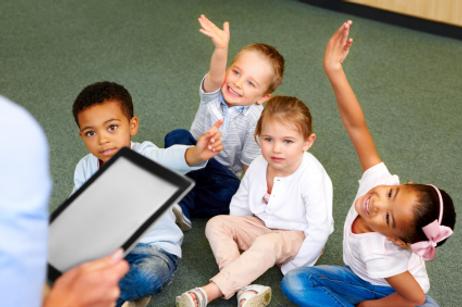
This video discusses the pros and cons of using technology in the classroom.

Learning Advantages of New Media

Less than 30 years ago, fewer than half the households in the United States owned a personal computer, and the Internet was still primarily used by scientists to share information.

Today, the “new media” of learning has leaped off the pages of books and onto the web pages online. For example, volumes of encyclopedias are becoming more obsolete, as this knowledge is easily accessible through the internet and CD-ROMs. Elementary school children are learning to use new media more fluently than their parents, with applications ranging from PowerPoint to Excel. Subsequently, with the potential for learning enclosed in new media, these technologies have found a place in the classroom. While some may

. . .read more

Public School vs. Homeschooling

Updated
|
Public School vs. Homeschooling
Compare homeschooling and public school in 2026. Explore learning environments, curriculum differences, social development, and how to choose the best fit for your child.

In recent years, homeschooled children seem to be "winning." They have conquered national spelling bees, obtained generous scholarships to elite universities, and have even found success in a wide variety of academic, athletic, and extracurricular pursuits. If homeschooled kids are enjoying such success, it is understandable why any parent would ask, "Is regular school or homeschooling best for my child?"

Like many questions about your child's education, this particular one does not have an easy answer. It is important to consider many factors before deciding whether your child should stay at home to learn or should be sent to a regular public school.

Home Environment vs. School Environment

For many advocates of either homeschooling or public school education, the environment offered by either situation is the determining factor as to whether a child should be homeschooled or sent to a regular public school.

The Calm, Safe Environment of Home School

Proponents of homeschooling believe that children thrive better in a safe, comfortable environment with which they are familiar. Ironically, so do advocates of public schooling.

However, homeschoolers believe the home is the safest, most secure environment in which a child can learn. At home, a child does not have to deal with peer pressure or with fitting in with the popular cliques. A child can just "be." This gives the child the opportunity to focus on the lessons being taught and on the educational expectations required of him or her.

Orkid Jalali offers her take on

. . .read more

Recent Articles

The First Six Weeks at a New Public School
The first six weeks reveal how children are adapting to a new public school. Learn which academic, social, emotional, attendance, and routine signals parents should monitor closely.
Will Your Child Receive Enough Individual Attention? Looking Beyond Student-Teacher Ratios
Student-teacher ratios reveal only part of a school’s story. Learn how families can evaluate class size, staffing, teacher access, tutoring, feedback, and personalized support for children today.
What Families Should Ask About AI Use in Public Schools
Families need clear answers about classroom AI. Learn what to ask public schools about teaching, academic integrity, privacy, teacher oversight, equity, and student learning before concerns arise.