
This article has been updated to reflect 2026 data and recent developments.
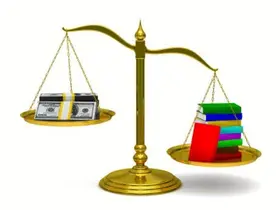
Stirring up a raging political, social, and economic debate, the issue of school vouchers is a hot topic among community leaders, members, and educators. School vouchers, which essentially work as a scholarship, allow parents to redirect the trajectory of educational funding. Instead of applying tax dollars to schools directly, vouchers allow tax money to be sent to individual families. With this approach, parents and families can choose how their educational tax money is spent, allowing students to attend private or public schools, as the tax money can be used to pay for private tuition costs.
For proponents, vouchers offer students in failing schools access to greater educational opportunities in private schools. On the other side of the debate, many experts assert that vouchers, in the larger spectrum, will cause far more harm than good. The debate has expanded considerably as more states have adopted vouchers, education savings accounts, and other forms of publicly supported school choice.
Vouchers and the Current State of Student Funding
While vouchers were still a relatively new concept and practice when this article was originally published, the Supreme Court of Wisconsin approved of its state’s voucher program in 1998, which supported family-ownership of educational tax funds. This verdict was appealed to the United States Supreme Court after its passing, but the judges of the Supreme Court voted not to hear the appeal; therefore, Wisconsin was able to continue