Updated
|
Technology in Public Schools
Whether you're a parent, educator, or education enthusiast, join us as we uncover the transformative potential of technology in public schools and the strategies for securing sustainable funding to ensure equal access and enhanced learning experiences for all students.

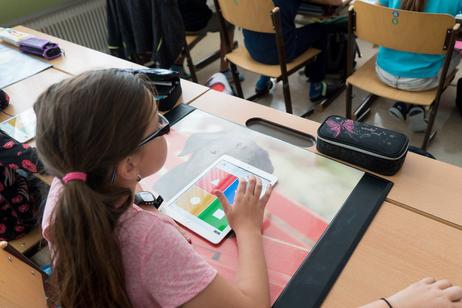
In recent years, the technology investment in public schools, ranging from K-12 institutions, has grown astronomically. According to Equity Review research, in 1998 alone, “the level of spending on educational technology at the national level was estimated at over $5 billion,” and it has grown each year in the last decade.

While each school’s budget is diverse and unique, programs have been implemented to balance the rising costs of technology and education, aiming to provide all students with equitable access to a learning environment with modern and interactive equipment.

This illuminating article delves into the dynamic landscape of technology implementation and funding in public schools. We examine the various ways technology is being integrated into educational settings, ranging from interactive whiteboards and online learning platforms to coding programs and virtual reality experiences. We also explore the challenges and opportunities associated with funding technology initiatives, considering budget constraints, equity concerns, and the evolving needs of students and educators. By showcasing real-life examples and innovative approaches, we shed light on successful models and best practices that can inspire and guide schools in their technology adoption journey. Whether you're a parent, educator, or education enthusiast, join us as we uncover the transformative potential of technology in public schools and the strategies for securing sustainable funding to ensure equal access and enhanced learning experiences for all students.

Federal Funding in Public Schools

According to the “Resource Guide to Federal Funding for Technology in Public Schools,” a five-year, $2 billion

. . .read more

Academic Clubs in Public Schools

Updated
|
Academic Clubs in Public Schools
Explore academic clubs in public schools, including robotics, travel, technology and volunteerism, plus opportunities for competitions, college preparation, scholarships, and student involvement.

This article has been updated to reflect 2026 data and recent developments.

While sports have always been a staple in public schools, many students are taking advantage of non-athletic opportunities, such as academic sports. Both athletes and non-athlete students are discovering that the latest public school clubs are not only building students’ profiles for college applications, but they’re also providing rare opportunities for travel, competitions, awards, and even college scholarships! Today, the Common App continues to give students the opportunity to report activities as part of their college applications.

Academic Clubs

An academic club is essentially any school-approved group of students, often with a faculty sponsor, who meet to develop activities or discussions based on their particular topic of interest. Group meetings are often informal and can even involve after-school field trips, community volunteerism opportunities, or other venues. An academic club intends to generate enthusiasm for a topic while encouraging student involvement and achievement.

While in the past, most academic clubs were based on school subjects, such as the book club, the math club, or the science club, public schools today have a much greater scope in clubs – and even geared towards gifted students. For example, springing up around campuses are “Robotics Clubs,” where students actually design a robot and compete in competitions. Another forum for clubs is technology-based, where “Gaming Clubs,” “Computer Design Clubs,” or “Web Clubs” have grown in popularity; students not only learn about how the technology works, but they’re also

. . .read more

Parent-Teacher Conferences

Updated
|
Parent-Teacher Conferences
Learn when to meet with your child's teacher in 2026, how to prepare for parent-teacher conferences, and build strong school-family partnerships that support student success.

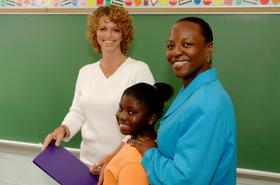
Parent and teacher discussing a student's academic progress during a school conference

As parents struggle to navigate the balance of fostering their child's autonomy versus being actively involved, knowing when to meet with a teacher depends on a child's age, behavior, academic progress, and any special learning needs. Whether a student is gifted, struggling, or displaying average abilities plays a large role in determining when parents should intervene and meet with school leaders.

In 2026, many schools also use parent portals, messaging apps, and virtual conferences to supplement traditional face-to-face meetings, making communication more accessible than ever. However, knowing when to schedule a conversation remains just as important as the method used.

This video offers an example of a parent-teacher conference.

When to Meet with a Teacher

Collaborating Insights

If you have serious and pressing concerns about your child's behavior, academic progress, or other specific or general issues, teachers can provide a great deal of insight into your child's development. According to Terri Mauro, author of The Everything Parent's Guide, "If you have a pressing concern that needs to be addressed right away, don't delay in requesting a meeting yourself."

Surprisingly, teachers may actually spend more consistent time observing your child throughout the day than most parents. Once children are home, they may be playing with friends, participating in extracurricular activities, or spending time independently. As a result, meeting with a teacher to discuss classroom observations

. . .read more

Gifted Children in Public Schools

Updated
|
Gifted Children in Public Schools
Learn how gifted children are identified, approached, and served in public schools.

As public schools are working to make classrooms fully inclusive, where all children are treated equally, many parents are concerned that their gifted child may not be faced with the appropriate educational environment that fosters challenging learning.

Carol Bainbridge, a board member of the Indiana Association for the Gifted, explains: “To be a gifted child is to demonstrate an exceptional talent in a particular area.” This exceptional talent includes high IQ levels and abilities that can be a predictor and indicator of adult achievement. As schools are implementing increasingly orthodox practices across curriculum areas, many gifted children may be left behind instead of pushed ahead.

Gifted Children

What Qualifies as “Gifted”?

There are various ranges of “gifted abilities,” ranging from “Mildly Gifted,” all the way to “Profoundly Gifted.” In a standard bell curve, most average learners fall between a range of 85 and 115, with 100 being the absolute norm. According to Carol Bainbridge, “the farther away from the absolute norm of 100 a child is, the greater the need for special educational accommodations, regardless of whether the distance is on the left or right of 100.”

Lacking a Challenge

While gifted children may possess exceptional abilities, they are not always high achievers. As Bainbridge continues, “even when they don't achieve good grades, they tend to score high on achievement tests, most often in the 95-99 percentile range. They love to learn and their love of learning, good memories, and ability to learn quickly and easily enable

. . .read more

Autistic Children and Public Schools

Updated
|
Autistic Children and Public Schools
Learn about how children with autism can succeed in public schools.

This article has been updated to reflect 2026 data and recent developments.

According to the latest data from the Centers for Disease Control and Prevention, approximately 1 in 31 8-year-old children were identified with autism in 2022 across the communities monitored by the CDC. With an increasing number of autistic students across the country, public schools are implementing plans to foster family support and student success.

Since federal law requires that schools provide children with the "least restrictive" environment possible, full inclusion in regular class sizes is often a beneficial pathway for children with autism.

As Abramson of National Public Radio indicates, there are cases of children with autism who are unable to speak as they are entering early elementary school; however, with the development of inclusive programs in public schools, teachers are reporting that children often overcome social problems, speech problems, and behavioral issues while working with teachers, peers, and parental support.

While autistic students need extra help and assistance, progress is evident in public school programs across the country. Ultimately, according to Abramson, research demonstrates that the earlier children receive help with their autism, the higher the probability that they will develop effective communication skills.

The Early Signs of Autism

With autism affecting a significant number of children in the United States, parents are looking to find out more about symptoms and signs of autistic behavior. However, since the development of each child is unique and varies, some professionals often may try to

. . .read more

Recent Articles

When a Public School Cancels a Course Your Child Needs
Learn what parents can do when public schools cancel essential courses, including protecting graduation credits, finding approved alternatives, requesting substitutions, and preventing disruptions to college or career plans before deadlines.
Verify School Assignment Before Buying a House
Before buying a house, learn how to verify your child's assigned public school, check conflicting property listings, confirm enrollment eligibility, and avoid costly school assignment surprises before closing on a property.
School Bus Commute Times: What Parents Should Know
Discover how long school bus commutes really take, why routes vary, and what parents should ask about pickup times, student fatigue, transportation reliability, and daily schedules before choosing schools.