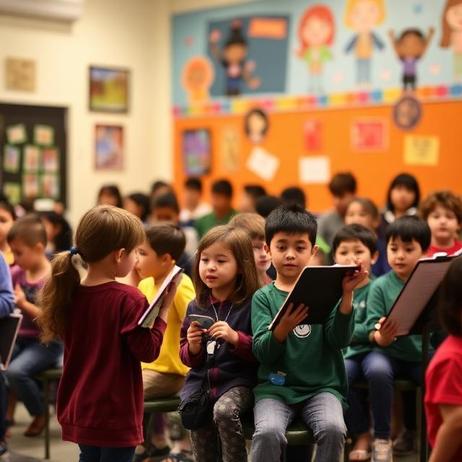
rts education continues to play a critical role in American public schools in 2026. While debates over school funding, testing standards, and academic recovery remain ongoing, educators and policymakers increasingly recognize that arts programs are not optional enrichment activities. They are an essential component of a well-rounded education.
Music, theater, dance, visual arts, and digital media programs support student achievement, strengthen social-emotional development, and improve overall school engagement. As schools continue addressing student mental health concerns, chronic absenteeism, and workforce readiness, arts education has become more relevant than ever.
According to the National Endowment for the Arts, arts participation supports creativity, communication, and cultural understanding, all of which are increasingly important in modern education and employment environments.
For families evaluating school quality, arts offerings are now viewed alongside academics, athletics, and extracurricular opportunities as indicators of a strong public school experience.
Why Arts Education Still Matters in 2026
Public schools today face growing pressure to prepare students for a rapidly changing world. Employers increasingly value creativity, collaboration, adaptability, and communication skills, qualities that arts education naturally develops.
Students involved in the arts often demonstrate:
- Improved critical thinking skills
- Greater classroom engagement
- Stronger communication abilities
- Better collaboration and teamwork
- Increased confidence and self-expression
- Higher levels of school attendance
Arts instruction also helps students connect emotionally to school. In an era when many districts continue addressing post-pandemic learning gaps and student wellness concerns, creative programs provide important opportunities for expression and belonging.
Many schools are integrating arts programs into broader student engagement initiatives, similar to the strategies discussed in How Public Schools Create School Spirit in 2026.
The Academic Benefits of Arts Programs
Research consistently shows that arts education supports academic achievement across multiple subjects.
The U.S. Department of Education continues to identify arts education as an important component of a comprehensive educational experience. Studies have linked arts participation with improved literacy, stronger math performance, and enhanced problem-solving abilities.
Students engaged in music programs often demonstrate stronger pattern recognition and mathematical reasoning. Theater programs strengthen reading comprehension and verbal communication skills. Visual arts improve observation, interpretation, and analytical thinking.
Academic Areas Supported by Arts Education
| Arts Discipline | Academic Benefits |
|---|---|
| Music | Math reasoning, memory, concentration |
| Theater | Reading comprehension, public speaking |
| Visual Arts | Creativity, analysis, interpretation |
| Dance | Coordination, discipline, spatial awareness |
| Media Arts | Digital literacy, storytelling, communication |
Schools increasingly recognize that arts instruction supports learning across disciplines rather than competing against core academic subjects.
For additional insight into the connection between enrichment activities and student performance, parents may also find value in reading How Extracurricular Activities Improve Academic Performance.
Arts Education and Student Mental Health
One of the most significant developments in recent years has been the growing recognition of the relationship between arts education and student wellness.
Counselors and educators report that arts participation can help students:
- Manage stress and anxiety
- Develop emotional awareness
- Build resilience
- Strengthen peer relationships
- Improve self-esteem
Creative expression gives students constructive ways to process emotions and experiences. Whether through painting, music composition, acting, or dance, arts programs often provide emotional outlets that traditional academic settings may not offer.
This has become especially important as districts nationwide continue addressing rising concerns about adolescent mental health and student disengagement.
The collaborative nature of many arts programs also helps students develop stronger social connections, which can contribute to improved school climate and reduced feelings of isolation.
The Rise of Digital and Media Arts Programs
Arts education in 2026 extends far beyond traditional painting and choir classes.
Many public schools are expanding course offerings in:
- Graphic design
- Animation
- Film production
- Audio engineering
- Photography
- Digital storytelling
- Video editing
These programs reflect the growing influence of creative industries in the modern economy. Students interested in technology and communications often find media arts programs especially engaging because they combine technical and artistic skills.
The expansion of digital arts also aligns with broader conversations about technology integration in schools, explored further in Technology in Public Schools.
Career and technical education pathways increasingly include creative disciplines, helping students connect classroom learning to future employment opportunities in marketing, entertainment, communications, design, and digital media.
Equity Challenges in Arts Access
Despite widespread support for arts education, access remains uneven across school districts.
Students in higher-income districts often have access to:
- Full-time arts teachers
- Modern performance facilities
- Theater productions
- Orchestra and band programs
- Specialized electives
- Updated technology and equipment
Meanwhile, schools facing budget limitations may struggle to maintain even basic arts offerings.
According to the Arts Education Data Project, millions of students nationwide still have limited access to consistent arts instruction. Schools in high-poverty communities are disproportionately affected by staffing shortages and funding constraints.
These disparities raise concerns about educational equity because arts programs often provide opportunities for leadership, confidence-building, and creative exploration that benefit students far beyond graduation.
How Schools Are Integrating Arts Into Core Learning
Rather than treating arts education as separate from academics, many districts now incorporate arts-based learning strategies directly into classroom instruction.
Examples include:
- Using drawing and visual design in science lessons
- Incorporating music and rhythm into literacy instruction
- Teaching history through performance and storytelling
- Applying design thinking in STEM courses
- Using multimedia projects for research presentations
This interdisciplinary approach supports engagement while helping students retain information more effectively.
Schools also report that arts integration can make learning more accessible for students with different learning styles and abilities.
Community Partnerships Are Expanding Arts Opportunities
To address funding and staffing challenges, many districts are partnering with local organizations to expand arts access.
Common partnerships now include collaborations with:
- Museums
- Community theaters
- Universities
- Arts nonprofits
- Local musicians and performers
- Cultural organizations
These partnerships expose students to professional artists and real-world creative experiences while helping schools supplement limited resources.
Community engagement through performances, exhibits, and public events also strengthens school culture and family involvement.
This community-building aspect mirrors broader trends explored in How Students Build Community in Large Schools.
What Parents Should Look for in School Arts Programs
When evaluating a public school, families should consider the quality and consistency of its arts offerings.
Important questions include:
- Are arts classes taught by certified teachers?
- How frequently do students participate in arts instruction?
- Are multiple arts disciplines available?
- Do students have opportunities to perform or showcase work?
- Are arts programs available across grade levels?
- Does the school support both beginner and advanced students?
Strong arts programs often indicate a school culture that values student engagement, creativity, and whole-child development.
Families researching schools can compare programs, demographics, and school performance data through Public School Review.
Why Continued Investment in Arts Education Matters
Arts education remains one of the most effective ways public schools can support both academic and personal development.
In 2026, the conversation surrounding arts programs is no longer limited to whether schools can afford them. Increasingly, educators are asking whether schools can afford to operate without them.
The arts help students develop creativity, discipline, collaboration, and emotional intelligence, skills that remain essential in higher education, the workforce, and civic life.
As public schools continue adapting to changing educational priorities, arts education remains a vital part of preparing students for long-term success. The schools that invest in strong arts programs are often investing in stronger school culture, improved student engagement, and more well-rounded educational experiences for every child.