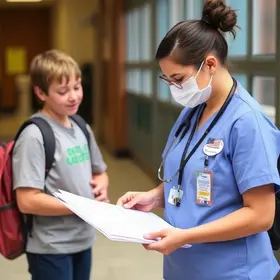
Shaker Lane Elementary School serves 425 students in grades Prekindergarten-2.
The student-teacher ratio of 13:1 is higher than the Massachusetts state level of 12:1.
Minority enrollment is 28% of the student body (majority Asian), which is lower than the Massachusetts state average of 49% (majority Hispanic).
Quick Facts (2026-27)
- Grades: Prekindergarten-2
- Enrollment: 425 students
- Student-Teacher Ratio: 13:1
- Minority Enrollment: 28%
- Attendance Zone: Shaker Lane Elementary's attendance zone encompasses the entire school district in Littleton, MA, covering approximately 17.5 square miles. The typical drive to the school is between 5 to 10 minutes, with an average distance of 3.3 miles to the zone's edge and a maximum distance of 4.5 miles.
- Source: National Center for Education Statistics (NCES), MA Dept. of Education
School Overview
Shaker Lane Elementary School's student population of 425 students has grown by 20% over five school years.
The teacher population of 32 teachers has grown by 6% over five school years.
Grades Offered
Grades Prekindergarten-2
(Supplemental Virtual)
(Supplemental Virtual)
Total Students
425 students
Total Classroom Teachers
32 teachers
School Rankings
The diversity score of Shaker Lane Elementary School is 0.46, which is less than the diversity score at state average of 0.66. The school's diversity has stayed relatively flat over five school years.
Student-Teacher Ratio
13:1
12:1
American Indian
n/a
n/a
Asian
15%
8%
Hispanic
6%
26%
Black
1%
10%
White
72%
51%
Hawaiian
n/a
n/a
Two or more races
6%
5%
All Ethnic Groups
Chronically Absent Students
(22-23)13.2%
22.8%
Participates in the National School Lunch Program (NSLP)
Yes
Eligible for Free Lunch
10%
34%
Eligible for Reduced Lunch
2%
4%
School Statewide Testing
School District Name
Source: National Center for Education Statistics (NCES), MA Dept. of Education
Frequently Asked Questions
What schools are Shaker Lane Elementary School often compared to?
Shaker Lane Elementary Schoolis often viewed alongside schools like Russell St Elementary School, Littleton Middle School by visitors of our site.
How many students attend Shaker Lane Elementary School?
425 students attend Shaker Lane Elementary School.
What is the racial composition of the student body?
72% of Shaker Lane Elementary School students are White, 15% of students are Asian, 6% of students are Hispanic, 6% of students are Two or more races, and 1% of students are Black.
What is the student-teacher ratio of Shaker Lane Elementary School?
Shaker Lane Elementary School has a student ration of 13:1, which is higher than the Massachusetts state average of 12:1.
What grades does Shaker Lane Elementary School offer ?
Shaker Lane Elementary School offers enrollment in grades Prekindergarten-2 (Supplemental Virtual).
What school district is Shaker Lane Elementary School part of?
Shaker Lane Elementary School is part of Littleton School District.
In what neighborhood is Shaker Lane Elementary School located?
Shaker Lane Elementary School is located in the Littleton Common neighborhood of Littleton, MA. There are 2 other public schools located in Littleton Common.
School Reviews
Review Shaker Lane Elementary School. Reviews should be a few sentences in length. Please include any comments on:
- Quality of academic programs, teachers, and facilities
- Availability of music, art, sports and other extracurricular activities
Recent Articles

School Leadership Matters: Evaluating a Principal
Learn how to evaluate a public school principal before enrolling by examining leadership stability, teacher support, communication, school culture, instructional priorities, discipline, family engagement, and measurable improvement efforts.
Comparing Before- and After-School Programs
Learn how to compare before- and after-school programs when choosing a public school, including hours, costs, staffing, safety, activities, enrollment rules, transportation, meals, and daily convenience for families.

Choosing a Public School During Budget Uncertainty
Learn which questions parents should ask when choosing a public school during budget uncertainty, including staffing, programs, class sizes, transportation, reserves, enrollment trends, and planned reductions ahead.