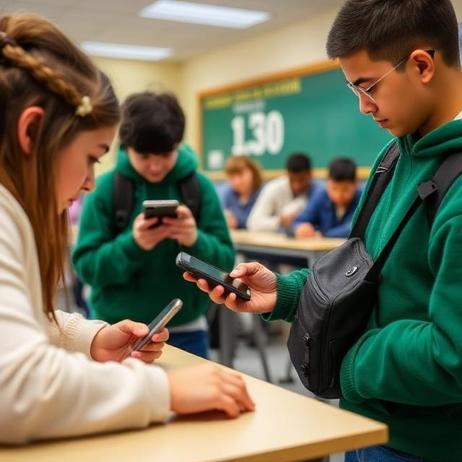
School cell phone bans have moved from a local school policy debate to a nationwide education trend. In 2026, public school districts across the United States are implementing stricter restrictions on student smartphone use, while many states have enacted laws requiring schools to adopt phone-free learning environments.
For parents, the shift raises important questions. Will banning phones improve learning? How do schools handle emergencies? What happens when students need technology for educational purposes?
This guide explains what school cell phone bans look like in 2026, why they are becoming more common, and how families can prepare.
Why School Cell Phone Bans Are Expanding
The primary argument behind school cell phone bans is simple: educators believe smartphones are a major source of distraction.
Recent data from the National Center for Education Statistics found that more than half of public school leaders reported negative effects from student cellphone use on academic performance, while even larger percentages cited concerns about attention spans and mental health. According to NCES, 77% of public schools already prohibit cellphone use during class time.
Parents may be surprised to learn that the movement is no longer limited to individual districts. Several states have adopted statewide restrictions or requirements that schools create formal cellphone policies, making phone-free classrooms a mainstream education policy rather than an experimental approach.
For many educators, the goal is not to eliminate technology. Most schools already provide students with district-issued laptops or tablets for instruction. Instead, the focus is reducing nonacademic distractions caused by personal devices.
For additional information on national education data, parents can review the NCES findings at nces.ed.gov/learn/press-release/more-half-public-school-leaders-say-cell-phones-hurt-academic-performance.
What Does a School Cell Phone Ban Actually Mean?
Not all school cell phone bans are identical.
In 2026, schools generally use one of three approaches:
- Classroom Ban: Phones are prohibited during instructional periods but may be used during lunch or passing periods.
- Bell-to-Bell Ban: Phones remain inaccessible from the first bell until dismissal.
- Secure Storage Model: Students place phones in pouches, lockers, or designated storage systems throughout the school day.
The bell-to-bell model has become increasingly popular because administrators argue it removes ambiguity and reduces enforcement challenges.
Under these policies, students typically keep possession of their devices but cannot access them during the school day.
The Benefits Supporters Highlight
Advocates of school cell phone bans point to several potential advantages.
Improved Attention and Focus
Teachers frequently report spending significant instructional time redirecting students who are texting, scrolling social media, or watching videos.
When phones are removed from the learning environment, educators often describe classrooms as calmer and more engaged.
Increased Face-to-Face Interaction
Many districts report that students socialize more during lunch and breaks when smartphones are unavailable.
Parents often express concern that students spend large portions of the school day communicating digitally, even when surrounded by peers. Supporters argue that phone-free environments encourage relationship-building and communication skills.
Reduced Cyberbullying During School Hours
While school cell phone bans cannot eliminate cyberbullying entirely, they can reduce opportunities for online conflicts to escalate during the school day.
Schools with stronger device restrictions frequently cite fewer classroom disruptions tied to social media disputes.
Better Classroom Management
Many teachers support clear schoolwide policies because they create consistent expectations.
Rather than debating device use from classroom to classroom, students encounter one standard across the entire school.
The Concerns Parents Commonly Raise
Despite growing support, school cell phone bans remain controversial.
Parents often have legitimate concerns about safety, communication, and student independence.
Emergency Communication
One of the most common objections involves school emergencies.
Many parents feel reassured knowing they can contact their child directly.
Schools implementing phone restrictions generally emphasize that emergency communication remains available through school offices, administrators, and established safety protocols. Most state laws and district policies also include emergency exceptions.
Families should carefully review their district's procedures before the school year begins.
Medical and Accessibility Needs
Most policies include exemptions for students who require devices because of documented medical conditions, individualized education programs (IEPs), Section 504 plans, or accessibility accommodations.
Parents whose children rely on smartphones for health monitoring or communication support should verify how these accommodations will be handled.
Preparing Students for Responsible Technology Use
Critics argue that complete bans do not teach responsible digital citizenship.
Some educators believe schools should focus on helping students manage technology appropriately rather than removing access entirely.
This debate continues as districts evaluate long-term outcomes.
What Research Says So Far
The evidence surrounding school cell phone bans remains evolving.
Many educators report positive anecdotal results, including fewer classroom disruptions and stronger student engagement.
At the same time, some recent studies suggest the academic benefits may be more modest than supporters initially expected. Researchers continue to examine whether improved attention translates into measurable gains in achievement, attendance, and student well-being over time.
For parents, the key takeaway is that cellphone policies are not a magic solution. Student success still depends on effective teaching, strong school culture, family support, and appropriate technology use outside school hours.
The broader discussion about youth screen time continues to be informed by organizations such as the American Academy of Pediatrics, which provides guidance for families at www.aap.org.
How Schools Are Enforcing Cell Phone Bans
Implementation varies widely.
Common enforcement methods include:
- Locked magnetic pouches
- Classroom phone storage systems
- Student lockers
- Backpack-only policies
- Progressive disciplinary consequences
Many districts have learned that enforcement consistency is critical.
A policy that is applied differently by individual teachers often creates confusion and frustration for students and parents.
Successful schools typically communicate expectations clearly before implementation and provide ongoing reminders throughout the year.
What Parents Can Do
School cell phone bans tend to work best when families understand and support the policy.
Parents can help by:
- Reviewing the school's device policy before classes begin.
- Discussing expectations with their child.
- Establishing after-school screen-time boundaries.
- Encouraging healthy technology habits at home.
- Identifying alternative communication plans for emergencies.
It can also be helpful to explain the rationale behind the policy rather than focusing solely on restrictions.
Students are often more receptive when they understand that the goal is improved learning and attention rather than punishment.
Questions to Ask Your School
If your district is implementing a school cell phone ban, consider asking:
- Are phones prohibited only during class or throughout the day?
- How are emergencies handled?
- What accommodations exist for medical needs?
- What happens if a student violates the policy?
- Are smartwatches and earbuds included?
- How will the school measure success?
Understanding these details can help prevent misunderstandings and make the transition smoother for students.
Looking Ahead: The Future of School Cell Phone Bans
The policy landscape is changing rapidly.
By 2026, many states have enacted restrictions or requirements related to student smartphone use, and additional legislation continues to emerge. At the same time, schools are balancing device restrictions with increasing reliance on educational technology, artificial intelligence tools, and digital learning platforms.
The most likely future is not a complete rejection of technology, but a clearer distinction between school-managed educational devices and personal smartphones.
As districts refine their approaches, parents can expect ongoing adjustments based on research, student feedback, and classroom outcomes.
Final Thoughts
School cell phone bans have become one of the most significant education policy developments of the decade. While opinions differ on the best approach, the trend toward phone-free learning environments is clearly accelerating in 2026.
For parents, the most important step is understanding how a school's specific policy works and maintaining open communication with both educators and students. When implemented thoughtfully, school cell phone bans can support classroom focus while still preserving appropriate channels for safety, communication, and learning.
The conversation is far from over, but one thing is clear: personal technology and public education will continue to evolve together, and families will play a central role in shaping that balance.